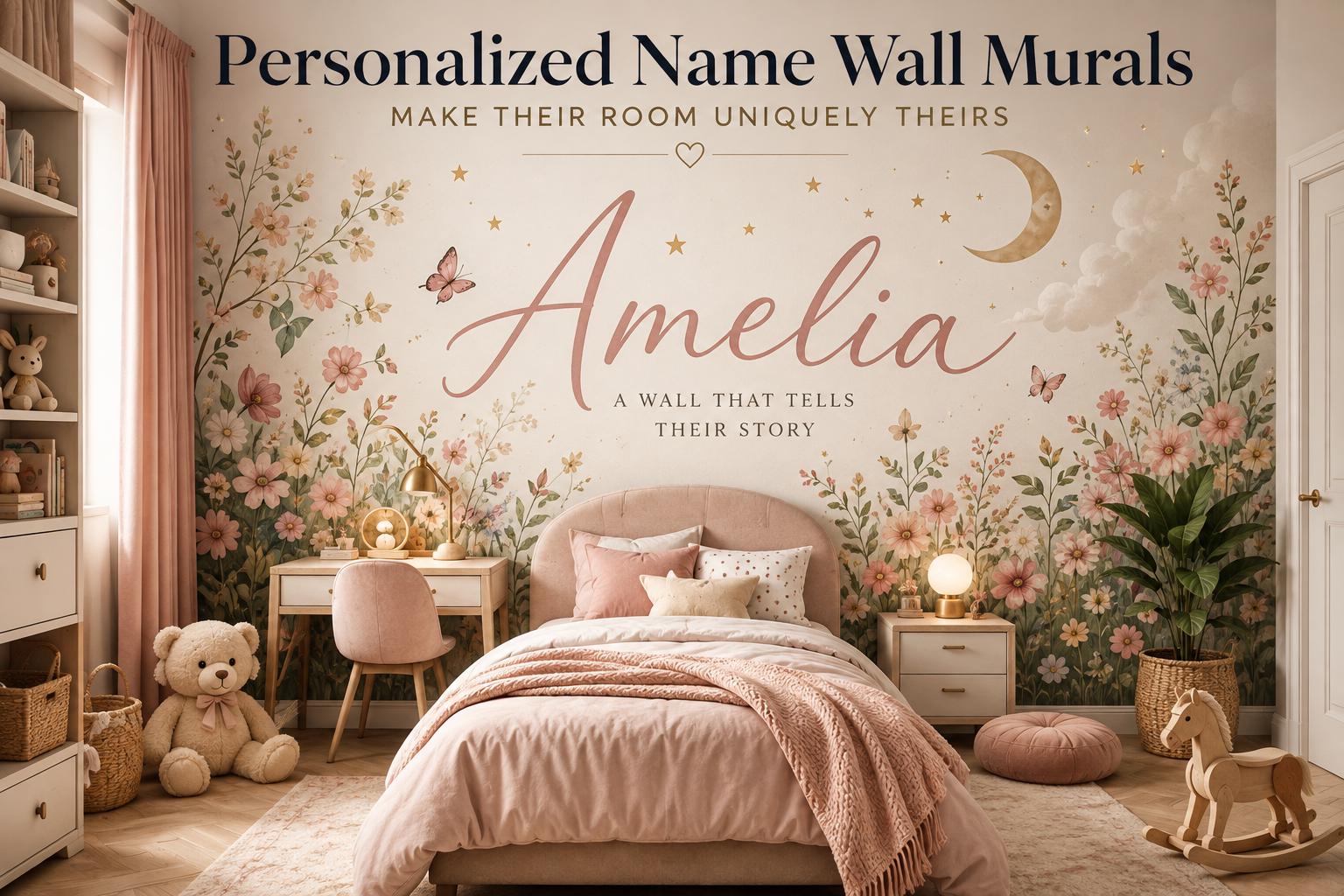
A name over the bed, tucked into a garden of flowers, set among stars, or layered into a favorite safari scene can make a room feel like it belongs to its smallest resident. A personalized name wall mural turns an ordinary wall into a design feature with real meaning - without committing to painted lettering, a complicated stencil project, or traditional pasted wallpaper.For nurseries, kids' bedrooms, playrooms, and even guest spaces, the best personalized murals balance imagination with the practical details that make a room easy to live with. The name should feel integrated into the artwork, the scale should suit the wall, and the material should work with the surface you have.
Start With the Room's Mood
A personalized name wall mural works best when it supports the feeling you want from the room rather than competing with every other decorative choice. A soft botanical mural with a child’s name in graceful lettering suits a calm nursery or cottage-inspired bedroom. A moon-and-stars design can create a peaceful nighttime setting, while a colorful safari mural brings playful energy to a toddler room or shared play area.For a more polished, less theme-heavy look, choose a mural with subtle personalization. Think muted florals, vintage-inspired landscapes, abstract shapes, or a city map with a name placed as a small but intentional detail. This approach gives the room a custom finish while leaving space for the child’s style, furniture, and interests to change over time.The same thinking applies outside a child’s room. A family name or meaningful quote can add character to an entryway, home office, vacation rental, or reading nook. The mural does not need to announce itself loudly to make an impact. Sometimes a refined initial against a textured neutral background is exactly enough.
Choose a Wall That Can Carry the Design
The wall behind a crib, toddler bed, dresser, or reading chair is often the natural home for a personalized mural. It creates a focal point without filling every surface with decor, and it gives furniture a more finished, anchored look. In a nursery, a mural behind the crib can set the entire color direction for the room. In a child’s bedroom, placing it behind the bed helps the name feel like part of a purposeful headboard wall.Scale matters here. A wide wall can handle a full scenic design, oversized lettering, or a repeating pattern with the name centered in the composition. On a narrow wall, a more contained motif may look more considered. A mural that is too small for the wall can feel accidental, while one that is oversized without room to breathe can make a compact space seem busy.Before choosing a layout, measure the full width and height of the intended wall, not just the open space above a piece of furniture. Account for baseboards, sloped ceilings, windows, outlets, and built-in shelving. Made-to-order sizing is especially helpful when standard wallpaper rolls would leave you with awkward seams or excess material.
Make Personalization Feel Intentional
The name is the reason the mural feels one-of-a-kind, so spelling, capitalization, and placement deserve a careful final check. Consider how the child’s full name, first name, nickname, or initials will look within the design. A short name can take on a bold, graphic presence. A longer name may suit a flowing script, a smaller placement, or a layout where the artwork does more of the visual work.Font style shapes the mood as much as the background. Handwritten-style lettering feels soft and storybook-like. Clean block lettering leans modern and playful. Elegant serif typography can give floral, celestial, or vintage designs a more elevated finish. If the room already includes a lot of patterned bedding, colorful toys, or detailed furniture, a calmer mural and simple lettering often create better balance.Color is another decision worth slowing down for. A mural may look slightly different once it is on a full wall and exposed to the room’s daylight, lamp light, and nearby paint colors. Ordering a sample gives you a chance to see the material texture, adhesion, and color in the actual space before committing to a custom design. This is particularly useful for soft neutrals, pale pinks, greens, and blues, which can shift noticeably depending on lighting.
Plan Around Furniture, Not Just Empty Wall Space
A mural should work with the room after furniture is in place. If the bed, crib, or dresser will cover the lower portion of the wall, let the strongest details sit higher in the design. The name should remain visible rather than disappearing behind a tall headboard or changing table. For murals with animals, flowers, or stars, consider where those elements will land around furniture edges.You can also use the mural to make a modest room feel more designed. A vertical motif can draw the eye upward in a room with lower ceilings. A wide horizon, garden scene, or cloud-filled sky can make a narrow wall feel broader. For shared bedrooms, a personalized design can create each child’s own zone, especially when beds sit along the same wall.Keep the rest of the decor edited enough for the mural to do its job. Pull one or two colors from the artwork into pillows, a rug, curtains, or storage baskets. You do not need to match every shade. A room feels more collected when the mural leads the palette rather than being copied exactly across every item.
Why Peel-and-Stick Changes the Decision
Traditional wallpaper can be beautiful, but it often involves paste, prep work, and a level of permanence that does not suit every household. A peel-and-stick personalized name wall mural offers a more approachable route to a custom wall, particularly for renters, first-time decorators, and parents who want a major visual change without a full renovation project.The material is designed for DIY application on smooth, clean, dry walls. A careful installation still matters: take time to align the first panel, work gradually, and smooth outward as you apply each section. Rushing the first panel can affect the entire mural, so it is worth treating that starting line as the foundation of the project.Surface condition is the trade-off. Peel-and-stick wallpaper is not a universal answer for every wall. Heavy texture, peeling paint, dust, moisture, or freshly painted surfaces can affect adhesion and the finished look. Walls should be fully cured after painting, and samples are a smart first step if you are unsure about texture or paint type.For renters, removable wallpaper can be especially appealing, but always assess your wall finish and lease requirements before installation. Removal results can vary with the age and condition of the paint underneath. The goal is accessible decorating, not a promise that every wall surface behaves exactly the same way.
Order Custom Work With Confidence
Personalized murals are made to order, which is what allows the sizing and name details to feel tailored to your space. It also means the information you submit matters. Review the spelling, dimensions, and design selections before placing the order. Measure twice, and use the final wall dimensions rather than estimating from a listing photo or room plan.Custom products are generally non-returnable once production begins, so a sample and a final measurement check are practical safeguards, not unnecessary extras. If you are choosing between two colorways or cannot decide whether a design will feel too bold, seeing a sample at home can make the answer much clearer.WallpaperCraftWorks designs are created for the kind of spaces that deserve personality without requiring professional installation. The most successful result comes from pairing that design freedom with a little planning: a smooth wall, accurate measurements, considered colors, and a name that feels right for the room now.Let the mural be the detail that makes the room feel remembered. Whether it marks a new baby’s nursery, refreshes a growing child’s bedroom, or gives a vacation rental a more personal welcome, a name on the wall can turn a styled space into one that feels genuinely yours.