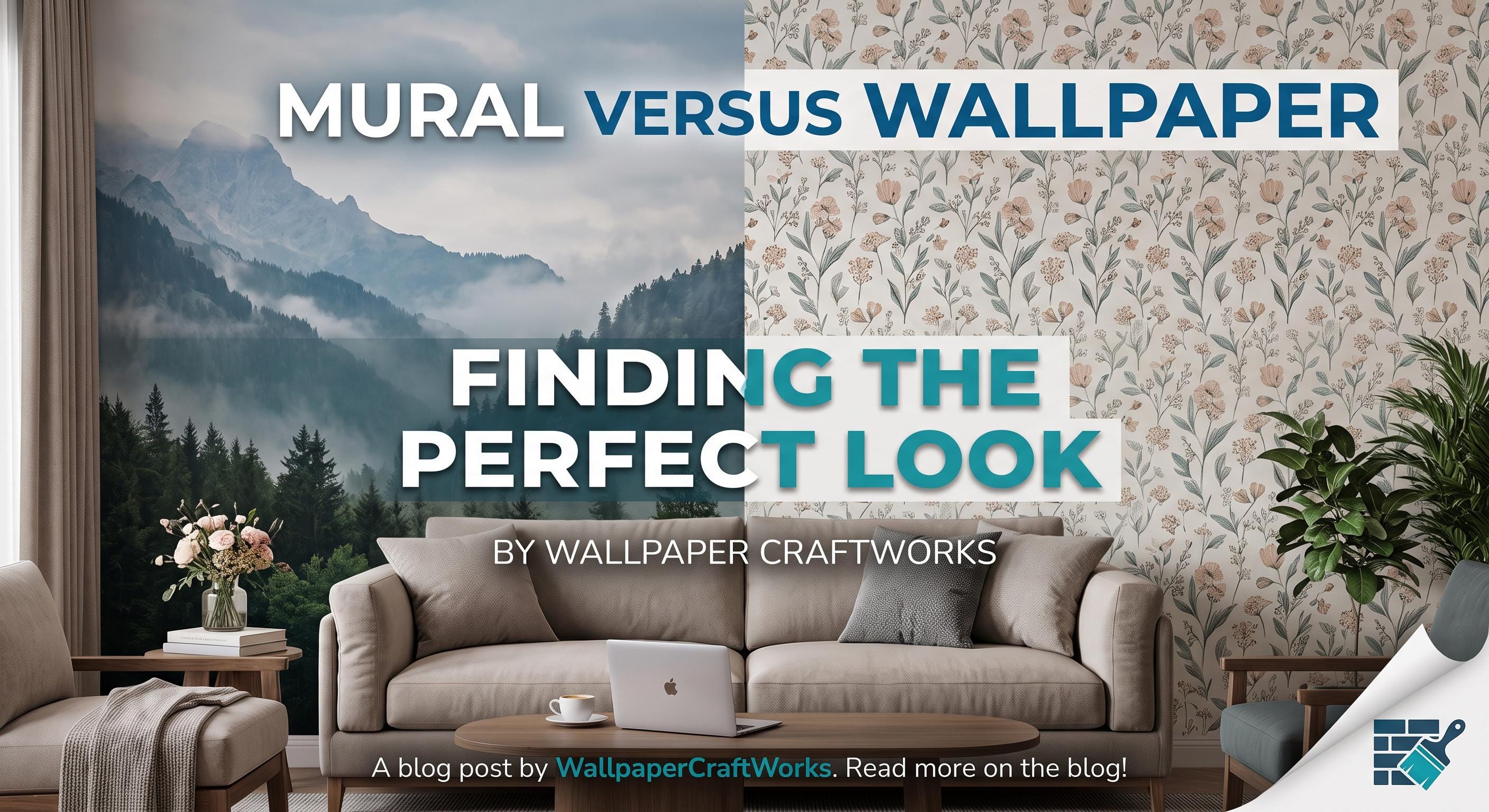
A blank wall can make a carefully furnished room feel unfinished. But when you are choosing between mural versus wallpaper, the real question is not which option is better overall. It is which one creates the mood you want, works with your wall dimensions, and feels like the right level of commitment for your home.Both can turn an ordinary bedroom, entryway, nursery, office, or rental into a space with a point of view. The difference is in how the design behaves on the wall. A mural tells one continuous visual story. Wallpaper creates a repeatable pattern that can cover a single accent wall or carry through an entire room.
Mural Versus Wallpaper: The Core Difference
A wall mural is a large-scale image designed to span a specific wall size. Think misty mountain ranges behind a bed, a watercolor city map in a home office, a safari scene in a child’s room, or a personalized design with a name or favorite quote. Each panel is part of one complete composition, so placement matters. The finished wall reads like artwork with architectural scale.Wallpaper is built around a repeating pattern. Florals, stripes, stars, checkerboards, abstract shapes, botanical vines, and luxury-inspired motifs repeat from panel to panel. That repeat gives wallpaper flexibility. It can dress up one wall, wrap a cozy powder room, line a reading nook, or cover all four walls without the image needing to begin and end in one exact place.Neither choice is automatically more dramatic. A deep navy celestial wallpaper can feel just as immersive as a moonlit mural, while a softly colored landscape mural can be quiet and calming. Scale, color contrast, and how much wall you cover will shape the final impact.
Choose a Mural When the Wall Is the Main Event
Murals work best when you want the wall to act as the room’s focal point. They are especially effective behind a bed, sofa, dining table, crib, desk, or reception-style seating area because the furniture naturally frames the scene.A mural can also solve a common decorating problem: a room that has plenty of furniture but no visual anchor. Instead of adding more small decor pieces, one oversized image creates instant intention. A vintage floral mural can give a bedroom a collected, romantic feel. A geometric or abstract mural can make a simple office feel more polished. A custom map or name mural adds personality to a nursery or family space without filling every surface with accessories.Customization is another reason to choose a mural. Since murals are produced for a specific width and height, you can select sizing that suits your wall rather than trying to make standard rolls work. This is useful for wide walls, narrow alcoves, sloped-ceiling spaces, and rooms where a standard mural size would leave awkward gaps.There is one trade-off. Because a mural is one coordinated image, measuring accurately matters more. You will want to account for the full wall area and think ahead about doors, windows, outlets, vents, and furniture placement. Ordering a sample first is a smart way to check color, material texture, and adhesion on your particular wall before committing to a made-to-order design.
Choose Wallpaper When You Want Flexible Pattern
Wallpaper is often the better choice when the pattern itself is the star. A repeat lets you create rhythm across a room, whether that means a delicate trailing botanical in a guest bedroom or a playful animal print in a playroom.It also gives you more freedom around tricky walls. A repeat pattern can continue around windows, built-ins, corners, and partial walls more naturally than a scene-based mural. If you are styling a small powder room, a hallway, or several connected wall sections, wallpaper can make the layout feel cohesive without requiring a single image to remain intact.For renters and decor lovers who like to refresh a room every few years, peel-and-stick wallpaper offers an approachable way to experiment. A bold pattern on one accent wall can be enough to change the personality of a room, while a softer neutral print can add texture without competing with artwork, colorful bedding, or statement furniture.Wallpaper is not always the lower-commitment visual choice, though. A large, high-contrast repeat on four walls can feel more intense than a single mural behind a bed. If you love a pattern but worry it may overwhelm the room, start with one wall, a small nook, or the wall above wainscoting.
Think About the Room Before the Design
The right choice depends on how the room is used and what is already happening in it. In a bedroom, a mural behind the bed creates a natural backdrop and keeps the rest of the walls quieter. Repeating wallpaper can be beautiful throughout the space, particularly with small-scale florals, subtle stripes, or warm neutral patterns.In a nursery or child’s room, murals are ideal for storytelling. Safari animals, outer space, enchanted forests, maps, and personalized name designs can make the room feel special from the start. Wallpaper is a strong option when you want a look that can grow with the child. Stars, dots, florals, soft checks, or nature-inspired prints can transition more easily from nursery to big-kid room.Home offices benefit from either direction. A mural of a skyline, mountain landscape, or abstract wash can make a video-call background feel intentional without adding visual clutter. Repeating wallpaper can bring a boutique-hotel feel to a work zone, especially when used behind open shelving or on the wall facing the desk.For vacation rentals, consider the guest experience. A memorable mural can create a photo-worthy moment that distinguishes a listing. Wallpaper may be more practical for extending a design theme through multiple smaller spaces, such as an entryway, bathroom, and bunk room.
Installation Considerations for Peel-and-Stick Designs
Peel-and-stick material makes both murals and wallpaper more accessible for DIY projects, but preparation still affects the result. These products are designed for clean, smooth, properly cured walls. Fresh paint needs adequate cure time, and highly textured surfaces can prevent full adhesion or show through the design.Before installing, clean away dust and residue, confirm your measurements, and lay out the panels in order. Start straight. That first panel sets the direction for every panel that follows, whether you are matching a mural image or aligning a wallpaper repeat.Murals demand extra attention to panel order because the image must line up precisely. With wallpaper, you will focus on matching the pattern repeat at each seam. Both benefit from working slowly, smoothing as you go, and avoiding the temptation to rush through a large wall in one afternoon.If your wall has strong texture, peeling paint, moisture issues, or an uneven surface, address those conditions before ordering. Peel-and-stick is a convenient decor solution, not a cover-up for wall damage or poor surface preparation.
Color, Samples, and Made-to-Order Choices
Screen colors are useful for narrowing down your favorites, but they are not a substitute for seeing a design in your own light. Morning sun, warm lamps, gray flooring, and nearby paint colors can all change how a print reads. A sample lets you test the actual color and material where it will live.This step is especially valuable for made-to-order murals and wallpaper. Custom sizing and personalization create a more tailored result, but they also mean you should review your dimensions, spelling, and design selection carefully before purchase. Measure the wall more than once, and leave yourself a little breathing room if the wall is not perfectly square.At WallpaperCraftWorks, designs are made to order for your selected space, which helps move beyond generic, one-size-fits-all decor. It also means samples and careful planning are worth the extra few minutes. A confident choice begins with knowing your wall, your lighting, and the feeling you want the room to have.
A Simple Way to Make the Final Call
Choose a mural if you want one large image, a personalized feature, or a clear focal point behind key furniture. Choose wallpaper if you want a repeating pattern, greater flexibility around architectural interruptions, or a design that can continue around the room.If you are still torn, picture the wall after the furniture is in place. Do you want to see a complete scene unfolding behind it, or do you want the room to be wrapped in color and pattern? That answer usually points you toward the design that will feel right long after installation day.