Art Deco is not a quiet background pattern. Its arches, fan shapes, stepped lines, and metallic-inspired details are made to give a room intention. This guide to art deco wallpaper helps you bring that tailored, glamorous energy home without turning your space into a period set or committing to a permanent renovation.The best Art Deco wallpaper feels considered rather than costume-like. It works when the pattern, wall placement, furniture, and color palette all support the same mood: polished, graphic, and a little dramatic. With peel-and-stick wallpaper, you can make that statement in a weekend, whether you are styling a rental-friendly bedroom accent wall, a refined home office, or a vacation rental guests will remember.
What Defines Art Deco Wallpaper?
Art Deco design emerged in the 1920s and 1930s, but its appeal has lasted because it balances ornament with order. The style favors symmetry, clean geometry, and luxurious visual cues. Think sunbursts, scallops, layered arches, diamonds, bold stripes, and repeating fan motifs.Color matters as much as pattern. Classic Art Deco wallpaper often pairs black with gold, deep emerald with warm brass, navy with cream, or blush with charcoal. Contemporary versions may use soft taupe, muted clay, or tonal neutrals for a calmer effect. The common thread is contrast and structure, even when the palette is understated.A true Art Deco look does not require literal gold foil or a black-and-white floor. A geometric print in warm beige can still read Deco when it has a crisp repeat and architectural rhythm. That flexibility makes the style especially useful for homes that want a luxury-inspired finish without feeling overly formal.
Choose the Right Art Deco Wallpaper for Your Room
Start with the role you want the wall to play. A large-scale, high-contrast fan pattern will naturally become the focal point of a room. A smaller repeat in a softer color can cover more wall area while keeping the atmosphere relaxed.
Living rooms and dining rooms
These spaces can handle a confident Art Deco pattern, especially behind a sofa, credenza, dining table, or bar area. Deep green, midnight blue, charcoal, and warm neutral wallpaper pair beautifully with velvet seating, walnut furniture, brass lighting, and sculptural mirrors. If the room already has ornate rugs or colorful artwork, choose a simpler geometric pattern so the walls do not compete with everything else.For a dining room, an arched or scalloped pattern can create a special-occasion feeling without adding another piece of furniture. It is also an effective way to give an open-plan dining area its own identity.
Bedrooms
An Art Deco accent wall behind the bed creates the feeling of a custom headboard wall, particularly when the pattern is centered behind the bed. Soft gold-inspired lines on cream, muted mauve fans, or tonal green arches offer plenty of visual interest while remaining restful.Bold black-and-gold wallpaper can work in a bedroom, but balance it with light bedding and uncluttered nightstands. If your goal is a calm retreat, select a design with low contrast rather than abandoning the Deco style altogether. The pattern can be glamorous without being loud.
Home offices and small commercial-style spaces
A home office is one of the best places to take a design risk. A graphic wallpaper behind your desk adds presence on video calls and helps separate work mode from the rest of the home. Navy, emerald, rust, and cream are especially effective for a composed, creative setting.In a compact office, scale is the key trade-off. Oversized arches can make a small wall feel expansive, but a very busy, large-scale print may overwhelm a room with limited natural light. Order a sample and look at it from several feet away before deciding.
Entryways, powder rooms, and rental spaces
Small spaces reward memorable wallpaper. An entryway in a Deco print can set the tone the moment someone walks in, while a powder room can carry a richer pattern than you might use in a larger room. Because these are smaller installations, they are also approachable first projects for DIY decorators.For vacation rentals, look for patterns that photograph well while still feeling versatile. A neutral Deco arch or subtle fan print gives guests a sense of character without making furnishings difficult to coordinate. It can make a simple room feel more intentional in listing photos.
Match Pattern Scale to the Wall
Pattern scale changes the way a room feels. Small repeats tend to read as texture from a distance and are useful when covering multiple walls. Medium-scale patterns are flexible enough for most accent walls. Large fans, sweeping arches, and oversized sunbursts make a strong architectural statement and generally work best on a clear, uninterrupted wall.Before choosing, measure the wall and notice what breaks it up. Windows, doors, open shelving, radiators, and sloped ceilings all affect how much of the design will be visible. A beautiful mural-scale pattern can lose impact when it is cut into too many narrow sections. In that case, a tighter repeat may look more polished.Also consider the pattern's alignment. Symmetrical motifs look best when they are centered around a focal point such as a bed, console, or dining table. When ordering custom-sized wallpaper, planning for that visual center can make the finished wall look far more tailored.
Build a Color Palette Around the Wallpaper
Art Deco wallpaper gives you a useful starting point for the rest of the room. Pull one or two colors from the print rather than trying to match every shade exactly. For example, a green and gold fan pattern might pair with ivory curtains, walnut wood, a camel chair, and a few brass accents.If your wallpaper has a dark ground, introduce lighter materials nearby. Linen shades, cream upholstery, pale bedding, or a light rug will keep the room from feeling closed in. If the wallpaper is light and airy, use black frames, dark wood, or a sculptural lamp to preserve the Deco contrast.Metal finishes should complement the wallpaper's undertone. Warm gold-inspired designs tend to suit brass, antique bronze, and warm wood. Cooler gray, navy, or silver-inspired patterns can work well with chrome, black metal, and smoked glass. You do not need every fixture to match, but repeating a finish two or three times makes the room feel intentional.
Use Peel-and-Stick Wallpaper Wisely
Peel-and-stick wallpaper is a practical fit for design-forward spaces because it avoids pasted application and gives renters and commitment-conscious decorators more flexibility. Still, removable does not mean suitable for every surface. The best results come from clean, smooth, dry, properly cured walls with a sound paint finish.Avoid applying self-adhesive wallpaper to heavily textured walls, freshly painted surfaces, peeling paint, damp areas, or walls with dust and residue. Texture can show through a geometric pattern and may reduce adhesion. Fresh paint should have adequate time to cure according to the paint manufacturer's guidance before wallpaper goes up.A sample is one of the smartest steps in this process. It lets you check the actual color in your room's morning and evening light, feel the material, and test adhesion on your specific wall. Screen colors can be useful for browsing, but they cannot account for your bulb temperature, window direction, or existing paint color.Accurate measuring is equally important. Measure the full width and height of the wall in several places, especially in older homes where corners may not be square. Include the complete area you want covered, then review the dimensions carefully before placing a made-to-order order. Custom production is what gives you a more fitted result, but it also means these products are typically non-returnable once produced except in cases such as defects or order errors.
Install for a Clean, Tailored Finish
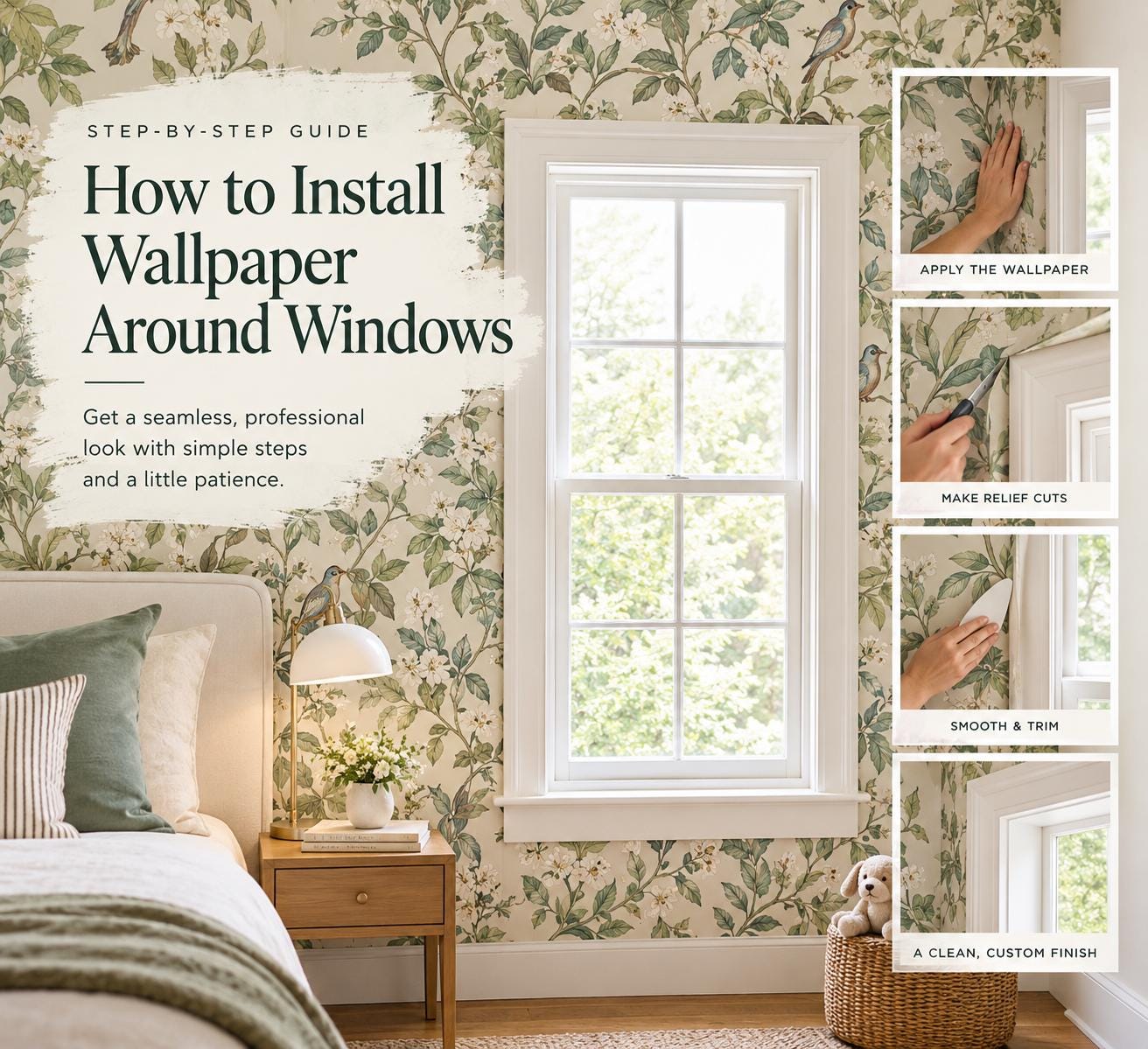
Give yourself a calm work area and enough time. Clean the wall, allow it to dry fully, and gather a level, measuring tape, smoothing tool, sharp utility knife, and a helper for wider panels. Start with a straight vertical guide line rather than relying on the corner of the room, since many walls are not perfectly plumb.Peel back only a small section of the backing at first. Position the top edge, check your alignment, and smooth downward gradually as you remove more backing. This method gives you more control and helps prevent trapped air. Work from the center outward with the smoothing tool, using gentle, steady pressure.Do not rush trimming around outlets, windows, or baseboards. A crisp edge makes geometric wallpaper look professionally finished. If you are covering a feature wall, stand back after the first panel is placed and confirm that the pattern is reading the way you expected before continuing.A well-chosen Deco pattern can do more than decorate a blank wall. It can frame the moments that happen there: a slow morning at the vanity, a dinner with friends, a confident presentation from your home office. Choose the version that fits your space and your level of boldness, then let the wall do its work.