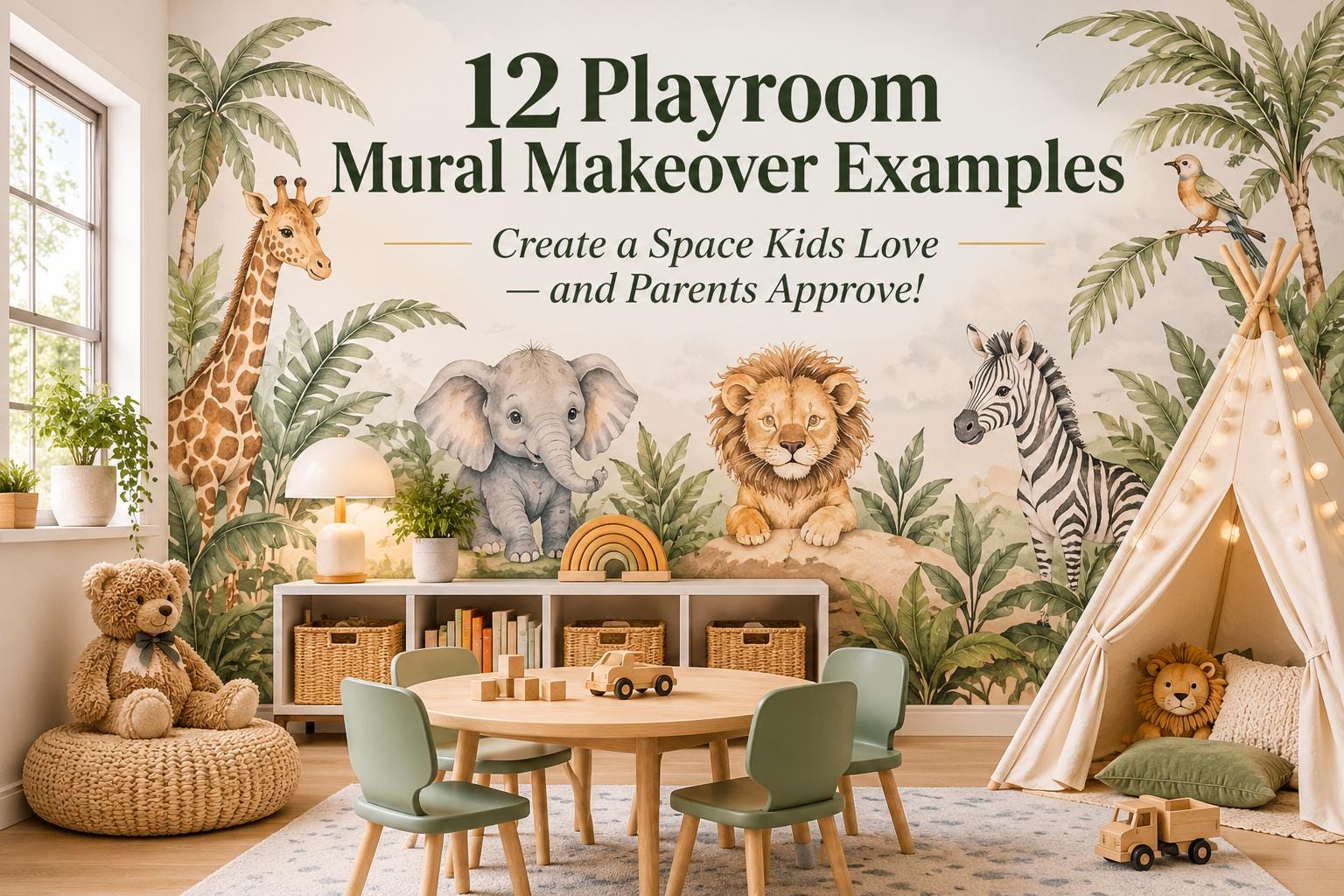
A playroom can collect a lot of color, toys, and big energy without ever feeling designed. The best playroom mural makeover examples solve that problem from the wall outward. A single well-chosen mural gives the room a visual anchor, creates a mood, and makes even open storage look more intentional.For parents, renters, and anyone refreshing a shared family space, peel-and-stick murals offer a high-impact change without committing to pasted wallpaper or a full renovation. The right choice depends on the child’s age, how the room is used, the amount of natural light, and whether you want a backdrop that grows with them for years.
What Makes a Playroom Mural Work
A mural does more than fill an empty wall. It can define a reading corner, soften a busy collection of play furniture, or give a multipurpose room its own identity. In a smaller playroom, one accent wall usually has more impact than covering every surface. In a large basement or bonus room, a full-wall scene can help the space feel warmer and more finished.Choose the wall you see first when entering the room, the wall behind a low play table, or the wall facing a reading nook. Avoid placing detailed designs behind tall shelving whenever possible. You want the artwork to remain visible, not become a pattern of half-hidden shapes.
12 Playroom Mural Makeover Examples
1. A Soft Safari Wall Behind Toy Storage
A safari mural with friendly animals, palms, and open sky adds personality without relying on loud primary colors. Pair it with natural wood bins, woven baskets, and a washable neutral rug. This look is especially useful when the playroom shares space with a family room because it feels polished enough for adults while still delighting young children.
2. A Personalized Name Mural for a Dedicated Play Space
For a room used mostly by one child, a personalized mural with their name can make the space feel genuinely theirs. Choose a design with a background motif, such as clouds, stars, florals, or woodland animals, so it still reads as wall art rather than oversized lettering. This is a meaningful option for a first playroom, but consider whether a shared room may need a more flexible design later.
3. A Celestial Mural for Quiet Play and Reading
A moon-and-stars design brings a calm, imaginative feel to a playroom that doubles as a wind-down space. Deep navy, dusty blue, muted lavender, and soft gold details work beautifully near floor cushions, book ledges, and a small canopy. If the room has limited daylight, choose a celestial print with a lighter background so the space stays open rather than cave-like.
4. A Map Mural for the Child Who Asks Why
World maps, city maps, and illustrated travel scenes turn the wall into a conversation starter. They work well in playrooms for elementary-age children because the design can support pretend travel, geography games, and growing curiosity. A map mural is also a smart bridge between a younger child’s playroom and a future homework or hobby room.
5. Oversized Florals for a Creative Playroom
A playful floral mural can make an arts-and-crafts room feel cheerful without looking overly themed. Look for painterly blooms, garden vines, or oversized daisies in colors that coordinate with your existing furniture. This is a strong choice when you want a feminine-leaning space that will not feel too young in a few years.
6. A Forest Scene for Imaginative Adventures
Woodland murals create a natural stage for pretend camping, animal figurines, and story time. A misty forest in soft greens and warm neutrals feels gentle, while illustrated trees and woodland animals bring more whimsy. Keep the furnishings simple so the mural stays the main event: a child-size table, open toy storage, and a few cozy textiles are often enough.
7. A Race Track Wall for Active Play
A stylized road or race track mural instantly gives cars, trucks, and ride-on toys a home base. Instead of choosing a design packed with logos or characters, consider roads, mountains, or an abstract landscape that leaves room for imagination. The trade-off is that this look is more specific than a botanical or map design, so it may be best for a clearly defined interest rather than a room meant to evolve quickly.
8. An Abstract Color Block Mural for a Shared Room
When siblings of different ages share the playroom, abstract arches, painterly shapes, or soft color blocks are a practical answer. They bring energy without assigning the room to one hobby, age group, or character. Pull two or three mural colors into bins, chairs, and artwork to make the room look coordinated rather than crowded.
9. A Cloud Mural That Makes Low Ceilings Feel Lighter
Low basement ceilings can make a playroom feel compressed, particularly when the room is full of large plastic toys. A pale sky-and-cloud mural shifts attention upward and creates a lighter visual horizon. Choose white or pale blue furniture accents nearby, then add small touches of color through books and toys instead of adding another bold wall treatment.
10. A Storybook City for Pretend Play
An illustrated city mural is full of possibilities: toy buses can travel the roads, dolls can visit the shops, and children can create stories around the buildings. It has more detail than an abstract mural, so use it on a wall with minimal furniture in front. A low bench or book rack is fine, but a tall cabinet will block the scene that makes the design special.
11. A Botanical Mural for a Family-Friendly Flex Room
Not every playroom needs to look like a children’s room. A leafy botanical mural can define one end of a living room, finished basement, or guest room as the play area while keeping the overall space adult-friendly. Add a low table, durable storage, and a round rug to signal where play happens. When the toys are put away, the mural still looks at home in the rest of the house.
12. A Minimal Star Pattern for Long-Term Flexibility
For a room you expect to update often, a small-scale star or dot mural gives you a decorative backdrop without locking you into a theme. It works with changing furniture, evolving favorite colors, and new interests. This is one of the most useful playroom mural makeover examples for renters and parents who want a finished look but prefer to keep future changes simple.
Plan the Mural Before You Order
Measure the full width and height of the wall at more than one point. Older homes, basement walls, and built-ins can create small differences that matter when ordering a made-to-order mural. Include the entire wall area in your measurements, then follow the ordering guidance for extra material needed for trimming during installation.Think about outlets, vents, windows, and doors before selecting the focal point of the artwork. For a personalized mural, decide where the name or central illustration should sit after furniture is in place. A quick painter’s-tape outline on the wall can help you picture the finished scale and reveal whether a design will be hidden behind a bookshelf.Color deserves the same attention. Screens can make a warm cream look bright white or soften a rich blue, especially under different room lighting. Ordering a sample lets you assess color, material texture, and adhesion against your paint, floor, and furnishings before committing to a custom-sized order.
Make the Peel-and-Stick Finish Look Its Best
Peel-and-stick wallpaper is designed for a more accessible DIY project, but wall preparation still matters. The surface should be smooth, clean, dry, and fully cured if recently painted. Highly textured walls, dusty surfaces, peeling paint, and some low-VOC or stain-resistant finishes may not provide the consistent adhesion needed for a lasting result.Start with a clean work area and apply panels slowly, checking alignment as you go. A second set of hands is helpful for larger panels, especially when the mural has a scene or pattern that needs to line up precisely. At WallpaperCraftWorks, murals are made to order in custom dimensions, so confirm measurements and design details carefully before purchasing. Custom wallcoverings are generally not returnable simply because a measurement or color choice changes after production.The most successful playroom wall is not the one with the most decoration. It is the one that gives children a place to imagine, play, and grow while making the whole room feel more like home.