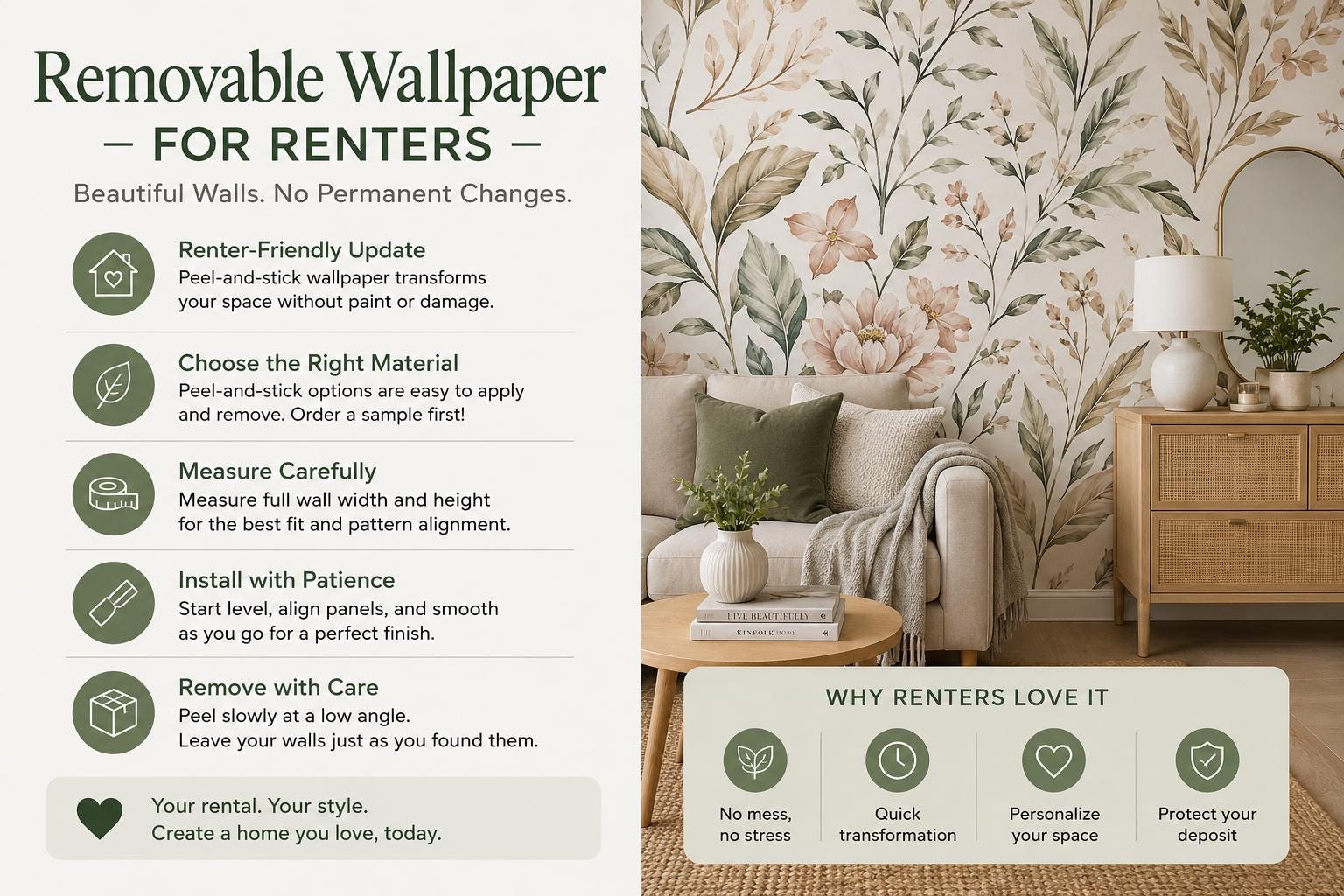
A plain rental wall can make even well-chosen furniture feel temporary. Removable wallpaper for renters changes that equation, giving a bedroom, nursery, entryway, or living room the visual presence of a thoughtfully designed home without asking you to repaint before your lease ends.The appeal is not simply that peel-and-stick wallpaper comes down. It is that a full wall of soft watercolor florals, oversized botanicals, playful animals, or a refined neutral pattern can make a room feel intentional from the moment you walk in. For renters who are working around white walls, limited renovation permissions, or a short timeline, that kind of transformation has real value.Still, renter-friendly does not mean risk-free or one-size-fits-all. The right material, surface preparation, and installation plan matter just as much as the artwork. A little planning helps you get the finished-room effect you want while protecting your deposit.
Why removable wallpaper works so well in rentals
Paint can add personality, but it often creates a second project at move-out. Traditional pasted wallpaper is even more permanent. Peel-and-stick wallpaper offers a different route: a printed, adhesive-backed wall covering that applies in panels and is designed to be removed when your space needs to change.That makes it especially useful for the rooms renters tend to put off decorating. A compact bedroom can become a calm retreat with a tonal botanical mural behind the bed. A dining nook can gain warmth and definition without new built-ins. In a child’s room, a cheerful animal or storybook-inspired print can make a temporary address feel familiar and joyful.Because wallpaper is installed vertically in panels, it also suits focused design moments. You do not have to cover every wall to make a statement. One properly measured accent wall can visually anchor a room, frame a crib or bed, or create a polished backdrop for video calls and everyday photos.
Choose the right wallpaper material first
The word “removable” is useful, but material details deserve a closer look. Not every wallpaper option is intended for the same level of permanence, and the right choice depends on your lease, wall condition, and how long you expect to stay.
Peel-and-stick for flexible decorating
For many renters, textured-canvas peel-and-stick or smooth 3M vinyl wallpaper is the most practical choice. These materials apply without paste, so there is no wet adhesive to mix, spread, or clean up. When it is time to leave, the panels can generally be lifted slowly from a corner and pulled back at a low angle.Textured-canvas peel-and-stick adds a subtle tactile finish that can make painted artwork and softer patterns feel especially dimensional. Smooth vinyl creates a crisp, clean surface that suits sharper graphic motifs, modern color blocks, and detailed mural artwork. The better choice is often aesthetic as well as functional: order a sample so you can see the printed color and surface finish in your own light.
Non-woven wallpaper for more permanent plans
Premium non-woven wallpaper can be a beautiful option for a long-term home or a rental where the owner has approved a traditional installation. It is not the default choice for a renter who needs easy removal at the end of a lease. If you are prioritizing flexibility, confirm that you are selecting a peel-and-stick format before ordering.This distinction matters because a gorgeous design is only a successful purchase when the material matches the reality of your walls and timeline.
Start with your lease and your wall surface
Before choosing a pattern, read the section of your lease that addresses alterations, adhesives, and repainting. Some landlords are comfortable with removable decor but want notice in writing. Others may have restrictions based on the age or finish of the walls. A quick email can prevent confusion later, especially if you plan to cover a large wall.Then look closely at the surface itself. Peel-and-stick wallpaper performs best on clean, smooth, properly cured painted walls. Fresh paint needs time to cure fully before wallpaper is applied. Walls with heavy texture, peeling paint, moisture damage, dust, or a very flat and chalky finish can create adhesion problems and may also increase the chance of paint lifting during removal.A small test area is wise when you have any doubts. This is particularly true in older apartments, where previous paint jobs may not be consistent from one room to the next. Samples are not just for comparing color. They are a low-stakes way to assess how a material looks, feels, and adheres in your space.
Measure for a finished, not almost-finished, wall
The most common wallpaper frustration is not pattern choice. It is ordering too little material. Measure the full width and height of the wall, including the areas around windows and doors. Do not subtract every small opening unless you have clear product-specific guidance to do so. Panels need enough coverage for pattern alignment, trimming, and a professional edge.For murals, accurate wall dimensions are essential because the artwork is arranged across a panel system. Measure at more than one point if your ceilings or corners are not perfectly square, then use the largest measurement. Older rentals often have slight variations that are invisible until a straight panel meets a sloping ceiling.It also helps to decide where the eye should land. Behind a bed, center the mural or key motif around the bed rather than automatically centering it on the wall. In a nursery, consider where the crib, rocker, and shelves will sit. A little pre-planning keeps the most charming part of the design from disappearing behind furniture.
Install with patience, not pressure
Peel-and-stick wallpaper is approachable for confident DIY decorators, but it rewards a slow start. Clean the wall with a gentle, residue-free method and let it dry completely. Gather a level, measuring tape, sharp utility knife, smoothing tool, and a stable step stool before you peel the first backing sheet.Begin with a straight reference line, not necessarily the corner. Rental walls are often slightly uneven, and a corner can lead the whole installation off level. Apply the first panel gradually, peeling back the backing a little at a time while smoothing from the center outward. Do not stretch the material to force it into place. If a panel goes on crooked, carefully lift and reposition it before moving forward.Panel overlap and pattern matching should follow the instructions for the specific wallpaper format. The artwork is made to create a continuous scene or repeat, but careful alignment is what makes it look custom rather than improvised. For a large mural or a tall wall, a second set of hands makes the process calmer and more precise.
Make the design work with rental realities
A renter-friendly wall can still look layered and collected. If your floors, cabinets, or trim are not your favorite, use wallpaper to establish a color story that makes those fixed features feel less dominant. Soft blue and green botanicals can cool down warm beige carpet. A warm, illustrated print can make basic white trim feel charming instead of stark.Consider scale before committing. Large-scale murals often shine on an uninterrupted wall with enough viewing distance. Smaller, repeating patterns can be more forgiving in narrow bedrooms, hallways, and powder rooms. In a kid’s space, a playful design may carry the room on its own, while an adult bedroom might need only one artful accent wall paired with quiet bedding and simple window treatments.You can also think beyond the obvious feature wall. The wall behind open shelving, the inside of a home-office nook, or the small wall facing your entry door can deliver a high-impact moment without requiring a large order. These spots are especially smart when you want a memorable look but may move within a year or two.
Plan for removal before move-out day
Save your order information, extra material, and any care instructions after installation. If a panel is damaged by a moving accident, pet scratch, or furniture scrape, having the original details makes it easier to identify the correct replacement option. Made-to-order wallpaper is produced for your selected material and dimensions, so it is worth keeping a record of what you purchased.When it is time to remove peel-and-stick wallpaper, work slowly and avoid pulling straight out from the wall. Start at a top corner and ease the panel downward at a low angle. If a section feels unusually resistant, pause rather than yanking. Temperature, wall condition, paint quality, and how long the wallpaper has been installed can all affect removal.Take a few photos of the wall before installation and after removal. They create a useful record for your landlord and give you peace of mind as you close out the lease.A rental does not have to wait for a future address to feel like yours. Choose a design that makes you happier to come home, sample it in your own light, and give the installation the care a full-room transformation deserves. The wall may be temporary, but the feeling of living somewhere thoughtfully yours does not have to be.