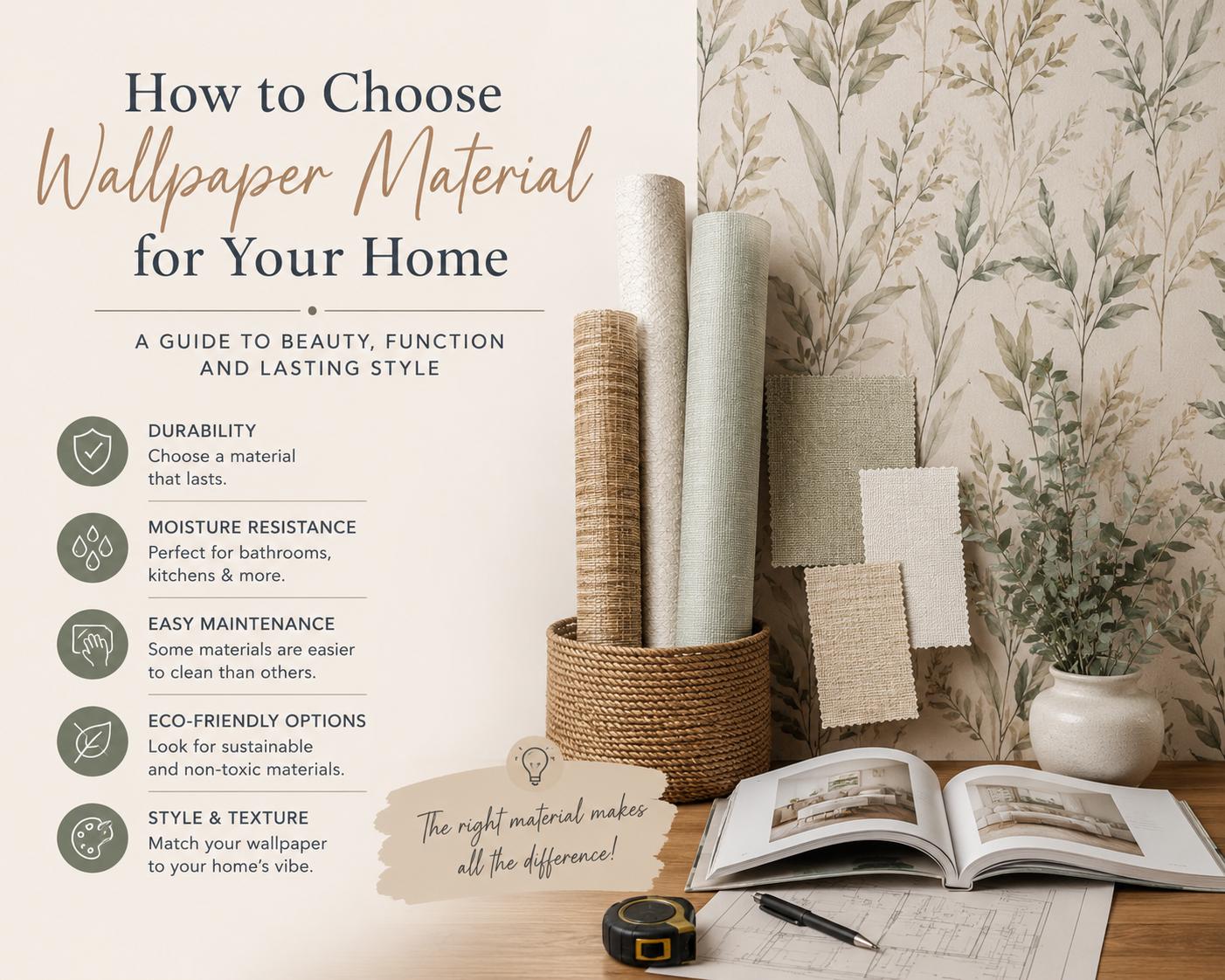
A wallpaper design can look perfect on screen, then feel completely different once it covers a real wall. The finish, texture, and installation method shape that final effect just as much as the artwork does. Learning how to choose wallpaper material starts with one practical question: what does this wall need to handle every day?A quiet bedroom feature wall has different needs than a high-energy playroom, a temporary apartment refresh, or a nursery you hope will grow with your child. The right material makes the installation feel manageable and helps the finished wall look intentional, not merely decorative.
How to Choose Wallpaper Material by Room and Lifestyle
Before falling in love with a pattern, consider who uses the room, how long you expect to keep the wallpaper up, and how comfortable you are with DIY installation. These answers narrow the choice quickly.For renters, removability is often the deciding factor. A peel-and-stick option can bring character to an apartment bedroom, entryway, or home office without making the space feel permanently committed. It is also appealing when you enjoy changing your decor as your taste evolves. That flexibility comes with a trade-off: peel-and-stick wallpaper relies on proper wall preparation and a smooth, suitable surface to adhere well.For homeowners planning a longer-term update, premium non-woven wallpaper can be an especially polished choice. Its substantial feel suits everything from painterly florals in a primary bedroom to sophisticated botanicals in a dining room. It creates a refined, traditional wallpaper look while still allowing a room’s artwork to take center stage.In children’s rooms, think beyond the first photo. A dreamy watercolor animal mural may be designed for a nursery, but it can feel equally charming as the room becomes a toddler bedroom. Choose a material based on the wall condition and your expected timeline, then choose a design that leaves room for the child and the space to grow.
Get to Know the Main Wallpaper Material Options
WallpaperCraftWorks designs are available in formats that support both permanent-feeling room transformations and renter-friendly decorating. Each material has its own look, feel, and best use case.
Premium non-woven wallpaper
Non-woven wallpaper is a strong choice when you want a classic, elevated wallcovering finish. It has a soft, matte appearance that works beautifully with detailed illustrations, layered botanicals, and watercolor designs because it does not compete with the art through excessive shine.This option is well suited to bedrooms, nurseries, living rooms, and accent walls where you want the installation to feel considered and lasting. It is often a natural fit for homeowners, although renters who have permission for traditional wallpaper may also prefer its tailored look.The trade-off is that this is not the same experience as a repositionable sticker. Installation typically involves wallpaper paste and a more traditional approach, so careful measuring, wall prep, and panel alignment matter. If your wall has old adhesive residue, peeling paint, or major texture, resolve those issues before starting.
Textured-canvas peel-and-stick wallpaper
Textured-canvas peel-and-stick wallpaper combines convenient self-adhesive installation with a lightly tactile surface. The canvas-like texture adds warmth and depth, which can be especially appealing for cozy nursery murals, storybook scenes, soft florals, and designs meant to feel handcrafted rather than glossy.It is a thoughtful choice for renters, DIY decorators, and families updating a single focal wall over a weekend. Because no paste is required, the process can feel less intimidating than traditional wallpaper. The panels are still large-format pieces, however, so a second set of hands and patient alignment can make a noticeable difference.Peel-and-stick material performs best on clean, dry, smooth walls with sound paint. Freshly painted walls need adequate curing time before application. Very textured walls, dusty surfaces, moisture-prone areas, and paint that is already lifting can affect adhesion. A renter-friendly material is only as reliable as the surface beneath it.
Smooth 3M vinyl wallpaper
Smooth 3M vinyl wallpaper offers a sleek, clean surface that lets saturated color and crisp graphic details stand out. If your design has bold shapes, bright character-inspired imagery, or a modern repeating pattern, a smooth finish can create a particularly fresh, polished result.This material is also peel-and-stick, making it attractive for temporary decorating and straightforward DIY projects. It works well in bedrooms, playrooms, creative corners, and other spaces where you want a vivid design to feel sharp and contemporary.Texture is a matter of personal style here. A smooth vinyl finish can make a colorful wall mural feel more graphic and high-definition, while textured canvas can make the same artwork feel softer and more tactile. Neither is automatically better. Let the room’s furniture, lighting, and overall mood guide the decision.
Match the Finish to the Look You Want
Material does more than determine how wallpaper goes on the wall. It changes how a design reads across the room.A subtle canvas texture can add a cozy layer to muted palettes, woodland scenes, vintage-inspired florals, and painterly watercolor. It tends to complement natural wood, woven baskets, linen bedding, and soft textiles. In a nursery or playroom, that tactile quality can make the wall feel warm without requiring extra decor.A smooth finish has a different kind of visual confidence. It favors clean lines, playful graphics, bolder colors, and high-contrast patterns. Consider it when the wallpaper is meant to be the room’s main statement, especially against simple furniture and uncluttered walls.Non-woven wallpaper’s matte, substantial appearance lands between those moods in its own way. It is a versatile backdrop for art-led interiors because it feels refined without looking overly formal. If you are building a room around one feature wall and want it to photograph beautifully in changing daylight, a low-sheen finish is often a smart direction.
Look at Your Wall Before You Order
A beautiful wallpaper panel cannot correct a poor wall surface. Take a close look at the intended wall in daylight before deciding on material and sizing.Smooth, primed, painted drywall is generally the easiest starting point for peel-and-stick wallpaper. Wipe away dust, oils, and residue, and make sure paint is stable. If the wall has a heavy orange-peel texture, visible patchwork, flaking paint, or old wallpaper seams, it may need prep before any wallpaper installation will look its best.Humidity and wall location deserve consideration, too. A wall near frequent steam, splashing water, or persistent dampness needs a finish selected with care. For a standard bedroom, nursery, playroom, hallway, or living-room accent wall, focus first on surface smoothness and the permanence you want from the project.Also account for obstacles. Windows, doors, outlets, sloped ceilings, and built-ins do not make wallpaper impossible, but they do add cutting and planning. Large-format murals arrive in numbered panels, which helps create the intended full-wall image. Measure the wall at its widest and tallest points, and include any extra allowance recommended for trimming and alignment.
Why a Sample Is Part of the Design Process
A sample is not a small version of the finished room. It is a decision-making tool. It lets you see color, scale, texture, and finish under the actual light in your home.Tape the sample to the intended wall and look at it in the morning, afternoon, and evening. A pale blue may appear airy in one room and slightly gray in another. Warm bulbs can change how blush, cream, and beige read, while cooler daylight may make greens and whites feel crisper.Use the sample to compare materials as well as colors. Run your hand across the textured-canvas option, see whether the smooth vinyl finish suits the furniture, and view non-woven wallpaper beside your trim color. This is especially worthwhile for a full mural or a large accent wall, where the material becomes a significant part of the room’s visual presence.
Plan for Installation, Not Just the Purchase
The easiest wallpaper project is the one planned before the box arrives. Check your measurements twice, confirm the panel layout, and give yourself enough time to work slowly. Rushing is more likely to cause bubbles, misaligned patterns, or unnecessary trimming than the material itself.For peel-and-stick wallpaper, start with a clean, dry wall and align the first panel carefully. That first panel sets the line for every panel that follows. A level, a smoothing tool, a sharp blade, and a helper for large panels can make the process more comfortable.For non-woven wallpaper, follow the installation guidance for the specific format and adhesive method. Prepare the wall, protect nearby surfaces, and work methodically. If your wall is unusually tall, textured, damaged, or full of architectural interruptions, professional installation may be worth considering.Made-to-order wallpaper deserves the same attention as any custom element in a room. Check your order when it arrives, keep the packaging until you have reviewed the panels, and photograph any shipping damage promptly. Clear order details and timely communication make damage-replacement support much easier if an issue occurs.The best material is the one that supports the life you want to live in the room. Choose the finish that fits your wall, your installation comfort, and your future plans, then let the pattern do what it does best: turn an ordinary surface into a space that feels unmistakably yours.