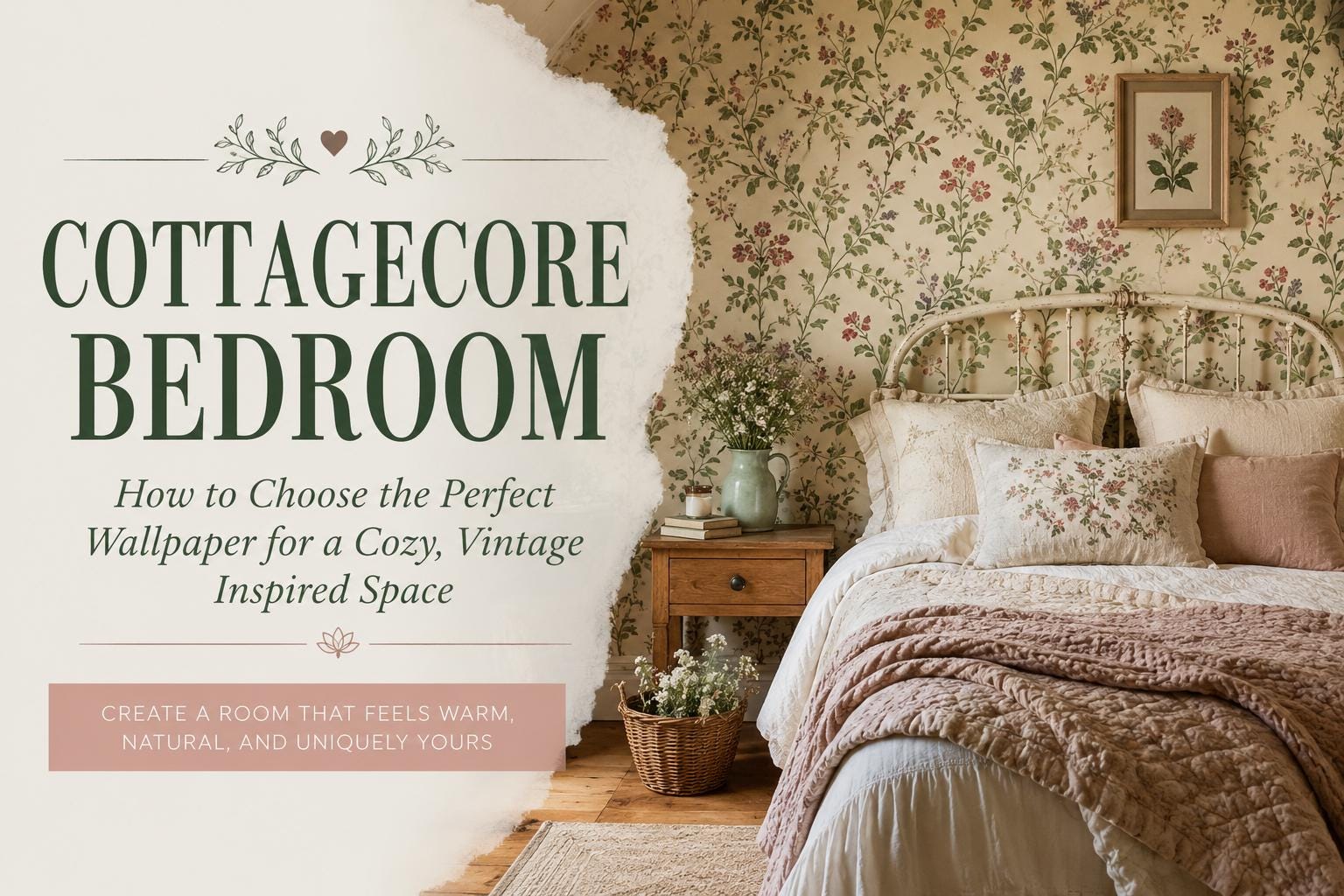
A bedroom can feel cottagecore without becoming overly themed. The difference is often on the walls: cottagecore wallpaper for bedroom spaces adds the lived-in softness, garden detail, and gentle nostalgia that plain paint cannot quite deliver. Whether you picture a sun-faded floral guest room, a woodland-inspired primary bedroom, or a sweet vintage space for a child, the right pattern can make the room feel collected rather than decorated overnight.
What Makes a Bedroom Feel Cottagecore?
Cottagecore is less about copying one exact country cottage and more about creating a room that feels warm, nature-connected, and personal. Think climbing roses, pressed wildflowers, leafy branches, small-scale gingham, faded storybook scenes, and colors that look at home beside natural wood, linen, and ceramic details.For bedrooms, the most successful version of this look is usually quiet enough to rest with. A sprawling high-contrast floral can be beautiful, but it may feel visually busy across every wall in a small room. A softer botanical print, a delicate meadow pattern, or a vintage-inspired floral often gives you the same romantic mood with a more restful finish.Color matters just as much as motif. Sage green, dusty blue, warm cream, blush, butter yellow, muted terracotta, and soft brown are easy starting points. You do not need to avoid deeper colors, though. A moody olive floral or dark forest toile can make a bedroom feel especially cozy when balanced with lighter bedding and warm lamps.
Choosing Cottagecore Wallpaper for a Bedroom
Start with the atmosphere you want to wake up to. This makes choosing among florals, botanicals, and scenic prints much easier, especially when shopping online.
For a light, romantic bedroom
Choose small florals on a cream, ivory, pale pink, or faded blue background. Ditsy flowers and scattered botanical sprigs create a gentle, airy look that works well behind a bed or throughout a smaller bedroom. Pair the pattern with white or oatmeal bedding, a quilted coverlet, and a vintage-style bedside lamp for a room that feels sweet but not overly precious.If your furniture is already detailed - such as a spindle bed, antique dresser, or ornate mirror - a small-scale pattern helps the room stay balanced. It adds character without competing with every other piece.
For a woodsy, grounded retreat
Leafy vines, ferns, woodland flowers, and botanical illustrations bring a more grounded cottagecore direction. These patterns work beautifully with oak, walnut, rattan, woven baskets, and olive or rust-colored textiles. They can also bridge cottagecore and a slightly more traditional or vintage style, which is useful if you want the room to feel timeless rather than trend-driven.A deep green wallpaper can be especially striking on the wall behind the bed. Keep the remaining walls light and add cream sheets or a natural linen duvet so the space still feels open.
For a vintage storybook feel
Toile-inspired scenes, tiny fruit motifs, hand-drawn birds, and antique garden prints add personality without relying only on flowers. These designs suit guest bedrooms, reading corners, and homes where the decor leans collected and old-world. Look for artwork with an illustrated rather than photo-realistic finish to keep the room soft and charming.This direction looks especially good with brass hardware, pleated lampshades, framed art, and a painted nightstand. The key is editing. Pick one or two supporting vintage details instead of filling every surface with decor.
For a child’s room that can grow with them
Cottagecore can be whimsical without feeling babyish. Consider gentle mushroom scenes, woodland animals, field flowers, or soft gingham in colors that coordinate with the rest of the home. A removable wallpaper accent wall gives a child’s bedroom a polished focal point now, while leaving room to update furniture, bedding, and accessories as their taste changes.Avoid choosing a pattern solely because it matches a temporary theme. A well-designed floral or forest print can move from toddler room to big-kid space much more easily than a highly specific character-style design.
Accent Wall or Full-Room Wallpaper?
An accent wall is a natural choice when the bed has a clear wall behind it. It frames the sleeping area, delivers a high-impact transformation, and lets you use a more detailed cottagecore pattern without overwhelming the room. This approach is also practical for renters and first-time wallpaper users who want a lower-commitment project.A full-room application can be just as beautiful, particularly with a small-scale print or a wallpaper with a light background. In a bedroom with good natural light, wrapping all four walls in a subtle floral can make the room feel intimate and intentionally finished. It works best when the ceiling, trim, and major furniture offer visual breathing room.There is no strict rule that small bedrooms need only light wallpaper. Dark prints can make a compact room feel cozy and enveloping. The trade-off is that they absorb more light, so plan for layered lighting and consider lighter curtains, bedding, or rugs. If you love a bold botanical but worry about commitment, order a sample first and view it on the intended wall in morning and evening light.
Match the Pattern Scale to Your Room
Pattern scale is one of the easiest details to overlook and one of the most influential. Large blossoms, oversized branches, and mural-style garden scenes create drama, but they need enough open wall space to be appreciated. They are often best behind a bed with a relatively simple headboard or on a wall not broken up by multiple windows and doors.Small-scale prints are more flexible. They can make an awkward wall feel finished, disguise minor visual clutter, and work around furniture more easily. They also tend to suit full-room installations because the repetition is gentler from a distance.Medium-scale florals sit in the middle and are often the easiest option for a primary bedroom. They bring visible detail and charm while still leaving room for layered textiles, artwork, and furniture. If you are torn between scales, use the sample as a real design tool. Tape it at eye level, then step back across the room. What looks subtle in your hand can read much bolder once repeated across a full wall.
Build the Room Around the Wallpaper
Once you have selected your wallpaper, let it guide the rest of the room instead of trying to match every color exactly. Pull one main neutral from the background for curtains or larger furniture, then repeat one or two accent tones in pillows, a throw, or framed art. This creates a finished look without making the space feel too coordinated.Natural materials are an easy fit: washed linen, cotton quilts, wood frames, woven shades, ceramic lamps, and vintage-inspired brass all complement cottagecore patterns. A simple upholstered headboard can soften a detailed wallpaper, while an iron or wood bed brings a little structure to delicate florals.Be thoughtful with competing prints. Florals can live beside stripes, checks, or gingham, but choose a shared color family and vary the scale. For example, a small floral wallpaper pairs well with a wider striped duvet or a subtle checked pillow. When both patterns are similarly busy and similarly sized, the bedroom can start to feel restless.
Peel-and-Stick Details to Plan Before You Order
Peel-and-stick wallpaper makes a cottagecore bedroom update more approachable, but preparation still matters. For the best adhesion, apply self-adhesive wallpaper to clean, dry, smooth walls. Textured walls, peeling paint, dusty surfaces, and fresh paint that has not fully cured can affect the finish.Measure each wall carefully, including the tallest point and the full width. Measure again before placing a custom order. Made-to-order wallpaper is created for your selected dimensions, which helps you avoid the generic-roll guesswork, but accuracy is essential. Account for wall variations, sloped ceilings, windows, and doors so you can plan how the pattern will fall.Samples are especially helpful with cottagecore designs because these palettes often contain nuanced undertones. A cream background may lean warm, a green may look more gray in low light, and a blush floral can appear different beside your existing bedding. A sample lets you check color, material texture, and adhesion on your own wall before committing to a larger made-to-order purchase.During installation, work slowly rather than trying to finish the room in one rushed session. Start with a straight first panel, smooth as you go, and keep the pattern repeat aligned from panel to panel. If the room has an old-house quirk like uneven trim or slightly imperfect corners, that is normal. Trim at the end for a clean edge and let the wallpaper, not the architecture, set the visual rhythm.WallpaperCraftWorks creates peel-and-stick designs in custom sizes for smooth-wall DIY projects, making it easier to turn an empty bedroom wall into a tailored focal point without traditional paste or professional installation.A cottagecore bedroom should feel like a place you want to linger in on a slow morning. Choose the pattern that gives you that feeling, then allow the rest of the room to stay simple enough for it to shine.