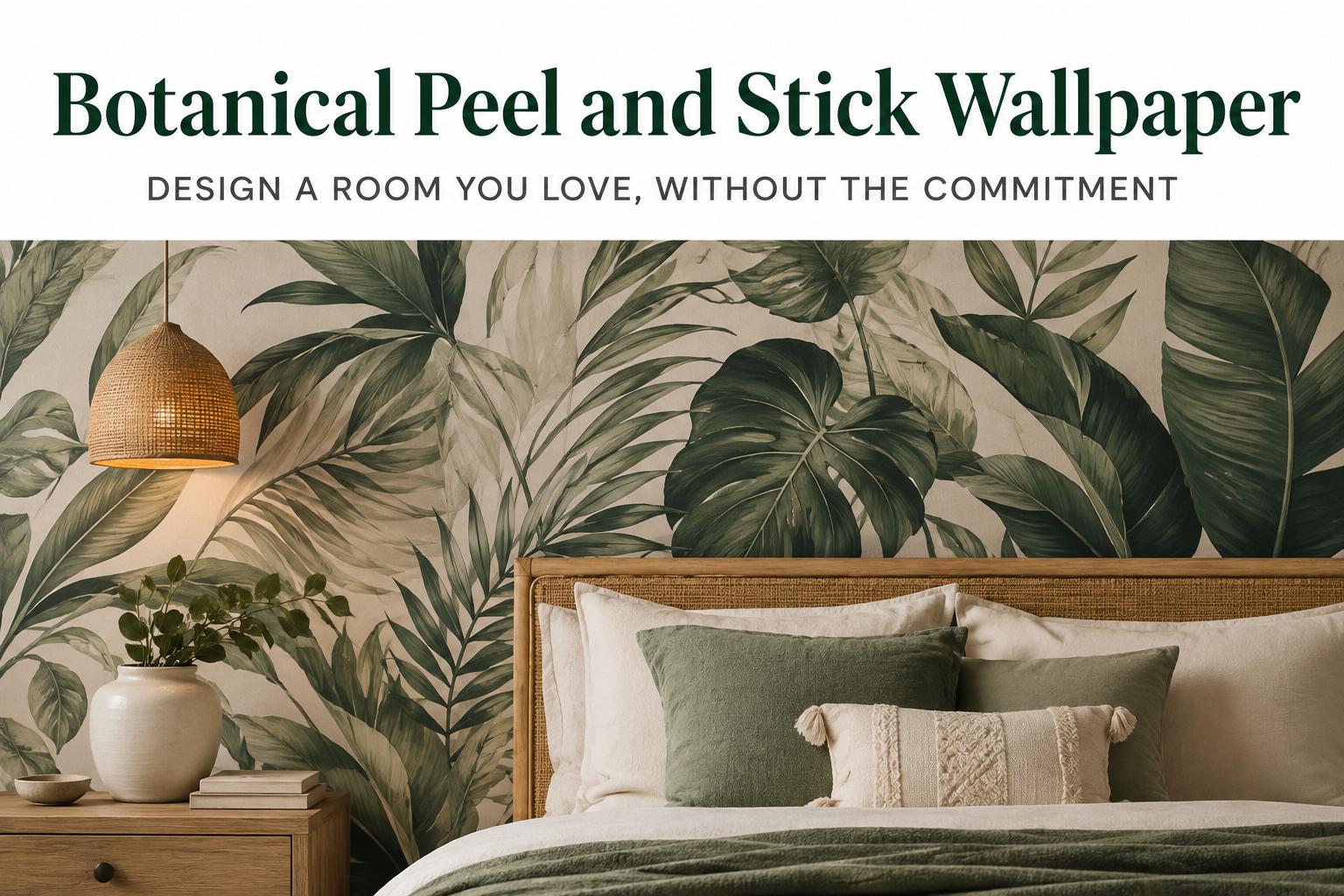
A leafy wall can do more than fill an empty space. Botanical peel and stick wallpaper gives a room an immediate point of view: calming, collected, a little wild, or quietly luxurious. Unlike a new sofa or a full renovation, it changes the atmosphere without asking you to live through a construction project.The best results come from choosing a print for the way a room is used, not only for the way it looks in a listing photo. Leaf scale, background color, wall dimensions, natural light, and surface condition all affect whether a botanical design feels like a polished backdrop or an overwhelming visual field. Here is how to make the choice with confidence.
What Botanical Peel and Stick Wallpaper Brings to a Room
Botanical wallpaper has range. Fine illustrated fronds can give an entryway a vintage conservatory feel, while oversized tropical leaves make a powder room, home office, or vacation rental bedroom feel deliberately designed. Delicate wildflowers soften a nursery or guest room. Moody foliage in deep green, charcoal, or navy can create a cocooning effect behind a bed or dining table.That flexibility is exactly why botanicals stay relevant. The subject is natural, but the styling can lean traditional, cottage-inspired, modern organic, maximalist, or coastal. A botanical print does not need to make the whole room feel themed. Pair it with clean-lined furniture, warm wood, woven textures, or simple linen bedding, and the wall becomes the layer that gives the space character.Peel-and-stick material makes that character more accessible. It is designed for DIY application on smooth, properly prepared walls, with no pasted-paper process or professional installation required. For renters and commitment-conscious decorators, that can be the difference between admiring a look and actually trying it.
Choose the Right Botanical Wallpaper Scale
The first decision is not color. It is scale. A beautiful print can feel completely different once it repeats across a wall.
Small-scale prints create a softer, layered look
Small leaves, vines, and closely spaced florals work well when you want texture without a strong focal point. They are especially useful in rooms with architectural details, open shelving, patterned upholstery, or several existing colors. A smaller repeat can make a compact powder room feel charming and enveloping, although it may read busier than expected in a bright, open room.Choose this direction for vintage botanical sketches, ditsy florals, delicate branches, and designs that should feel like a background rather than the main event.
Large leaves make a clear design statement
Oversized palms, banana leaves, gingko branches, and dramatic florals are made for walls that deserve attention. Think behind a bed, along a dining-room wall, at the end of a hallway, or behind a desk on video calls. Large-scale prints can also work surprisingly well in small spaces because they look intentional rather than cluttered.The trade-off is visibility. A bold repeat will show more of its personality, so it needs room to breathe. Keep nearby furnishings relatively simple, or repeat one or two colors from the wallpaper in pillows, art, or window treatments instead of introducing several competing patterns.
Medium-scale botanicals are the most flexible
For a living room, guest room, or open-plan space, medium-scale foliage is often the easiest place to start. It provides enough detail to feel decorative from across the room and enough restraint to live with every day. If you are unsure whether to cover one wall or an entire room, a medium-scale design generally gives you more options.
Start With the Room's Light and Existing Colors
A wallpaper image on a screen cannot show exactly how a color will respond to your home. Morning sun, warm bulbs, cool LEDs, neighboring paint colors, and flooring undertones can all shift the way a background reads.In a low-light bedroom or north-facing office, creamy, soft sage, pale blue, or warm blush backgrounds can help the room feel lighter. That does not mean dark wallpaper is off limits. Deep green botanicals and black-ground florals are excellent in rooms where you want mood, depth, and a more intimate feel. They are particularly effective on a single wall with lamps, brass accents, and lighter bedding or upholstery to create contrast.Look beyond the leaf color. A print with green foliage may carry warm tan, gray-blue, muted gold, or soft pink details that connect it to your furniture. Pulling from a secondary color often produces a more considered room than matching the obvious green exactly.Ordering a sample is the practical next step when color confidence matters. View it vertically on the intended wall, then check it in daylight and at night. A sample also lets you see the material texture and test adhesion on your specific surface before placing a made-to-order order.
Measure for a Custom Botanical Feature Wall
Botanical prints can be forgiving visually, but wallpaper sizing is not a place to guess. Measure the full width and height of the wall in inches, including areas behind furniture that will remain against the wall. Do not subtract for windows, doors, or outlets unless your ordering instructions specifically call for it. Extra material allows for trimming and helps preserve the design across the wall.Measure in more than one place. Walls are often not perfectly square, especially in older homes. Use the widest width and tallest height you find, and record those numbers carefully before ordering. For sloped ceilings, stairwells, alcoves, or walls with unusual cutouts, take a simple sketch with every measurement marked.Custom sizing is a meaningful advantage over standard rolls because it is produced for your dimensions rather than asking you to calculate how many generic rolls might work. Still, made-to-order wallcovering deserves a final measurement check. Because it is created specifically for your order, it may be non-returnable once production begins. Confirm the dimensions, design choice, and shipping details before you submit the order.
Where Botanical Peel and Stick Wallpaper Works Best
Smooth, clean, dry, fully cured walls are the best foundation for self-adhesive wallpaper. Fresh paint needs adequate curing time before installation, and heavily textured walls, peeling paint, dust, moisture exposure, or low-quality paint can affect adhesion and removal. If the surface is questionable, test a sample first rather than hoping the finished panels will behave differently.A botanical accent wall is a natural fit behind a headboard, crib, dining banquette, or entry console because furniture frames the pattern and makes the placement feel purposeful. For a home office, a leafy wall behind the desk gives virtual meetings a more finished background without redesigning the whole room. In a vacation rental, it can create a memorable photo moment in a bedroom, reading nook, or entry.Full-room coverage is another option, particularly with soft branches, small florals, or a light-ground print. A powder room, laundry room, nursery, or walk-in closet can handle more visual personality than a large, open living area. The right choice depends on whether you want the wallpaper to be a focal point or the atmosphere of the entire space.
Install With Patience, Not Pressure
Peel-and-stick wallpaper is DIY-friendly, but a calm setup matters more than speed. Clear the wall, clean it according to the product guidance, and give it time to dry completely. Gather a level, measuring tape, smoothing tool, sharp utility knife, and a stable step stool before unrolling the first panel.Start with a straight vertical guide rather than trusting a corner to be square. Apply the first panel gradually, smoothing from the center outward as you remove the backing a little at a time. Do not pull the material taut. Gentle handling helps prevent stretching and keeps the pattern aligned from panel to panel.If a panel lands slightly off, lift and reposition it carefully before pressing it down firmly. Work deliberately around outlets, windows, and trim, leaving final cuts until the panel is smooth and aligned. A second set of hands is helpful for tall walls, but the job is manageable for many DIY decorators when the wall is prepared and the first panel is level.
Give the Botanical Wall a Finished Look
Once the wallpaper is up, let the room support it rather than compete with it. A botanical design usually needs only a few companion elements: a solid-colored throw, a wood frame, a ceramic lamp, or a textured rug. Real plants can be a natural pairing, but they are optional. The wall itself already provides the greenery.For a more tailored look, repeat one shade from the print in the room's textiles and choose a contrasting neutral for larger pieces. For example, a sage-and-cream botanical can sit beautifully with oatmeal linen and walnut wood, while a dark tropical print becomes more refined with ivory bedding, black accents, and warm metal lighting.Choose the print that makes you pause when you enter the room, then give it the accurate measurements and smooth wall it deserves. A thoughtfully placed botanical wall can make an ordinary room feel personal long after the tools are put away.