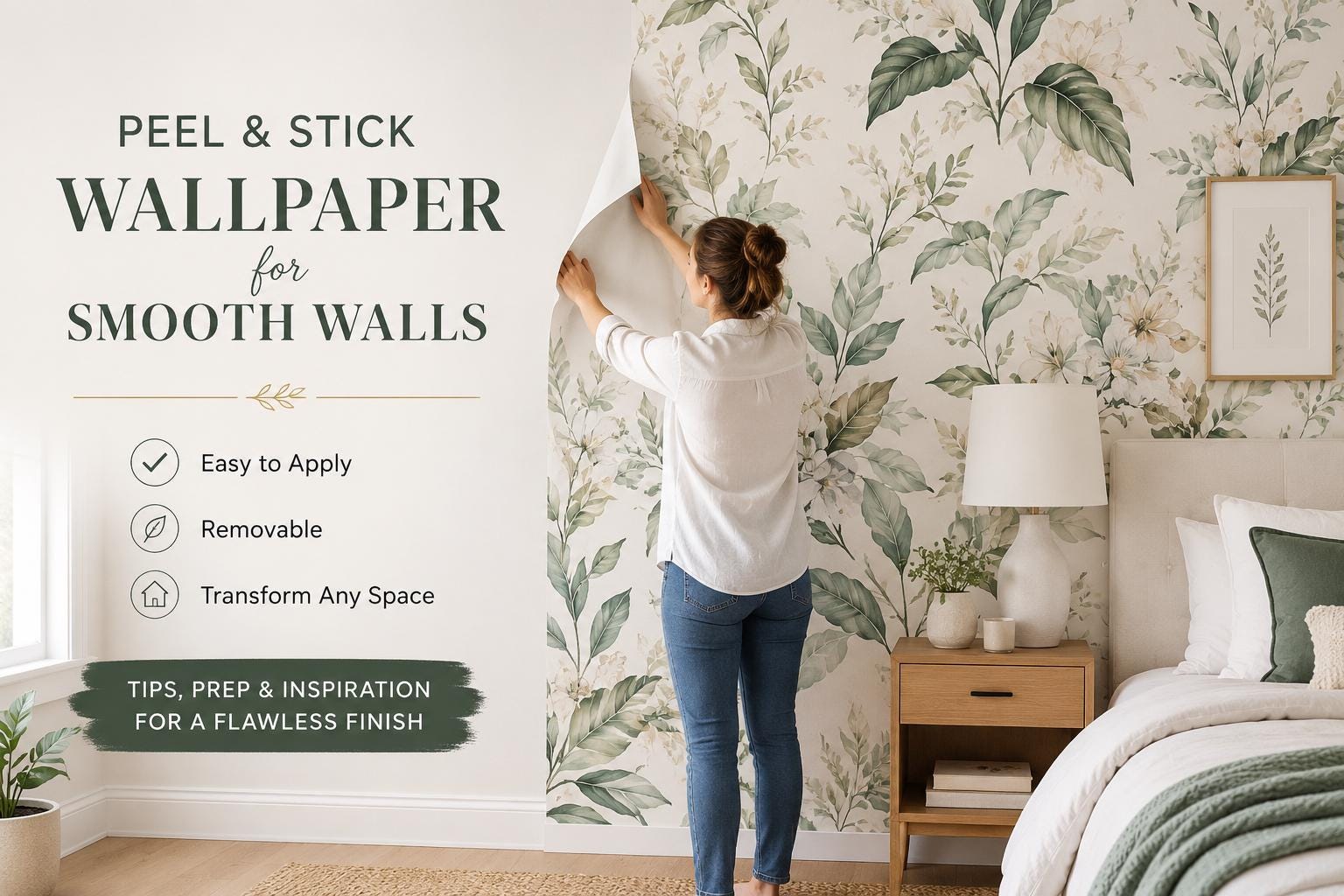
A dramatic botanical bedroom, a personalized nursery mural, or a polished home-office backdrop can begin with one very practical question: will it stick? When shoppers search for peel and stick wallpaper smooth walls, they are really looking for a wall treatment that feels elevated but does not demand paste, installers, or a permanent renovation. The answer depends less on your design choice and more on the surface underneath it.Peel-and-stick wallpaper is designed for clean, dry, properly prepared smooth walls. Give it that foundation, and a custom wallcovering can create the kind of visual shift that changes the whole room - whether you are defining a dining nook, softening a rental bedroom, or giving a child’s room a look that feels distinctly theirs.
Why Smooth Walls Matter for Peel-and-Stick Wallpaper
Self-adhesive wallpaper needs broad, consistent contact with the wall. On a smooth painted surface, the adhesive can lie flat and hold evenly across each panel. That helps the design look crisp, keeps seams aligned, and reduces the chance of edges lifting over time.Texture changes the equation. Orange peel texture, heavy knockdown, sand finishes, exposed brick, unfinished drywall, and pronounced plaster create tiny peaks and valleys. The wallpaper touches the high spots but cannot fully bond inside the low ones. It may still appear acceptable at first, but adhesion and the finished appearance become less predictable.That does not mean every wall must be perfectly flawless. Minor paint texture is often workable, especially for a smaller accent wall. But if you can feel a pronounced texture with your hand, see deep shadowing across the surface, or notice bumps through a sheet of paper pressed to the wall, prepare for a less reliable result. A sample is the best way to make that call before committing to a full made-to-order order.
How to Tell if Your Wall Is Ready
Start with a simple visual and touch test in good daylight. The wall should feel even, dry, and firmly painted, without flaking areas, loose drywall paper, cracks, or old adhesive residue. Run your palm over the surface. A smooth wall may have a little natural paint variation, but it should not feel gritty, deeply dimpled, or raised.Paint condition matters just as much as texture. Fresh paint needs time to fully cure before wallpaper goes up. A wall that feels dry after a day or two may still be releasing moisture or softening under pressure. Follow the paint manufacturer’s cure-time guidance, which is commonly several weeks, before applying a self-adhesive wallcovering.Avoid walls with ongoing humidity or moisture issues. Bathrooms with frequent steam, damp basements, and walls near an active leak are not ideal candidates. In a kitchen or laundry space, placement matters. A feature wall away from direct splashes and strong heat can be a beautiful choice, while the area immediately behind a range or sink calls for more caution.
The Sample Test Is Worth the Pause
A sample lets you check three things at once: color, material appearance, and adhesion on your particular wall. Place it in the actual room rather than judging it under a phone screen or in a different light. Morning sun, warm lamps, and cool overhead fixtures can all shift how a blush floral, deep navy celestial print, or warm neutral abstract pattern reads.For the adhesion test, apply the sample to a clean section of wall and let it sit according to the product instructions. Look for lifting around the edges, bubbles caused by surface texture, or paint that seems weak when the sample is removed. Testing is especially useful in rentals, newly painted rooms, and homes with older walls that have had several paint jobs.
Prep Smooth Walls Before You Apply
Wallpaper prep is not complicated, but it is the difference between a quick, satisfying project and an afternoon of avoidable adjustments. Remove outlet covers if you are comfortable doing so, move furniture back from the wall, and give yourself enough floor space to handle each panel without folding or creasing it.Clean the wall with a gentle, residue-free method appropriate for the paint finish. Dust, cooking film, hairspray, and cleaning-product residue can interfere with adhesion even when the wall looks clean. Let the surface dry completely. Do not apply wallpaper over a damp wall or immediately after washing it.Patch nail holes and small dents, sand those repairs smooth, then wipe away all sanding dust. If you have recently made a repair, make sure the patched and painted area has fully cured. Glossy paint can sometimes be more challenging than a standard eggshell or satin finish, so a sample test becomes particularly valuable there.Measure the wall height and width carefully, in more than one location if the space is older or visibly uneven. Walls are rarely as square as they look. Custom sizing gives you a more tailored fit, but accurate measurements are essential because made-to-order wallpaper is produced specifically for your selected dimensions and is generally non-returnable once production begins.
Applying Peel-and-Stick Wallpaper on Smooth Walls
The first panel sets the visual direction for the entire wall. Do not rely on a ceiling line, corner, or window trim as automatically level. Use a level to mark a true vertical guide where your first panel will begin. This small step prevents a pattern from drifting as you work across the wall.Start at the top, peel back only a manageable amount of the backing paper, and position the panel along your guide. Smooth it gradually from the center outward with a wallpaper smoothing tool or soft squeegee. Work in short sections, peeling more backing as you go. Pulling away all the liner at once can make the material harder to control, especially with a wide panel or a large mural.If a bubble appears, do not panic. Gently lift and reposition the panel before pressing it down again. Smooth walls make this process much more forgiving because the material is resting against an even surface. Match subsequent panels carefully at the seam, keeping the printed design aligned rather than forcing the outer edge to meet if the wall itself is slightly uneven.Trim excess material at the ceiling, baseboard, and corners only after the panel is fully smoothed and aligned. Use a sharp blade and a straight edge, changing blades as needed for a clean cut. Around outlets and switches, make small, controlled cuts rather than one large opening.
Choose a Design That Works With the Room
A smooth wall gives you the freedom to choose wallpaper based on mood rather than hiding structural problems. For a small entry or powder room, a high-contrast luxury-inspired pattern can deliver a memorable first impression. A soft watercolor botanical can make a primary bedroom feel settled and layered without adding visual weight.In a nursery or playroom, personalized names, whimsical safari scenes, stars, or illustrated maps can make the room feel intentionally designed around the child. For a home office, consider an abstract, city-inspired, or richly colored mural behind the desk. It creates a more finished video-call backdrop and gives the room a stronger identity without a full remodel.Scale deserves attention. Large mural elements make the biggest statement on an uninterrupted wall, while a dense small-scale print can suit a compact nook, closet, or accent area. If you are decorating a vacation rental, choose a design that photographs clearly and supports the feeling you want guests to remember. A distinctive wall can make an ordinary room more recognizable in listing photos.
When Peel-and-Stick Wallpaper May Not Be the Best Fit
Honest surface assessment protects both your time and your finished look. If your wall is heavily textured, actively damp, crumbling, or freshly painted, wait or address the surface first. Applying over those conditions may lead to visible texture, weak adhesion, or damage to already compromised paint when removed.Likewise, self-adhesive wallpaper is not a shortcut for a wall that needs repair. If seams, nail pops, major dents, or peeling paint are visible now, they are likely to remain visible beneath the wallpaper. A little prep gives your chosen design the clean canvas it deserves.For renters, removal is a major benefit, but paint condition still matters. Wallpaper removal is gentlest when the underlying paint was properly applied and remains well bonded to the wall. Test a sample in an inconspicuous area, and keep a note of your wall’s condition before installation for peace of mind.
Make the Wall Feel Personal, Not Temporary
The advantage of peel-and-stick wallpaper on smooth walls is not simply that it is easier to apply. It gives you permission to choose a room’s point of view. You can bring in oversized palms for a vacation-like bedroom, a moody celestial sky for a reading corner, or a custom name mural that makes a nursery feel ready for its newest resident.Take the extra time to test, measure, and prep before placing your order. Once the wall is ready, the installation becomes the enjoyable part: watching a blank surface become the detail everyone notices when they walk into the room.