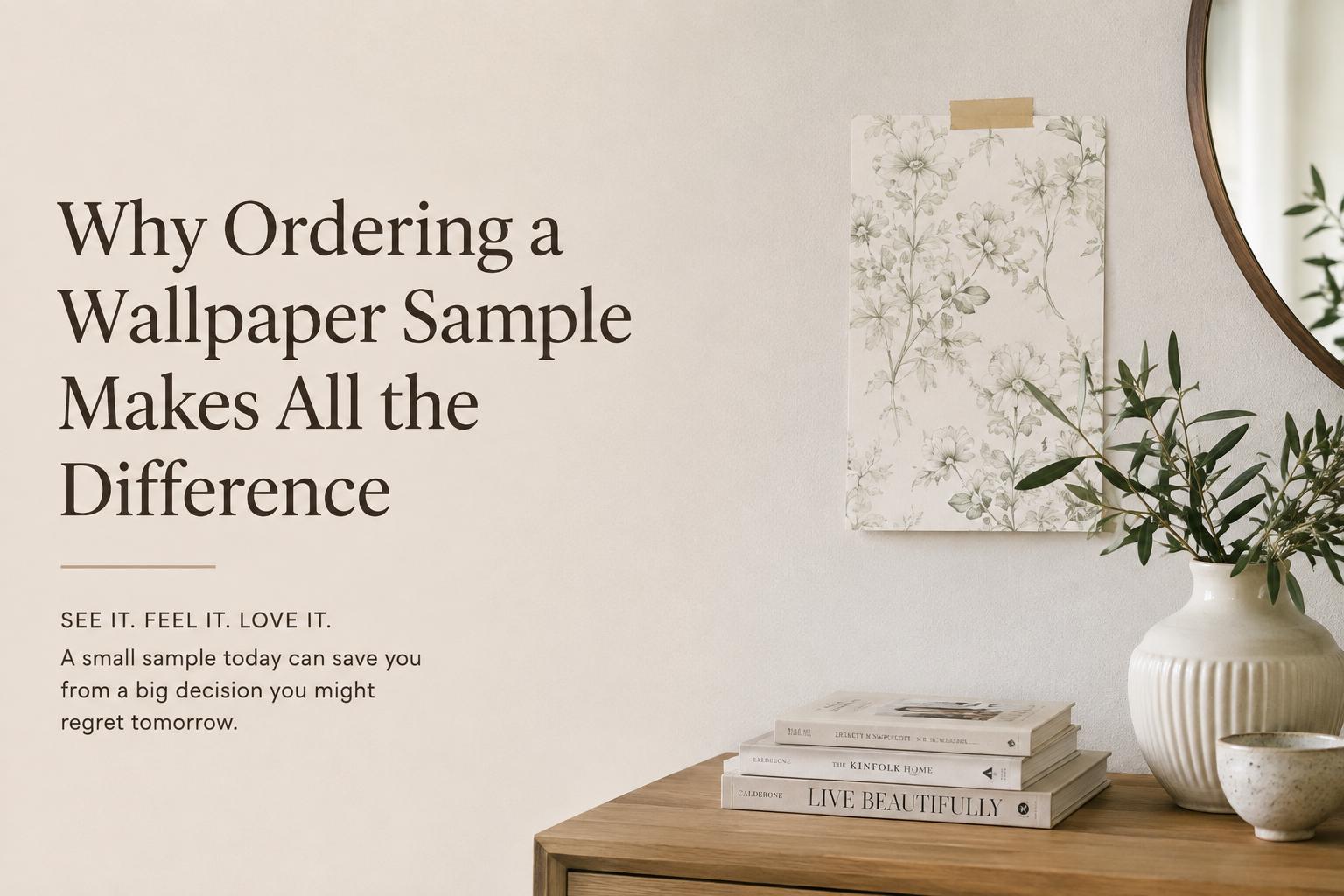
oody botanical print can look perfect on a screen, then feel unexpectedly dark beside your existing floors, trim, and furniture. Ordering a wallpaper sample before buying gives you a real-world view of the design in the room where it will live - not just in a carefully lit product photo.For peel-and-stick wallpaper and custom wall murals, a sample is more than a nice extra. It is the easiest way to test your color choice, get a feel for the material, and make sure your wall is a suitable surface before ordering a made-to-order design. A small sample can prevent a large, expensive mismatch while helping you commit to a room transformation you will love seeing every day.
What a Wallpaper Sample Can Tell You
A sample lets you evaluate the details that screens cannot reliably show. Every device displays color a little differently, and natural light changes throughout the day. A soft beige may lean warmer in a sunny bedroom, while a deep navy may look nearly black in a north-facing home office. Holding the wallpaper against your wall reveals how the design responds to your actual lighting, paint color, flooring, and surrounding decor.Texture matters, too. Peel-and-stick wallpaper has a clean, self-adhesive finish designed for smooth walls and DIY application. Seeing the material in person helps you decide whether it suits the mood you want. A delicate floral can feel airy and refined, a marble-inspired print can bring a polished hotel look to a powder room, and a bold safari scene can give a child’s room the playful visual energy it needs.Scale is another reason to sample first. A pattern that looks subtle online may have larger motifs than expected when viewed up close. Place the sample at eye level, then step back across the room. This quick test helps you see whether the pattern feels balanced for the wall, especially in smaller entryways, nurseries, and compact rental spaces.
How to Use a Wallpaper Sample Before Buying
The best sample test is simple: live with it for a few days. Place it on the intended wall and look at it in morning sun, afternoon light, and evening lamp light. If the wall is near a window, check for glare. If it is behind a bed or sofa, hold the sample beside the headboard, upholstery, artwork, or curtains rather than viewing it in isolation.You do not need to fully install a sample to make a color decision. Position it with painter’s tape so it is easy to move around the room. Try it vertically and horizontally if the print has a directional layout. For a mural, use the sample to assess color and material while reviewing the full design layout and custom dimensions separately.If you are choosing between two designs, test both at the same time. The comparison is often revealing. One pattern may complement your oak furniture, while another may work better with cool gray tile. A favorite online is not always the right one once it meets the rest of the room.
Check Your Wall Surface, Not Just the Pattern
Peel-and-stick wallpaper is made for smooth, clean, dry, properly cured surfaces. Your sample can help you assess whether your wall is ready, but it should not be treated as a guarantee on difficult surfaces. Freshly painted walls need adequate curing time, and heavily textured walls, dusty surfaces, peeling paint, damp areas, or walls with loose finishes may not provide the dependable adhesion you want.Run your hand across the wall before you order. If you can strongly feel orange-peel texture, uneven patches, or raised paint edges, the finished result may show those imperfections. A sample gives you a chance to see how the material lies against the wall and whether surface preparation is needed first.For renters, this step is especially useful. Peel-and-stick wallpaper can be a practical way to personalize a bedroom, office nook, or entryway without traditional paste, but the condition of the existing paint still matters. A well-prepared smooth wall makes removal and installation more predictable than a wall with old, flaking, or poorly bonded paint.
Color Testing for Different Rooms
The room’s purpose should shape how you judge a sample. In a bedroom, look at it in low evening light as well as daylight. A romantic vintage floral or celestial print may feel beautifully calming after sunset, while a high-contrast geometric can create more energy than you want near the bed.For a home office, test the sample beside your desk and monitor. Consider how it looks on video calls, particularly if the wall will be visible behind you. Soft abstract patterns and luxury-inspired neutrals can add depth without competing with your workspace, while a city map or personalized quote mural can create a backdrop with more character.In nurseries and children’s rooms, place the sample near the furniture you already own. Whimsical animals, jungle scenes, and pastel florals often look different beside natural wood cribs, bright toys, or white shelving. The goal is not to match every item exactly. It is to make sure the wallpaper creates a room that feels intentional rather than visually crowded.For vacation rentals and small commercial-style spaces, consider durability of the look as much as immediate impact. A design should photograph well, but it also needs to feel welcoming to a range of guests. A sample makes it easier to judge whether a statement print feels memorable and polished rather than overpowering.
Why Samples Matter for Custom-Sized Wallpaper
Made-to-order wallpaper is created for your selected dimensions, which is one reason a sample is worth ordering before you finalize your wall measurements and design choice. Once production begins, the product is tailored to your order rather than pulled from a generic shelf. That gives you more flexibility to create a fitted accent wall, full-room treatment, or personalized mural, but it also means the planning stage matters.Use the sample period to measure carefully. Measure the widest and tallest points of the wall, accounting for areas around windows, doors, sloped ceilings, built-ins, or trim. It is often better to allow a little extra material for alignment and trimming than to order too tightly. If you are styling a single focal wall, confirm exactly where the design will start and stop before choosing your final size.For personalized murals, double-check every custom detail before placing the full order. Names, initials, city references, and quotes become part of the finished artwork, so spelling, capitalization, and layout choices deserve a final review. The sample confirms the visual direction; careful order details make sure the finished mural feels personal for the right reasons.
A Sample Helps You Buy With More Confidence
A wallpaper sample is a small step that supports a much more confident design decision. It helps you move past the uncertainty of online color, assess your wall honestly, and choose a print with a clear sense of how it will feel in your space. That is especially valuable when you are considering a dramatic dark floral, a large-scale abstract, or an immersive mural that will define the room.At WallpaperCraftWorks, samples are a practical part of planning a made-to-order peel-and-stick project, not an afterthought. They give you time to see the design with your own lighting, your own furniture, and your own wall finish before you commit.The most satisfying wallpaper projects rarely begin with a rushed click. Let the sample sit in the room, notice it at different hours, and wait for the moment when the design stops feeling like an option and starts feeling like it belongs there.