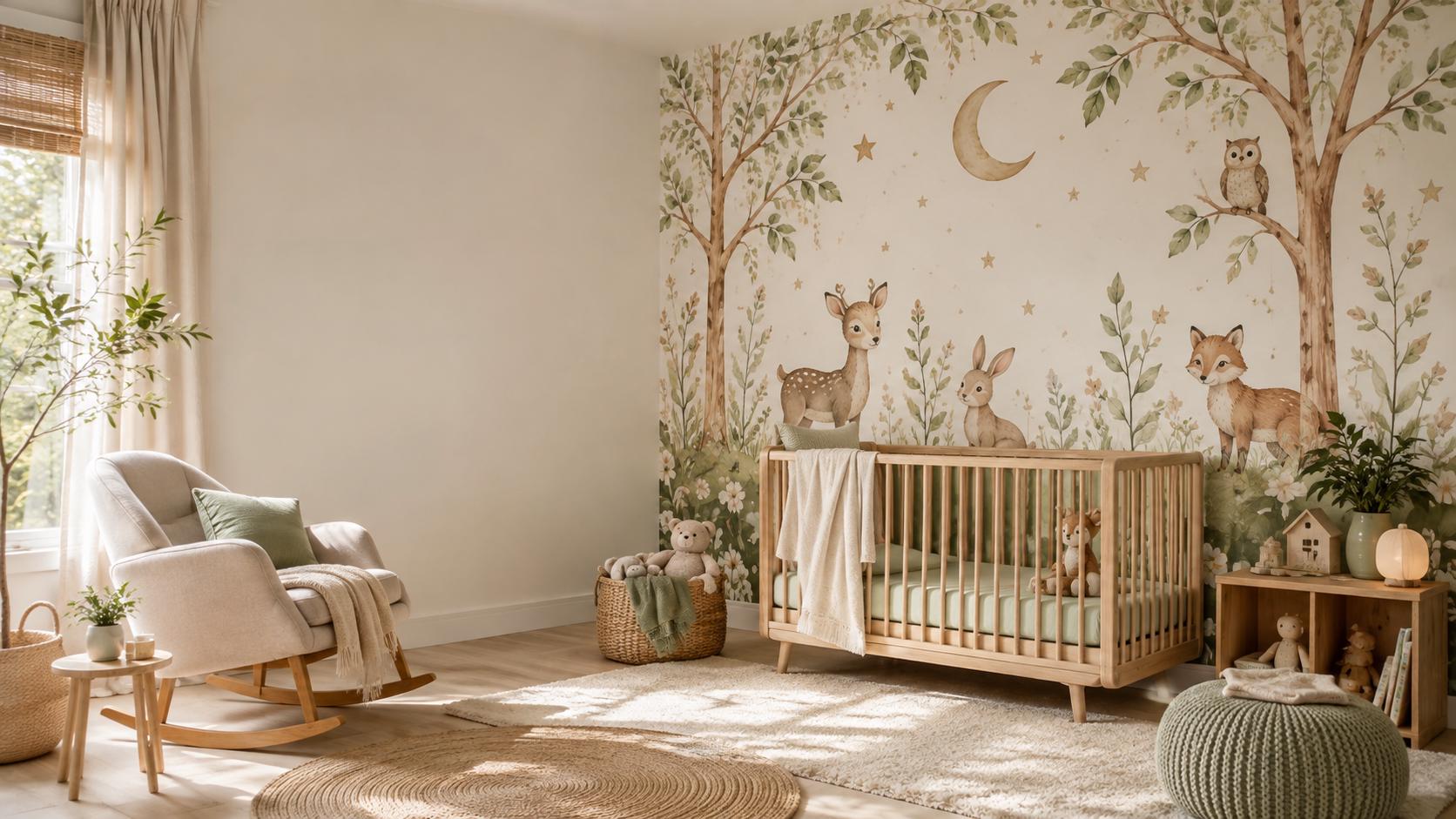
A nursery can change overnight once the wall behind the crib has a point of view. Nursery peel and stick wallpaper gives the room its visual anchor without asking you to commit to paste, installers, or a permanent renovation while you are still figuring out what parenthood looks like in your home.The best choice is not always the loudest pattern or the one that photographs best in a square online. It is the design that makes late-night feedings feel calmer, works with the furniture you already chose, and still feels sweet when a bassinet becomes a crib and a crib becomes a toddler bed.
Start With the Mood, Not the Theme
A nursery does not need to look like a catalog set. Before choosing animals, stars, florals, or a name mural, decide how you want the room to feel. Soft botanical wallpaper can make a small nursery feel settled and timeless. A sky, moon, or celestial print brings a quiet, dreamy quality to a room with simple wood furniture. Safari animals add playfulness without requiring every accessory to match.For a polished look, let the wallpaper carry one major idea and keep the rest of the room quieter. If the wall has illustrated jungle animals, choose solid bedding and a rug with a subtle texture. If you choose an airy floral, bring in one or two colors from the print through curtains, a changing pad cover, or framed art.Color matters more than theme in a room used at every hour. Warm neutrals, muted greens, dusty blues, soft peach, and buttery yellow can feel gentle without becoming bland. High-contrast black-and-white designs can be striking, especially in a modern nursery, but they create a bolder statement. There is no wrong direction, as long as the pattern supports the mood you want to live with.
Choose Nursery Peel and Stick Wallpaper With Room to Grow
Babies outgrow obvious baby decor quickly. A design with a little visual longevity can carry the room through the toddler years and beyond, saving you from a full redesign when their preferences begin to arrive loudly.Instead of selecting a print only because it says “nursery,” look for a pattern that can shift with the furniture. Delicate meadow flowers can become a lovely backdrop for a child’s reading corner. Whimsical animals can work just as well behind a big-kid bed. Celestial wallpaper can move from nursery to playroom without missing a beat.Personalized wallpaper is a more specific choice. A name, initial, or custom quote mural makes a beautiful focal wall and a memorable backdrop for early photos. It is especially fitting if you want the space to feel truly theirs from the beginning. The trade-off is simple: personalized designs are less flexible if the room will soon be shared by siblings or repurposed for guests. If you love the custom look but want more adaptability, consider an initial or a phrase that can remain relevant as your child grows.
Decide Which Wall Deserves the Attention
One accent wall is often enough. The wall behind the crib is a natural choice because it creates an intentional focal point without overwhelming a compact room. A wall behind a dresser or changing table also works well, particularly if the crib sits beneath a window or on a wall interrupted by doors.Full-room wallpaper can be beautiful in a larger nursery or a space with a soft, low-contrast repeat. Tiny florals, small stars, and delicate woodland scenes can wrap a room in personality while still feeling restful. In a smaller room, a large-scale mural may be better on one uninterrupted wall so the scene has room to breathe.Take a practical look at the wall before falling for a design. Count outlets, switches, windows, closet doors, and sloped ceilings. A made-to-order wallcovering can be sized for your wall rather than forcing you to piece together generic rolls, but accurate measurements are still essential. Measure the wall’s widest and tallest points, then double-check before ordering.
Samples Make a Better Decision Than a Screen Ever Can
A nursery palette can look entirely different between morning sun, afternoon shade, and warm bedside lighting. A sample lets you see the actual color and material texture in the room where it will live. It also gives you a chance to compare the print with paint, wood tones, fabric, and the white or cream finish of your crib.Place the sample on the intended wall for a day or two. Look at it during the times you are most likely to use the room. If the wallpaper will be near a window, notice how direct light affects the color. A pale sage may appear cooler in a north-facing room, while a warm blush can become more saturated in late-afternoon sun.Samples are also the smart way to test adhesion. Peel-and-stick wallpaper is designed for smooth, clean, properly cured walls. Fresh paint needs adequate curing time, and textured surfaces, dusty walls, peeling paint, or low-quality paint finishes can affect how the material performs. This is a decorative solution built for accessible DIY, but surface preparation still matters.
Prepare for a Calm, Accurate Installation
The appeal of peel-and-stick wallpaper is that you can transform a nursery without paste or professional installation. The most polished results come from slowing down at the beginning. Clean the wall, allow it to dry completely, and make sure it is smooth and free from loose paint or residue.Unroll the panels and check the design layout before removing any backing. Start from a straight vertical guide rather than assuming the corner of the room is perfectly square. Most homes have at least a little variation, and a true starting line helps the pattern stay aligned as you work across the wall.Apply the material gradually, smoothing as you go instead of exposing the entire adhesive backing at once. A second set of hands is helpful for wide panels, tall walls, or murals with details that need careful alignment. Work patiently around outlets and trim, then make final cuts only after the panel is positioned.If you are decorating during pregnancy or on a tight timeline, install well before the room needs to be finished. That gives you breathing room to correct a small alignment issue, complete other projects, and enjoy the space before the baby arrives.
Style the Wallpaper Without Overfilling the Room
Once the wall is up, resist the urge to add decor to every open surface. Wallpaper already supplies color, movement, and personality. Let it do that work.Choose a crib, dresser, and glider that sit comfortably with the pattern rather than competing for attention. Natural wood, warm white, light oak, and soft upholstered pieces pair easily with many nursery designs. If your wallpaper features a deep or saturated color, repeat it once in a pillow, curtain edge, or storage basket for a pulled-together look.A few functional layers make the room feel finished: blackout window treatments for sleep, a washable rug for comfort, closed storage for the daily clutter, and soft lighting for nighttime routines. These practical pieces matter as much as the decorative ones because a nursery is not just photographed - it is used.
What to Know Before You Order
Peel-and-stick wallpaper offers flexibility, but it is not a shortcut around every wall condition. It performs best on smooth interior walls in good condition. If your nursery has pronounced orange-peel texture, damaged drywall, newly painted surfaces, or walls that have adhesion issues, test a sample first and address the surface before committing to a full wall.Because custom-sized and personalized wallpaper is made to order, take time with measurements, layout, and design selection before placing your purchase. Made-to-order products generally cannot be returned simply because a color feels different in person or a measurement was entered incorrectly. Ordering a sample and measuring twice are small steps that protect a much bigger decorating decision.A nursery should feel personal, but it does not have to be precious. Choose the pattern that makes you pause when you walk past the doorway, prepare the wall with care, and let the finished space become part of the ordinary, beautiful routines ahead.