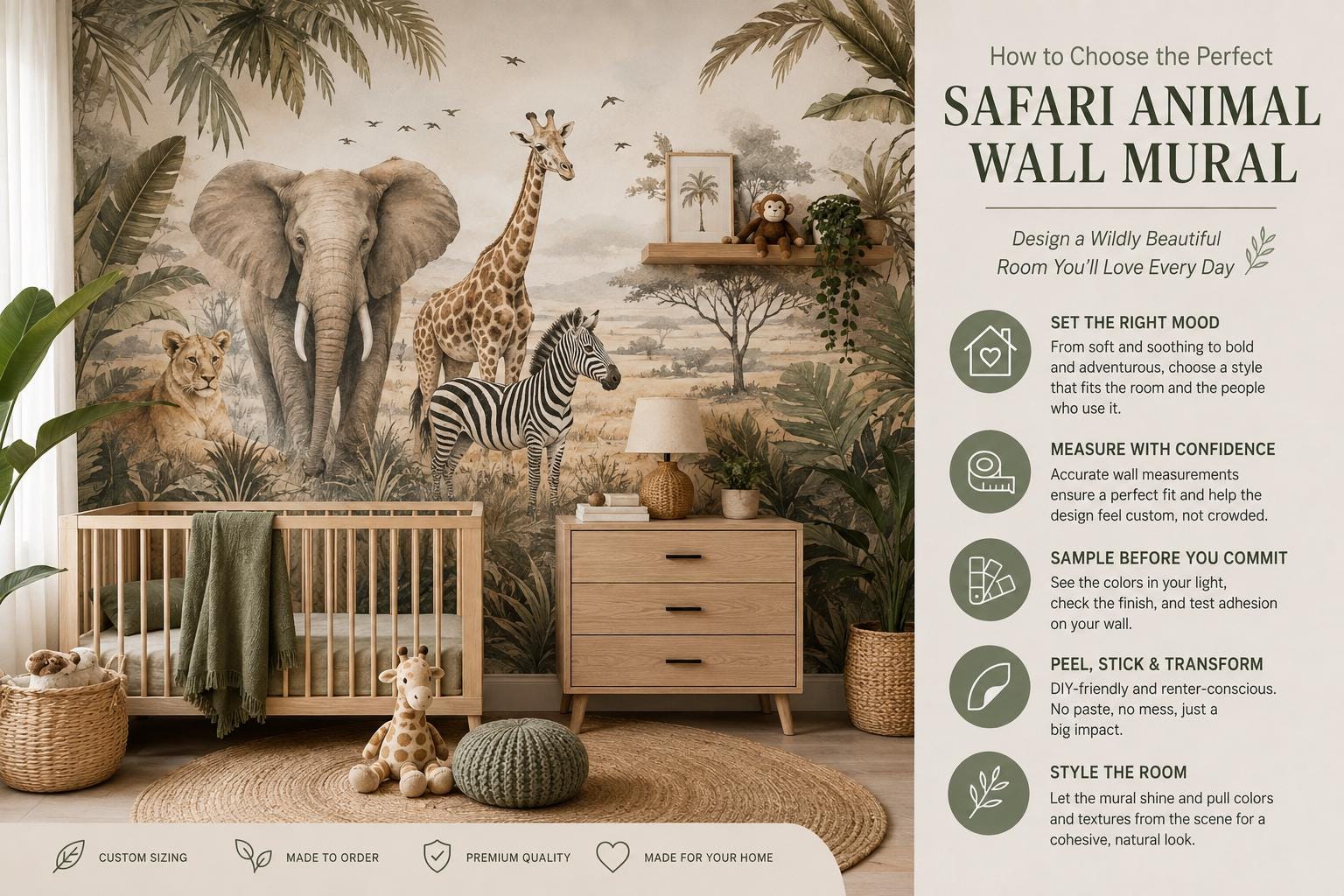
A blank wall can make a beautifully furnished room feel unfinished. A safari animal wall mural changes that quickly, bringing elephants, giraffes, zebras, jungle foliage, and wide-open savanna scenes into the space without adding another piece of furniture. It can be playful enough for a nursery, refined enough for a guest room, and memorable enough to give a vacation rental its own point of view.The best safari-inspired rooms do not rely on animal motifs alone. They balance scale, color, furniture, and wall placement so the mural feels intentional rather than theme-heavy. With made-to-order peel-and-stick material, you can create that high-impact look without paste, professional installation, or a permanent renovation.
Start With the Mood, Not Just the Animals
Safari design can look very different from one room to another. A softly painted scene with warm sand, misty green leaves, and illustrated animals creates a calm, storybook feeling. A high-contrast mural with dramatic palms and bold wildlife feels more energetic and graphic. The right choice depends on who uses the room and how you want it to feel after the wall is finished.For a nursery or toddler room, look for gentle colors and artwork with breathing room around the animals. Soft beige, dusty sage, pale blue, and warm clay work well because they stay easy on the eye during everyday routines. A mural with animals gathered among subtle foliage can feel whimsical without becoming visually busy.In a playroom, bolder color can work beautifully. Rich jungle greens, golden grasslands, and oversized animal illustrations bring movement to a room designed for imagination. Keep the surrounding furniture simple so the wall remains the main event.Adult spaces benefit from a more edited interpretation. Consider a sepia-toned savanna, a vintage-style wildlife illustration, or a mural where foliage and landscape are as prominent as the animals. Paired with natural wood, woven accents, linen bedding, or black metal details, safari imagery can feel collected and design-forward rather than childish.
Choose the Right Wall for a Safari Animal Wall Mural
A mural has the most impact when it has room to be seen. The wall behind a crib, bed, desk, dining banquette, or sofa is often the natural choice because the furniture already creates a visual anchor. It also helps frame the scene without asking the mural to compete with every wall in the room.Before measuring, think about interruptions. Doors, large windows, built-in shelving, angled ceilings, and wall-mounted televisions can break up an elaborate composition. That does not automatically rule out the wall, but a simpler pattern or landscape-style scene may be more forgiving there. A broad, uninterrupted wall lets large-scale giraffes, elephants, and trees read clearly from across the room.For a smaller bedroom or nursery, one accent wall is usually enough. Covering every wall in a dense jungle scene can make a compact space feel enclosed. On the other hand, a softly colored mural with an open sky or pale background may work as a full-room treatment when you want a more immersive effect.Home offices and rental properties are especially good candidates for a statement mural. Behind a desk, it makes video-call backgrounds more personal. In a guest room or vacation rental, it gives visitors a detail they will remember and photograph, which can make a space feel more considered than a standard neutral room.
Get the Scale Right Before You Order
The most common mural mistake is ordering based on a rough wall estimate. A few inches matter, particularly with made-to-order panels and artwork that includes large animals or a centered scene. Measure the full width and height of the wall in inches, then measure again. Include the wall area behind furniture, even if a crib, headboard, or console table will cover part of the lower design.It is wise to add a small amount of extra material to your measurements. Walls are not always perfectly square, and a little overage gives you room to trim neatly at the edges. Measure at more than one point across the wall if possible, especially in older homes where ceiling lines and corners can vary.Scale matters inside the artwork too. On a narrow wall, an enormous elephant face or extra-large giraffe may feel cropped and cramped. On a wide living room wall, tiny animal illustrations can disappear once furniture is in place. A custom-sized mural helps the design feel tailored to the room instead of looking like a generic roll forced to fit.If you are unsure about color, finish, or how a design will read in your lighting, order a sample first. Daylight, warm lamps, and cool overhead lighting can change the appearance of greens, creams, and earth tones. A sample also lets you see the material texture and test adhesion on your specific wall surface before committing to a full mural.
Build the Room Around the Mural
Once the mural is chosen, you do not need to fill the room with matching animal decor. In fact, too many themed accessories can make the space feel less polished. Let the wall carry the story, then use the rest of the room to support its colors and textures.Pull two or three shades from the mural for practical pieces such as curtains, bedding, a rug, or storage baskets. For example, a sandy backdrop can connect to oat-colored linen and light wood. Deep green leaves can be echoed in a throw pillow or a painted dresser. A small amount of black can tie in zebra stripes or graphic linework without taking over the room.Natural textures are an easy fit: rattan, cane, jute, woven cotton, oak, and warm leather all complement safari scenes. In a child's room, choose durable versions of those materials, such as washable rugs, soft fabric bins, and rounded wood furniture. In an adult bedroom, a woven pendant, textured throw, and simple upholstered bed can make the mural feel elevated.There is also room for contrast. A clean-lined white desk can sharpen a lush jungle mural in a home office. Brass lighting can add a subtle luxe note to a vintage wildlife scene. The goal is not to recreate a lodge in every detail. It is to give the mural enough support that it looks like a deliberate part of the interior.
Peel-and-Stick Installation Works Best on the Right Surface
Peel-and-stick wall murals are designed to make a dramatic refresh feel approachable, but surface prep still matters. For the strongest results, apply the material to a smooth, clean, dry, fully cured painted wall. Fresh paint needs adequate curing time before installation, because paint that still releases moisture can affect adhesion.Textured walls, heavily textured orange-peel finishes, dusty surfaces, peeling paint, and walls with old wallpaper underneath may not provide a reliable bond. The material can only adhere as well as the wall surface itself. If paint is loose or flaking, address that first rather than expecting the mural to hold it in place.Take your time with panel alignment. Begin at the top, keep the first panel straight, and smooth gradually as you work downward. Rushing can create bubbles, crooked seams, or artwork that drifts across the wall. A second set of hands is useful for larger panels, especially when placing a full-width design over a bed or crib wall.For renters, peel-and-stick material offers a more flexible alternative to pasted wallpaper, but removal results can vary with wall condition, paint quality, and prior surface preparation. Use care during installation and removal, and test a sample when you have concerns about your particular paint finish.
A Thoughtful Choice for Rooms That Need Personality
A safari mural is more versatile than it first appears. It can become the backdrop for sleepy bedtime stories, a cheerful workspace, a polished guest room, or a rental bedroom with a distinct identity. The trade-off is that a mural makes a clear style statement, so it pays to choose a design you will enjoy seeing every day rather than selecting the loudest option in the moment.At WallpaperCraftWorks, custom sizing and sample ordering make that decision more comfortable. You can check the color in your own room, confirm the wall is suitable, and order a mural sized for the space you actually have. When the design, wall, and room mood work together, the result is not simply animal-themed decor. It is a wall that gives the entire room a reason to feel finished.