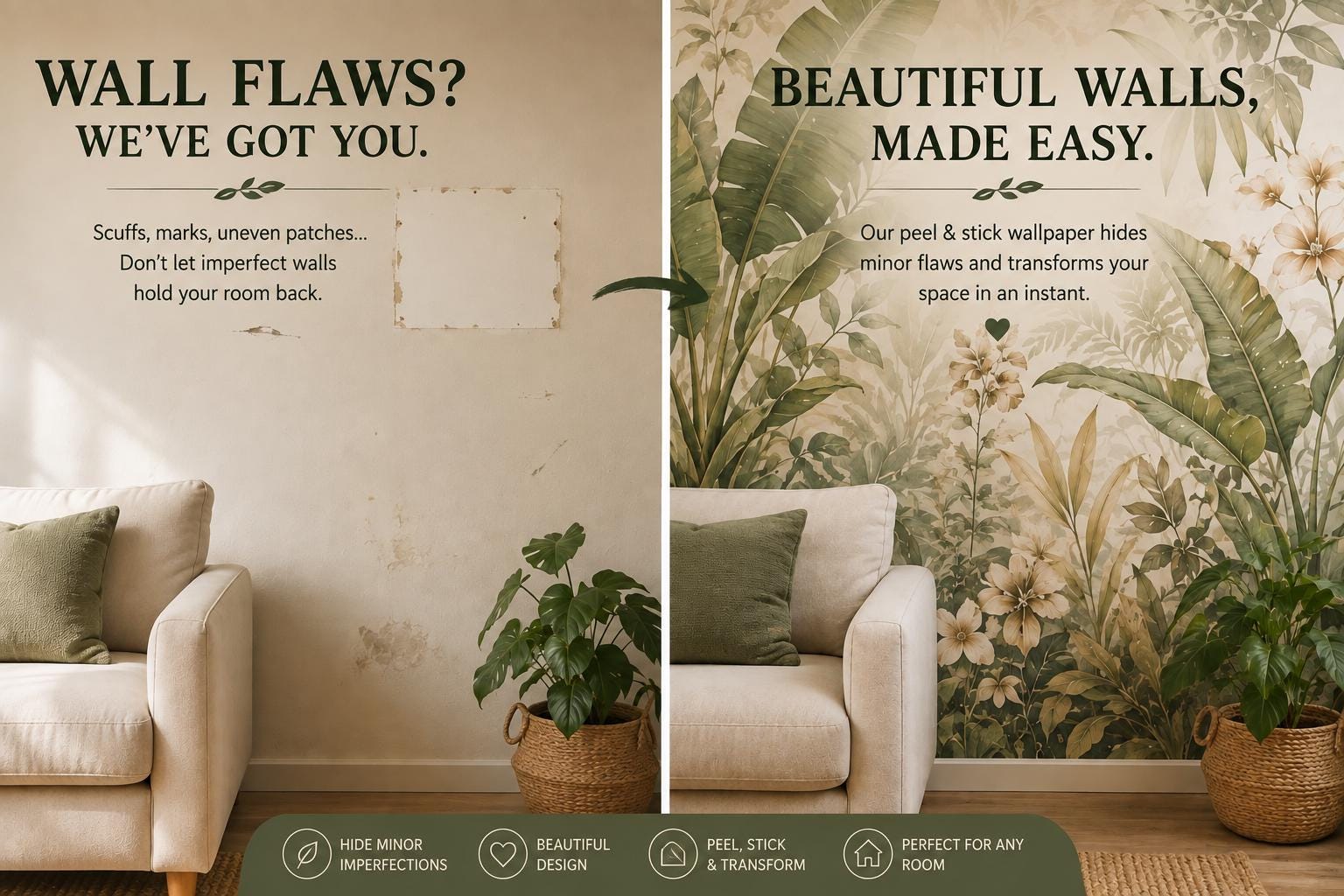
small scuff beside the sofa is easy to ignore. The uneven patch left by an old picture frame, a faded paint touch-up, or a wall with faint texture can make an entire room feel unfinished. So, can wallpaper hide wall flaws? Often, yes - but peel-and-stick wallpaper works best as a beautiful finishing layer, not a substitute for repairing a damaged wall.The good news is that the right pattern can shift attention away from minor cosmetic imperfections while giving the room a completely intentional look. A botanical print can soften a few subtle paint inconsistencies. A mural can turn a plain home office wall into a focal point. A patterned nursery wall can make small visual distractions disappear into a playful, polished design. The key is knowing what to cover, what to fix first, and how to prepare the surface for a smooth result.
Can Wallpaper Hide Wall Flaws or Just Cover Them?
Wallpaper can visually disguise many minor flaws because it adds color, pattern, and texture over the wall. Rather than drawing the eye to a faint stain or a mismatched paint sheen, a well-chosen design gives the eye somewhere better to land.Peel-and-stick wallpaper is especially helpful when you want a high-impact refresh without repainting an entire room or committing to traditional pasted wallpaper. It can conceal light cosmetic issues and create a custom-looking accent wall in a bedroom, entryway, rental, nursery, or vacation rental. But because the material sits directly against the wall, it cannot flatten a surface that is physically uneven.Think of wallpaper as a tailored outfit, not heavy-duty construction material. It can make a wall look far more refined, but pronounced dents, crumbling drywall, peeling paint, and deep seams may still show through. In some cases, they can also weaken adhesion.
Wall Flaws Peel-and-Stick Wallpaper Can Often Disguise
Minor surface issues are the best candidates for wallpaper. A matte or patterned design is generally more forgiving than a pale, solid, or glossy finish because pattern variation naturally breaks up the visual field.Wallpaper may help disguise light scuffs, old paint touch-up marks, faint discoloration, small nail holes that have been properly filled, and slight variations in wall color. It can also make a subtle orange-peel texture less noticeable, particularly when the design has movement, detail, or layered color.Design choice matters. A dense floral, vintage botanical, abstract print, celestial sky, or safari scene has enough visual interest to redirect attention from tiny inconsistencies. A personalized map or name mural can do the same by making the wall feel purposeful and specific to the room.For a wall with mild texture, order a sample before committing to a full custom order. Place it in the room, view it in morning and evening light, and run your hand over the edges after it has had time to adhere. A sample helps you assess both color confidence and how the material responds to your particular surface.
Flaws You Should Repair Before Hanging Wallpaper
Some damage should be addressed before installation, even if you are choosing a busy pattern. Peel-and-stick wallpaper is designed for smooth, clean, dry walls. If the surface underneath is unstable, the finished wall may look uneven or the panels may not stay securely in place.Repair deep dents, gouges, cracks, raised drywall tape seams, loose joint compound, and holes larger than a standard nail hole. Sand down rough patches after filling them so the surface feels level to the touch. If you can clearly feel an edge with your fingertips, there is a good chance you will see it through the wallpaper in certain lighting.Peeling or flaking paint also needs attention. Remove anything loose, patch as needed, sand the area smooth, and make sure the wall is fully cured and clean before installation. Wallpaper should not be asked to hold failing paint to the wall.Moisture stains deserve a closer look, too. A faint old mark that has been sealed and fully dried may be cosmetic. A current water stain, soft drywall, mildew, or recurring condensation points to a moisture issue that needs to be fixed before decorating. Covering it may make the wall look better for a while, but it will not solve the cause.
Texture, Glossy Paint, and Other Surface Considerations
Wall texture is where expectations matter most. Light orange-peel texture can sometimes work with peel-and-stick wallpaper, especially with a detailed pattern. Heavy texture, pronounced knockdown texture, brick, unfinished plaster, and textured paneling are less reliable. They create gaps beneath the adhesive and can leave the wallpaper looking bumpy.Very glossy paint can also be challenging because it may not provide the ideal surface for adhesion. A clean, smooth wall with eggshell, satin, or properly prepared paint is usually a better starting point. Freshly painted walls should be allowed to cure fully according to the paint manufacturer's guidance before wallpaper is applied.If your wall has a few questionable areas, do not rely on a photograph alone. Look across the wall from the side with a lamp on. Side lighting reveals raised edges, dips, and texture far more clearly than straight-on daylight. This simple check can tell you whether a quick patch-and-sand job will make the difference.
How to Prep a Flawed Wall for a Better Finish
Preparation does not need to become a full renovation project. For most cosmetic wall issues, a little focused work creates a much cleaner backdrop for your new design.Start by removing hooks, hardware, outlet covers, and anything that will interrupt installation. Fill small holes and shallow divots with spackle, let it dry, then sand until the patch is smooth. Wipe away sanding dust and clean the wall with a gentle, residue-free method. The surface should be dry before you begin.Check for raised paint drips, old adhesive residue, or rough edges around patched areas. These details are easy to miss before hanging wallpaper, yet they can create visible bumps once a panel is in place. Taking ten extra minutes here is usually more valuable than trying to press out a problem later.Before ordering, measure the full width and height of the wall carefully, including any areas around doors, windows, or sloped ceilings. Custom sizing helps you plan the layout around the room rather than forcing a generic roll to fit. For an accent wall, consider where the first panel will begin and where the pattern will be most visible from the doorway.
Choose a Design That Works With the Wall You Have
If your wall is not perfectly flawless but is smooth and structurally sound, choose a design that is forgiving by nature. Medium-to-dark colors, layered motifs, and all-over patterns tend to conceal minor visual variation better than stark white backgrounds or clean-lined geometric designs with large open spaces.That does not mean you have to sacrifice your style. A dark, moody celestial mural can bring depth to a bedroom. Soft floral wallpaper can make a nursery feel finished without looking overly formal. An abstract print can introduce a modern, artful mood in a home office while taking attention away from a few small wall imperfections.Large-scale murals are often a strong option for a wall with minor flaws because the image creates a clear focal point. Just remember that very light murals with broad areas of sky, cream, or pale color can be less forgiving than designs with richer detail. Requesting a sample is the most practical way to see how a color palette and material texture will feel in your own space.
When Wallpaper Is Not the Right Fix
Wallpaper is not the best answer for walls with active moisture, major cracking, extensive texture, or unstable paint. Those conditions call for repair first. Likewise, if you are trying to hide a significant bowed section of drywall or a large unpatched hole, wallpaper will follow the shape underneath rather than erase it.There is also a difference between removable and effortless. Peel-and-stick wallpaper makes a dramatic decorative update more approachable, but careful alignment, a clean surface, and patient application still matter. Made-to-order wallpaper is created to your selected dimensions and design, so measuring, sampling, and surface prep are smart steps before purchase.A wall does not need to be brand-new to become a beautiful backdrop. It simply needs to be smooth, clean, dry, and ready for a design that gives the room a point of view. Fix the flaws that affect the surface, then let a pattern you genuinely love do what great decor does best: make the whole space feel intentionally yours.