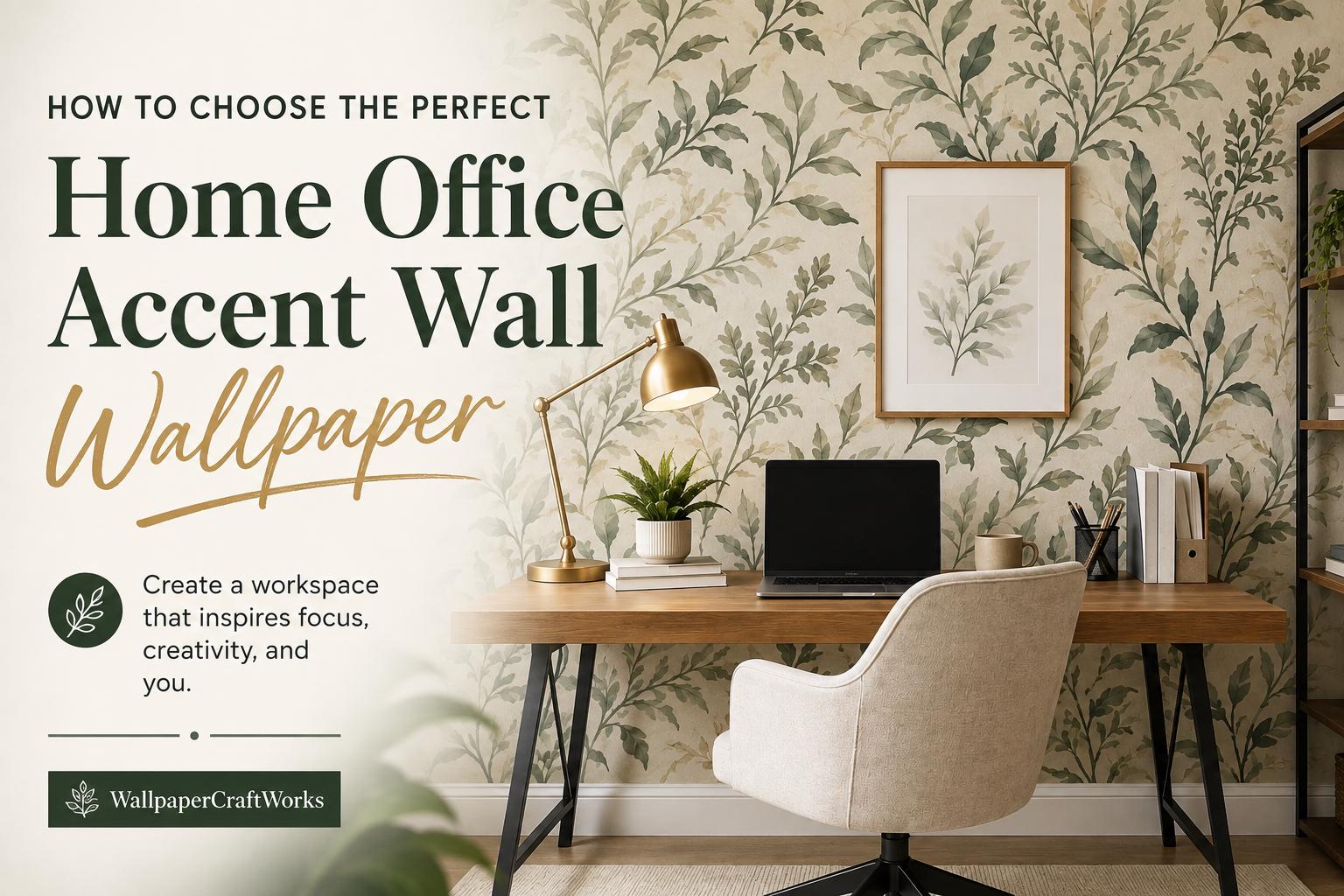
A blank wall behind your desk can make even a well-organized workspace feel unfinished. The right home office accent wall wallpaper gives your work zone a visual anchor, creates a polished backdrop for video calls, and makes a spare bedroom corner or dedicated study feel intentional rather than temporary.This is one room where wallpaper does more than decorate. It can help separate work from the rest of home life, especially when your desk sits in a living room, guest room, or open-plan space. With peel-and-stick wallpaper, that shift does not need to involve pasted paper, professional installation, or a permanent renovation.
Start With the Wall You See Most
For most home offices, the best accent wall is the one directly behind the desk or the wall you face while working. A wall behind you makes an immediate statement on camera and gives shelving, framed art, or a simple desk a more finished setting. A wall in front of you can be equally effective when you want the pattern to create a motivating, personal view during the workday.The choice depends on how you use the room. If your background appears in frequent meetings, choose a design that feels interesting without competing with your face on screen. If the office is mainly for focused solo work, you can be more expressive with color, scale, and pattern.Avoid choosing a wall simply because it is the largest. A narrow wall between windows, the alcove around a built-in desk, or the wall inside a converted closet office can become the strongest design moment. Accent walls work because they concentrate visual impact in one deliberate place.
Choose Home Office Accent Wall Wallpaper by Mood
Your office does not need to look corporate to help you work well. The most successful designs support the feeling you want when you sit down at your desk.
For calm focus, use organic pattern and softened color
Botanical sketches, quiet florals, gentle arches, and muted leafy prints bring movement to a room without making it feel busy. Sage, warm beige, dusty blue, soft terracotta, and creamy neutrals are especially easy to pair with wood desks, woven storage, and warm metal lighting.A small-scale botanical can make a compact office feel settled and layered. If your office has limited natural light, look for a lighter ground color rather than a dark print that may make the room feel more enclosed.
For a creative studio, choose confident contrast
Abstract wallpaper, graphic brushstrokes, playful geometrics, and colorful murals can energize a room used for design work, writing, crafting, or side projects. The key is balance. Let the accent wall carry the personality, then keep the desk surface and remaining walls relatively simple.A high-contrast pattern is particularly effective behind a streamlined desk in white, black, oak, or walnut. It gives a basic work setup a more collected, design-forward look without requiring new furniture.
For a refined workspace, favor depth over clutter
Luxury-inspired patterns, tonal marble looks, deep navy celestial scenes, and understated metallic-style motifs can make a home office feel more established. These designs work beautifully in libraries, studies, executive-style workspaces, and guest rooms that need to serve two purposes.Darker wallpaper can feel dramatic and polished, but it works best when the room has enough lighting and some contrast from lighter furnishings. Add a task lamp, a light-colored chair, or pale curtains so the office still feels comfortable during long work sessions.
Get the Scale Right for Your Room
Pattern scale changes how a home office reads. Large murals and oversized florals create a strong focal point, which is ideal for one uncluttered wall. They can make a small office feel more intentional, not necessarily smaller, as long as the design has some breathing room and the furniture does not cover every detail.Smaller repeats are often easier around bookcases, monitors, filing cabinets, and floating shelves. They add texture without requiring a completely open wall. If you have a desk with dual screens or a large storage unit, a medium or small-scale design usually stays visible in the areas around it.Consider the camera view, too. Tiny high-contrast patterns can sometimes appear visually active on video. A mural, a tonal print, or a larger repeat tends to create a cleaner background from a distance.
Make Color Work With What You Already Own
Wallpaper does not need to match every item in the room. It should connect with two or three existing elements, such as the desk finish, chair upholstery, curtains, rug, or artwork. That is enough to make the office feel pulled together.If you already own black office furniture, wallpaper with warm cream, rust, green, or blush tones can soften the look. Wood furniture pairs naturally with botanical, vintage-inspired, and earthy abstract prints. For white desks and built-ins, nearly any palette can work, but adding a richer wallpaper behind them prevents the room from feeling flat.Samples are especially useful here. Screen colors can shift depending on lighting, wall paint, and nearby materials. Viewing a sample in your office lets you see the actual color, material texture, and adhesion before committing to a custom-sized order. Check it in morning light, evening light, and with your desk lamp on.
Measure for a Custom-Fit Accent Wall
A home office accent wall looks its best when the wallpaper is sized for the actual wall rather than treated as a one-size-fits-all roll. Measure the widest point of the wall and the full height from floor to ceiling, even if furniture will cover part of it. Include any spaces around built-ins, windows, or doors that you plan to wallpaper.If your wall has an unusual shape, sloped ceiling, or obstacle such as a thermostat, take clear measurements before ordering. Custom sizing makes planning easier, but accuracy matters because made-to-order wallpaper is produced specifically for your dimensions. For that reason, custom orders are generally non-returnable once production begins.It is smart to measure twice and write the dimensions down in inches. Do not rely on a room listing, old construction plans, or an estimate based on furniture size. A few extra minutes at this stage helps create a cleaner final result.
Know When Peel-and-Stick Is the Right Fit
Peel-and-stick wallpaper is designed for accessible DIY decorating on smooth, clean, properly prepared walls. It is an appealing option for homeowners who want a high-impact update without paste and for renters who want a more flexible way to personalize their space.Surface condition matters. Freshly painted walls need adequate curing time before application, and heavily textured walls, dusty surfaces, peeling paint, or walls with moisture issues may not provide the adhesion you want. If you are unsure, ordering a sample first is the practical move.Before installation, clean the wall and let it dry fully. Work slowly from the top down, smoothing as you go rather than pulling away a large amount of backing all at once. A second person can make larger panels easier to position, particularly on tall walls or around windows.
Style the Office Around the Finished Wall
Once the wallpaper is installed, resist the urge to fill every inch of the room with more pattern. Let the accent wall do its job. A clean-lined desk, a comfortable chair, one or two shelves, and lighting that suits your work routine are often all it takes.For a more personal office, bring in details that echo the wallpaper without copying it exactly. A brass lamp can pick up warm tones in a celestial print. A ceramic planter can repeat the green from a botanical design. A simple framed quote, map, or personalized detail can make the workspace feel more like yours.WallpaperCraftWorks designs are made to help a work-from-home setup feel considered, whether you are creating a quiet study, a colorful creative corner, or a polished background for your next video call. Choose a wall and a pattern that make sitting down to work feel a little more like arriving somewhere you want to be.