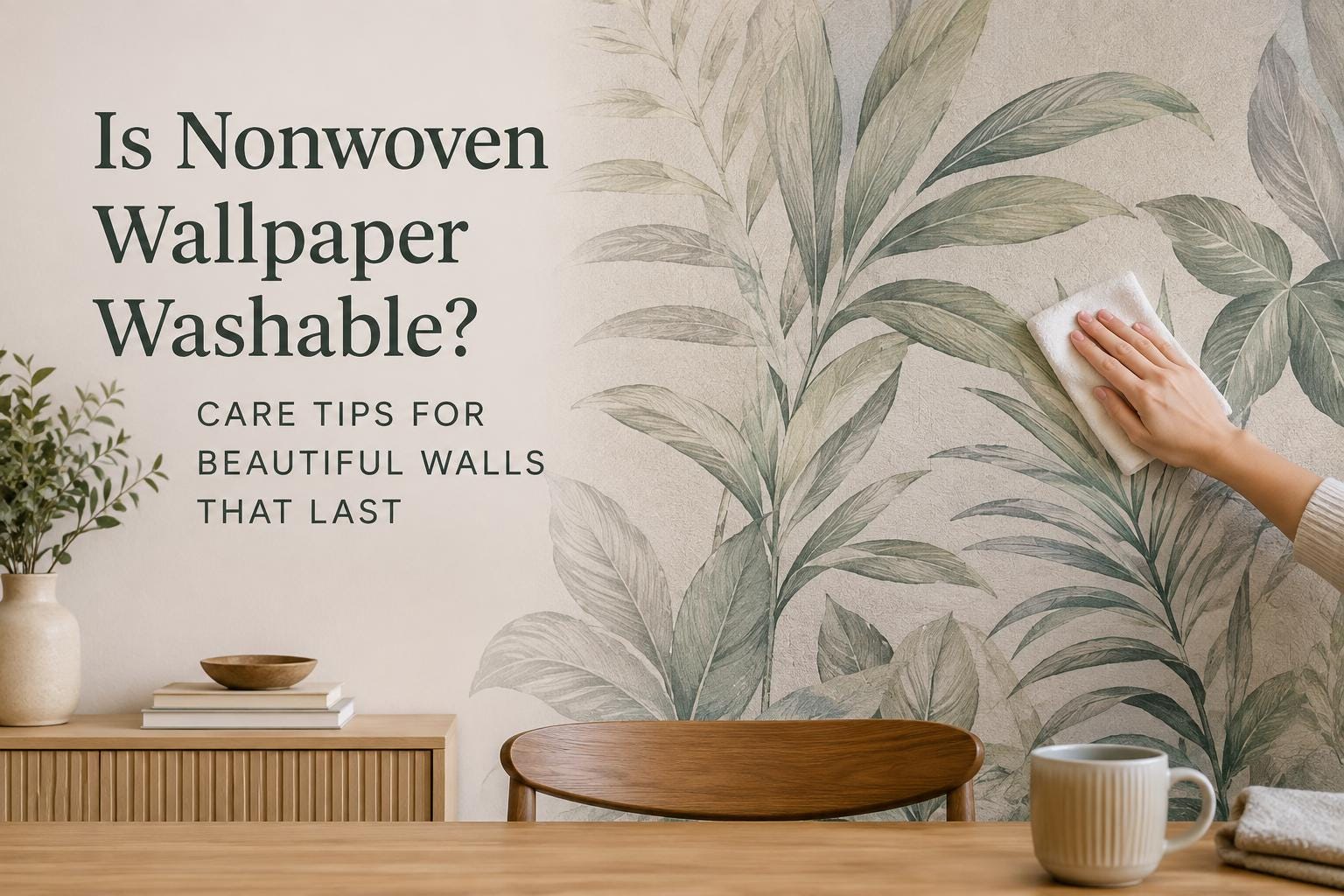
A botanical accent wall behind a dining table, a safari print in a busy playroom, or a moody mural in a home office all have one practical question attached: is nonwoven wallpaper washable? Usually, it can handle light, careful cleaning, but the most accurate answer depends on the wallpaper’s surface coating and the manufacturer’s care instructions.That distinction matters. “Nonwoven” describes the material structure of the wallpaper, often a blend of natural and synthetic fibers designed to be dimensionally stable and easier to hang than many traditional papers. It does not automatically mean the printed face is ready for repeated scrubbing, heavy moisture, or household cleaners. A wallcovering can be beautiful and practical without being indestructible.
Is Nonwoven Wallpaper Washable in Real Homes?
Many nonwoven wallpapers are labeled washable, meaning you can generally remove minor marks with a soft, damp cloth and gentle pressure. Think small fingerprints near a light switch, a light food splash in a breakfast nook, or ordinary dust in a nursery. This is useful for lived-in spaces where a completely hands-off wall treatment would feel unrealistic.Washable is not the same as scrubbable. A washable wallpaper may tolerate a lightly damp sponge, while a scrubbable or highly washable wallcovering is designed for more frequent cleaning and slightly firmer contact. The difference is especially relevant in kitchens, entryways, children’s rooms, and vacation rentals, where walls often receive more attention than expected.The printed finish is the deciding factor. A nonwoven wallpaper with a protective vinyl or washable top layer is generally more forgiving than an uncoated, matte, or textured paper finish. Metallic inks, raised details, hand-painted effects, and deeply textured designs can require extra caution even when the base material is nonwoven.Before cleaning any installed wallpaper, check the care guidance supplied with that specific product. If you are ordering a sample, use it as a practical test as well as a color check. You can see how the material looks under your lighting, feel its texture, and test a small hidden corner with a barely damp cloth before committing to a full wall.
How to Clean Washable Nonwoven Wallpaper Safely
The goal is to lift the mark without saturating the wallpaper or disturbing the printed finish. Start with the gentlest method possible. For dry dust, use a clean microfiber cloth or a soft brush attachment on a vacuum set to low suction. This simple habit helps a pale floral, a dark celestial print, or a light neutral mural keep its fresh, finished look over time.For a small smudge, dampen a soft white cloth with clean water, then wring it out thoroughly. The cloth should feel barely moist, not wet enough to leave droplets behind. Gently blot or wipe the spot with minimal pressure, working from the outside of the mark toward the center. Dry the area immediately with another clean, soft cloth.Avoid rubbing back and forth aggressively. Friction can burnish a matte surface, flatten texture, dull metallic detail, or lift color from a more delicate print. It can also leave a clean-looking patch that appears shinier than the surrounding wall when light hits it.If water alone does not remove the mark, do not immediately reach for a stronger cleaner. Test any mild soap solution on an extra sample or a hidden area first. Use only a tiny amount of gentle, clear dish soap mixed with water, and wipe again with a second cloth lightly dampened with plain water to remove residue. Then pat dry.Never soak the seams, spray cleaner directly onto the wall, or let water sit along the edges. Moisture behind wallpaper can weaken adhesion or affect the wall surface underneath, particularly around bathrooms, windows, and areas with inconsistent humidity.
Cleaners and tools to skip
Harsh cleaning products can do more harm than the original stain. Skip bleach, alcohol, ammonia, degreasers, disinfecting sprays, abrasive powders, magic erasers, and scouring pads. These products may fade ink, damage a protective layer, or leave permanent dull spots. Paper towels can also be surprisingly rough on delicate finishes, so a soft microfiber cloth is the safer choice.Grease deserves special attention. In a kitchen, a nonwoven wallpaper might be fine on a nearby accent wall, but it is not the best choice directly behind a range unless the product is explicitly rated for that environment and protected by a suitable backsplash. “Washable” should not be interpreted as grease-proof, steam-proof, or a substitute for a hard-working kitchen surface.
Why Finish Matters More Than the Word Nonwoven
Wallpaper terms can sound interchangeable, but they describe different features. Nonwoven refers to the backing or construction. Washable refers to how the surface handles light cleaning. Peel-and-stick refers to the installation method. Vinyl refers to a surface material or coating. One wallpaper can fit more than one of these categories, but it does not have to.For example, a smooth peel-and-stick wallpaper intended for dry, smooth interior walls may be easy to wipe lightly, yet still need gentler care than commercial-grade vinyl wallcovering. A luxurious nonwoven print may have a soft matte look that gives a room more depth than glossy vinyl, with the trade-off that it needs a lighter touch when cleaning.That trade-off is often worth it in design-led rooms. A vintage botanical wall can make a guest room feel layered and collected. A personalized name mural can turn a nursery into a space that feels distinctly your family’s. A soft abstract can give a rental-friendly home office a polished focal point. Choosing the right material means pairing that visual impact with the amount of everyday wear the room will actually receive.
Where Washable Nonwoven Wallpaper Works Best
Lightly washable nonwoven wallpaper is often a strong fit for bedrooms, living rooms, dining areas, home offices, nurseries, hallways with normal traffic, and powder rooms with good ventilation. These spaces benefit from a decorative finish without placing the wall under constant moisture, grease, or abrasion.A child’s room can still be a great candidate, especially when the wallcovering is used above a chair rail, behind a bed, or on an accent wall away from the most enthusiastic art-making zone. For a playroom, a wipeable finish is helpful, but it is smart to set expectations: crayon, marker, slime, and adhesive residue may not come away cleanly, no matter how carefully you try.Bathrooms require a more conditional answer. Nonwoven wallpaper can work in a well-ventilated half bath or a larger bathroom with reliable exhaust ventilation. It is a less reliable choice inside a shower area, directly beside a tub, or on walls that regularly collect condensation. Repeated humidity can be harder on wallcoverings than an occasional gentle wipe.
A Quick Care Routine That Protects the Design
The best cleaning strategy is prevention. Wipe accidental splashes promptly, keep humid rooms ventilated, and avoid placing furniture where it constantly rubs the wall. In high-touch spots, such as around switches and door frames, a quick dry dusting is often enough to prevent oils and grime from building up.If you are decorating a rental or a family home, consider the room’s real habits before selecting a design and material. A dramatic black-and-gold pattern may hide small marks better than a bright solid background. A mural placed behind a desk may receive less wear than one installed in a narrow entry. Placement can be just as practical as washability.For made-to-order wallpaper, ordering the correct dimensions and a sample first helps reduce avoidable surprises. WallpaperCraftWorks designs are created for smooth-wall DIY installation, and a sample gives you a low-pressure way to evaluate color, texture, adhesion, and care needs in the room where the design will live.A gently washable wallcovering lets your space feel expressive without demanding perfection from everyday life. Choose a finish suited to the room, clean with a light hand, and your favorite wall can stay a statement piece long after installation day.