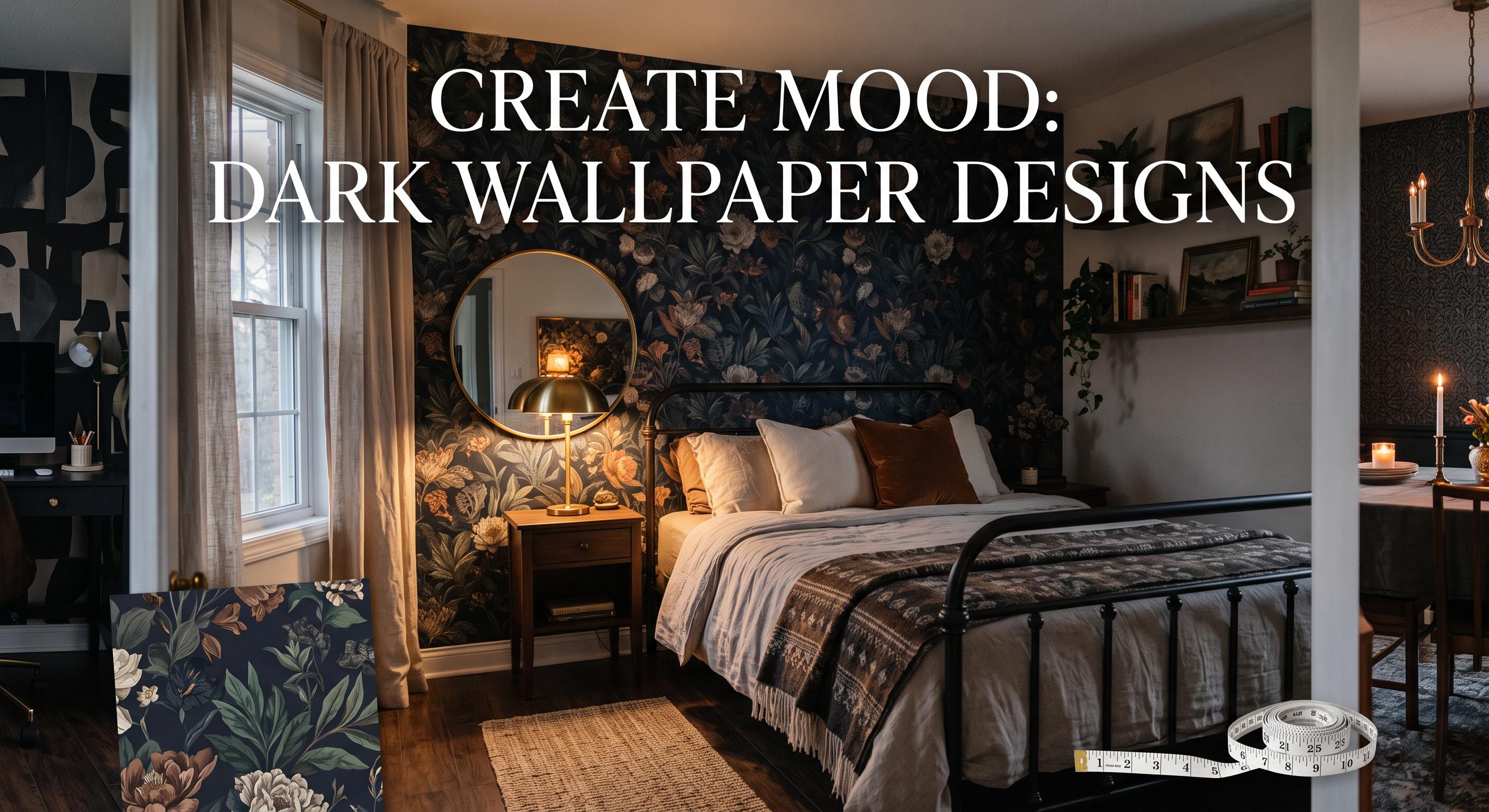
A dark room does not need rescuing with white paint. It needs a point of view. The right dark room wallpaper can turn a low-light bedroom, tucked-away home office, or north-facing dining room into the most memorable space in the house - layered, cozy, and deliberately styled rather than simply dim.Dark walls are often treated as a decorating risk, especially in smaller rooms. But wallpaper brings pattern, movement, and finish to the equation. Instead of making a room feel closed in, a thoughtfully chosen mural or peel-and-stick print can create depth, soften hard corners, and give the eye something beautiful to settle on.
Why Dark Room Wallpaper Works
Light walls reflect more daylight, but they do not automatically make a room feel inviting. In spaces with limited natural light, pale paint can sometimes read flat, gray, or unfinished. A darker wallpaper works with the room’s natural mood instead of fighting it.Deep botanical leaves, smoky abstract forms, charcoal florals, midnight blue skies, and warm espresso-toned patterns make shadows feel intentional. The result can be restful in a bedroom, focused in a home office, or intimate in a dining area. Pattern is especially useful because it creates visual dimension that a single flat paint color cannot.The key is choosing a design with enough variation. A nearly solid black wallcovering can be striking, but it asks more of the room’s lighting and furnishings. Prints with layered color, soft highlights, metallic-inspired details, or a lighter ground add richness while keeping the wall from feeling like a blank void.
Choose the Mood Before the Color
A dark wallpaper does not have to mean black. Navy, forest green, plum, chocolate brown, charcoal, and deep terracotta all create a moody effect, yet each tells a different story.For a bedroom, look for dusky florals, celestial motifs, or a muted landscape mural. These designs create a cocoon-like setting behind the bed and pair naturally with warm lamps, textured bedding, and wood furniture. A mural can also make a smaller bedroom feel more expansive when its scene has distance, soft movement, or an open sky.For a home office, consider an abstract design, refined geometric pattern, or dark botanical print. These styles feel polished on video calls without making the room look overly corporate. A deep blue or green backdrop is often easier to live with than true black, especially if the office doubles as a guest room.In a dining room or entryway, darker luxury-inspired patterns can deliver immediate drama. Think black-and-cream marble looks, vintage florals, rich arches, or artful linework. These spaces do not require bright, task-oriented lighting all day, so they are excellent places to be more daring.
Use One Wall to Set the Tone
An accent wall is the most approachable way to use dark room wallpaper. It gives the room a focal point without asking every wall, ceiling, and piece of furniture to participate. Behind a bed, sofa, desk, or dining table, wallpaper naturally frames the area people notice first.A full-room application can be equally beautiful, particularly in a powder room, nursery, compact office, or cozy den. The trade-off is that a busy print on every wall needs visual breathing room elsewhere. Keep window treatments simple, choose solid upholstery, and avoid adding too many competing small-scale patterns.If you are working with a low ceiling, choose a print with vertical movement, tall stems, upward-reaching branches, or an elongated mural composition. This helps draw the eye higher. In a narrow room, a mural with receding scenery or a broad, horizontal motif can make the wall feel less close.
Balance Darkness With Light and Texture
The best dark rooms are not dark in every way. Their walls may be deep, but their lighting is warm, their textiles are touchable, and their furnishings provide contrast.Choose bulbs that create a soft, warm glow rather than a stark bluish cast. Table lamps, sconces, and picture lights are useful because they place light at different heights, allowing wallpaper pattern to show after sunset. A single bright ceiling fixture can make a dramatic print feel flatter than it really is.Then bring in material contrast. Linen curtains, a wool rug, natural wood, brass-toned hardware, cream bedding, or a woven shade can keep a dark wall from feeling cold. You do not need to fill the room with white. Warm ivory, camel, rust, faded rose, and olive all work beautifully alongside dark blue, green, brown, and charcoal prints.Mirrors can help in the right location, particularly opposite a window or near a lamp, but they are optional. The goal is not to make the room look brighter at all costs. It is to make the available light feel considered.
Consider Scale Before Ordering
Scale is one of the details that separates a dramatic wall from a visually cluttered one. Large-scale leaves, oversized flowers, broad brushstrokes, and mural scenes often work surprisingly well in small rooms because they read as one complete composition. Tiny, high-contrast repeats may feel busier when viewed up close.Measure the full width and height of the wall, not just the visible space around furniture. Include areas behind headboards or bookcases if the wallpaper will be installed there. For walls with doors, windows, or sloped ceilings, accurate dimensions still matter because made-to-order panels are designed around the overall wall size, then trimmed carefully during installation.A sample is the easiest way to check whether the color feels right in your actual room. View it in morning light, afternoon shade, and at night with your lamps on. This is especially valuable with dark greens, blues, and neutrals, which can shift noticeably depending on surrounding paint, flooring, and bulb temperature.
Peel-and-Stick Makes the Look More Flexible
Dark wallpaper can feel like a big commitment, but peel-and-stick material makes the process more accessible for renters and homeowners who do not want pasted wallpaper or a contractor-led renovation. It is a practical option for creating a high-impact wall in a weekend, provided the surface is suitable.For the best adhesion, apply wallpaper to a clean, smooth, dry wall. Freshly painted walls need adequate curing time, and heavily textured walls, dusty surfaces, peeling paint, or walls with moisture issues can affect the final result. Taking time to prep is not glamorous, but it is what helps the finished wall look crisp from panel to panel.Start at the most visible edge, check that the first panel is level, and work gradually rather than pulling off the entire backing at once. A second set of hands is helpful for larger panels, though a carefully paced DIY install is very manageable in many spaces. Because made-to-order wallpaper is produced specifically for your selected dimensions, confirm measurements and design choices before placing an order. These custom products are generally non-returnable once production begins.
Try a Dark Wallpaper Where You Least Expect It
Some of the most successful dark rooms are the ones that do not need to feel large or airy. A windowless home office can become a stylish study. An underused guest room can take on boutique-hotel character. A small nursery can feel calm and magical with a night-sky mural, woodland scene, or deep floral backdrop personalized with a child’s name.Vacation rentals also benefit from a memorable feature wall. Guests may not remember a neutral room, but they remember the bedroom with midnight palms or the entry with an artful dark mural. The design should still suit the home’s overall style, but one distinctive wall can make a space feel photographed, finished, and more personal.Dark room wallpaper is most effective when it feels like a choice, not a compromise for a room with less light. Pick a design you genuinely want to live with, order a sample to see it under your own lighting, and let the room become moodier, warmer, and far more its own.