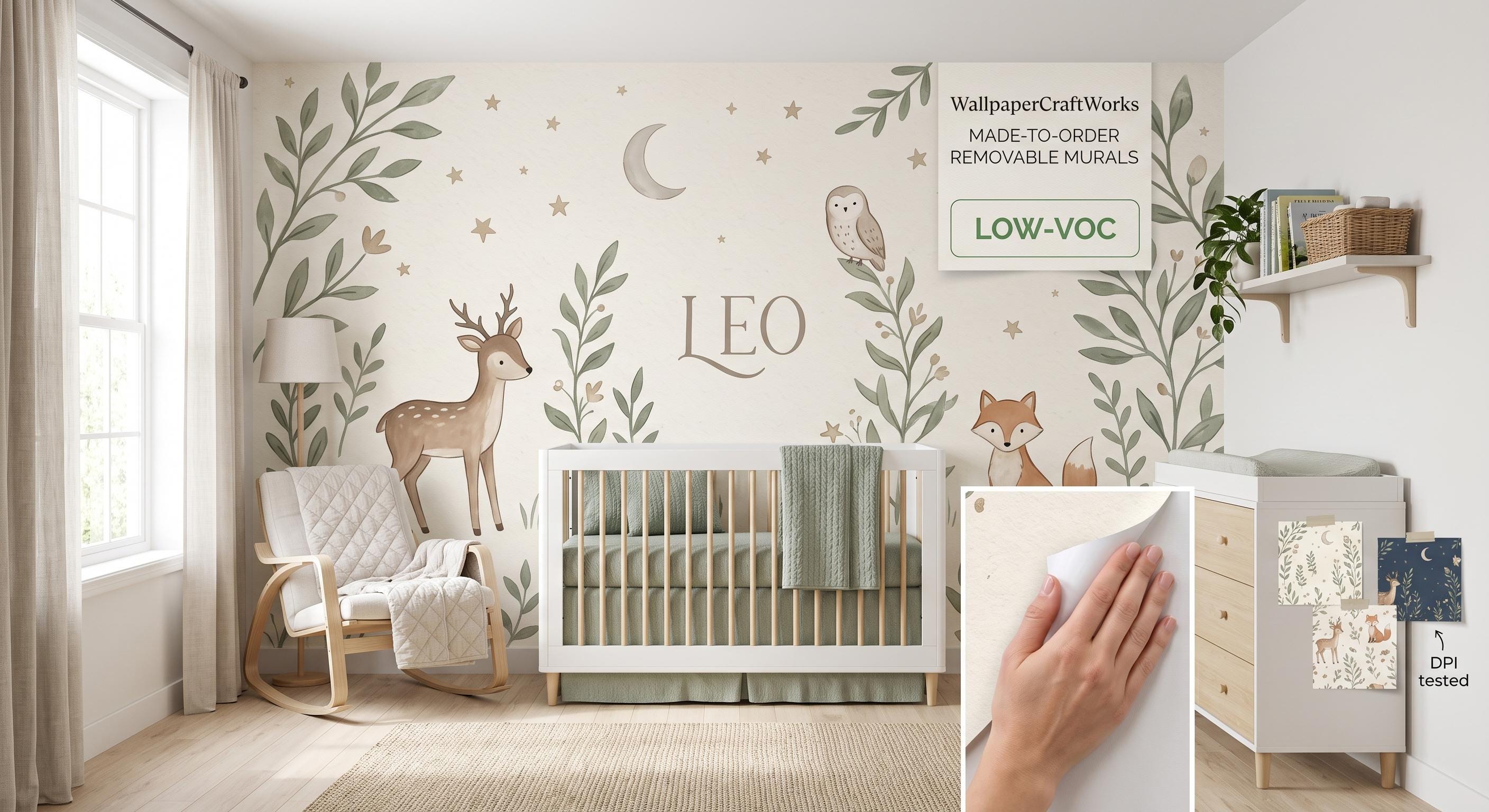
A nursery can become a little world of its own: soft woodland animals above the changing table, a quiet moon-and-stars mural behind a rocker, or a personalized name wall that makes the room feel finished before baby arrives. Nursery wallpaper safety is what lets you make that visual choice with confidence. The goal is not to make the room clinical. It is to choose a wallcovering, prepare the surface, and install it in a way that supports a clean, comfortable space for your family.Peel-and-stick wallpaper can be a practical fit for a nursery because it avoids traditional paste and gives homeowners and renters more flexibility later. Still, not every material suits every wall, and a beautiful print is only as successful as the surface beneath it. A few checks before ordering can help you get the look you want without avoidable installation surprises.
Nursery Wallpaper Safety Starts Before You Order
Start with the product details, not only the pattern. Ask the seller what the wallpaper is made from, what type of ink and adhesive is used, and whether there is available information on indoor-air considerations or relevant material testing. Terms such as low-VOC and PVC-free can be helpful, but they should describe the actual product you are considering, not be assumed because a wallpaper is marketed for children.This is especially worthwhile if someone in the household has sensitivities, asthma, or allergies. The best choice depends on your family, your room's ventilation, and the manufacturer information available. If clear answers are not provided, choose a seller that can offer more specific material details before you commit to a made-to-order wallcovering.A sample is one of the most useful steps in the process. It lets you see the real color in your nursery's daylight and evening lamp light, feel the finish, and test how the material sits on your particular wall. A soft sage botanical can look warmer next to cream trim than it does on a screen, while a navy celestial print may feel deeper in a north-facing room.Test the sample in a discreet area first. This is not just a color check. You are looking for reliable adhesion on a clean, smooth surface and checking that removal does not lift flaky paint. Because wallpaper orders are typically made to your dimensions, sampling first is a small step that can prevent a much larger mismatch.
Choose the Right Wall, Not Just the Right Design
Peel-and-stick wallpaper performs best on smooth, sound walls. A newly painted nursery may look ready, but fresh paint needs adequate time to cure before anything adhesive is applied. Follow the paint manufacturer's guidance, and give yourself extra time if the room is humid or poorly ventilated. Applying wallpaper too soon can weaken adhesion and may affect the paint finish when the panels are removed.Avoid walls with peeling paint, active moisture, mildew, heavy texture, or loose drywall material. Wallpaper will not solve a damp-wall problem, and covering it can make inspection harder later. Deal with leaks, condensation, and mold concerns before decorating. In an older home, use caution around deteriorating painted surfaces and address any potential lead-paint issue through appropriate testing or qualified help before sanding, scraping, or making repairs.A feature wall is often the easiest and most polished nursery choice. It creates a focal point behind a dresser or reading chair while limiting the number of seams and panels in the room. Full-room wallpaper can be charming, particularly in a small nursery, but it requires more exact measuring and more attention to wall condition. Neither approach is inherently safer. The better option is the one your wall can support and your installation plan can handle well.
Keep Crib Placement Practical
Plan the room layout before installation. If wallpaper will sit behind the crib, make sure the crib itself is assembled according to its instructions and positioned so a growing child cannot easily reach, pick, or pull at wallpaper edges. Keep the sleep area free of loose decorative items, hanging garlands, cords, shelves, and anything else that could fall or become reachable.Wallpaper is a wall finish, not a toy or a surface intended for climbing. A well-adhered panel on a smooth wall should lie flat, but it is still smart to inspect lower edges and seams periodically once your baby becomes mobile. If an edge starts to lift, press it back only if the wall and adhesive are clean and sound. If it continues lifting, remove or replace that section rather than leaving a tempting loose corner within reach.
Install With Clean Air and a Clean Surface
Good installation begins with a wall that is dry, dust-free, and free from oils or residue. Wipe the surface using the wallpaper maker's recommended cleaning method, then allow it to dry completely. Do not apply peel-and-stick material over a wall that feels cool and damp, even if it looks clean.Open a window when weather allows, or run the room's ventilation during prep and installation. Ventilation is a sensible habit when cleaning, painting, assembling furniture, or bringing any new decor into a nursery. Once the wallpaper is installed, let the room air out before spending extended time inside, particularly if you notice any new-product odor.Take your time aligning the first panel. Peel-and-stick wallpaper is designed for accessible DIY application, but rushing is the fastest route to bubbles, crooked seams, and repeated repositioning. Work from the top down, smooth gradually with a wallpaper tool, and avoid stretching the material as you apply it. If a panel is misaligned, carefully lift and reposition it according to the product instructions rather than forcing it into place.For large murals, tall walls, or a detailed pattern match, an extra set of hands makes a meaningful difference. This is not about needing a professional installer. It is about making the project easier to control, especially when you are working around a crib, dresser, or changing table. Install before moving heavy furniture into its final position whenever possible.
Be Careful Around Outlets, Heat, and Existing Finishes
Nursery walls often include outlets, vents, switches, baseboards, and windows that need thoughtful measuring. Turn off power at the breaker before removing outlet or switch covers, and use care when trimming around them. If you are not comfortable working near electrical fixtures, leave the covers in place and cut around them carefully, or ask for qualified help.Do not place wallpaper over vents, inside fireplaces, or in areas exposed to significant heat, steam, or repeated splashing. A nursery may not seem like a high-moisture room, but a wall near an adjoining bathroom, a humidifier, or a condensation-prone window can behave differently through the seasons. Adhesive wallcoverings need stable, dry conditions to remain flat and secure.Also consider the existing paint. Matte and flat finishes can be more delicate during removal than durable satin or eggshell paint. That does not mean peel-and-stick wallpaper cannot work on them, but it does mean the sample test matters more. Removable does not always mean zero impact, particularly on weak paint, improperly prepared walls, or surfaces with prior damage.
A Beautiful Nursery Can Still Be Easy to Maintain
Choose a pattern that works with real life. A busy safari print or scattered floral design can be forgiving around the occasional smudge, while a pale solid-look mural may show marks more readily near a changing area. Keep cleaning gentle and follow the product-specific care guidance. Aggressive scrubbing, harsh chemicals, and soaking a seam can damage the print or weaken the adhesive.Check the wallpaper occasionally as the room changes from newborn nursery to toddler space. Look at seams, bottom edges, and places near furniture that gets bumped. This quick habit matters more than trying to create a completely untouched room. Children live in their spaces, and practical decor should be cared for, not treated as too precious to use.For parents who want a design-led room without a permanent renovation, custom peel-and-stick wallpaper offers a flexible way to set the mood. WallpaperCraftWorks makes made-to-order options for smooth walls, including nursery murals and personalized designs, so measuring carefully and ordering a sample can help the final installation feel considered from the start.The safest nursery choices are usually the calm, deliberate ones: a material you have researched, a wall you have prepared, a layout that keeps sleep and play areas sensible, and an installation you are willing to inspect over time. Once those pieces are in place, you can let the design do what it should do - make the room feel warm, personal, and ready for the moments ahead.