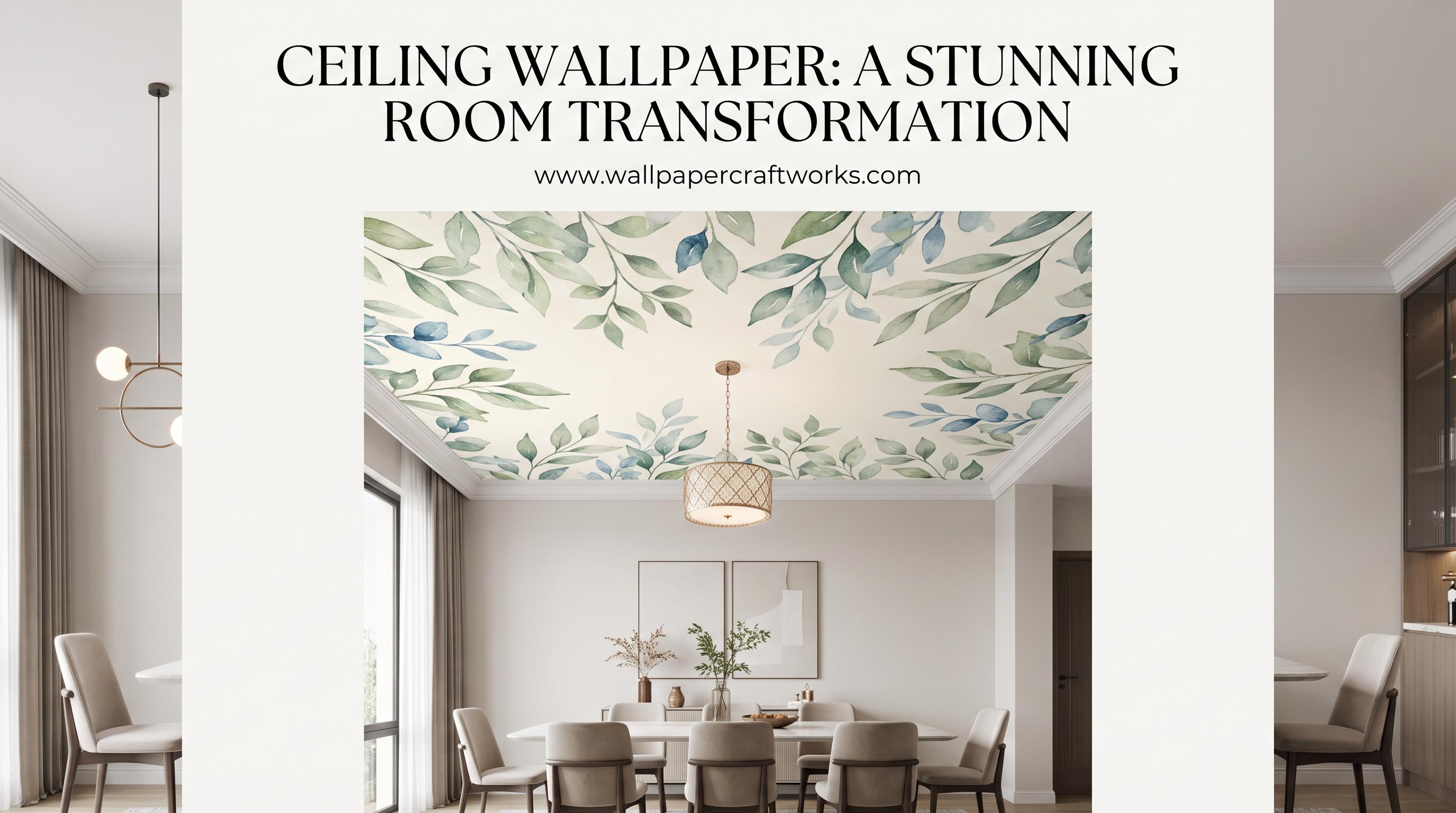
A ceiling is often the largest uninterrupted surface in a room, yet it is usually left plain white. Ceiling wallpaper changes that equation. A soft floral print can make a bedroom feel cocooning, a painted-sky mural can bring playfulness to a nursery, and a rich geometric can give a dining room the polished feeling of a boutique hotel - without rebuilding a thing.For homeowners, renters, and anyone looking for a high-impact update, the appeal is obvious: the ceiling becomes part of the design rather than the background. The practical question is whether your room, surface, and chosen pattern are right for a peel-and-stick application. A successful result starts with choosing the right visual scale and preparing for the realities of working overhead.
Why Ceiling Wallpaper Makes Such a Difference
Walls carry furniture, artwork, windows, and doors. A ceiling has fewer visual interruptions, which gives a pattern room to breathe. That open field can make even a simple design feel intentional and immersive.In smaller spaces, wallpaper overhead can create a jewel-box effect. Think powder rooms, entryways, reading nooks, or a nursery with a scattering of stars. In larger rooms, it can define a zone without adding another piece of furniture. A dramatic ceiling above a dining table, for example, makes the eating area feel distinct within an open-concept home.The effect depends on color and contrast. Pale botanicals, delicate clouds, and small-scale motifs add interest without making the ceiling feel lower. Deep navy celestial scenes, vintage florals, and luxury-inspired patterns create more drama, especially in rooms with adequate natural or layered lighting. Neither approach is automatically better. It comes down to whether you want the ceiling to whisper or lead the room.
Where Ceiling Wallpaper Works Best
Bedrooms are a natural fit because the ceiling is part of what you see when resting. A muted botanical or celestial design can give the room a calm, finished atmosphere, while a darker print behind a simple bed palette adds a more tailored look. Keep the wall treatment quieter if you want the overhead pattern to be the focus.Nurseries and children's rooms are another strong match. Stars, safari animals, soft rainbows, and personalized designs can turn bedtime into part of the room's story. A ceiling application is especially useful when you want whimsy without covering every wall in a busy print. It lets the room keep a clean, flexible backdrop as furniture and decor change.A home office benefits when it needs more personality than a standard desk-and-chair setup. A refined abstract pattern or architectural motif on the ceiling gives video-call backgrounds and focused work sessions a design-forward lift. For a vacation rental, it can create the memorable detail guests photograph and mention later.Dining rooms, hallways, and entryways also deserve consideration. These are spaces where people pass through or gather for shorter periods, so they can handle a bolder print. A dark floral or ornate pattern overhead can feel surprisingly sophisticated when the walls, trim, and furnishings have enough breathing room.
Choose a Pattern That Suits the Ceiling
The best ceiling design relates to the room's proportions. In a low-ceilinged space, lighter backgrounds and smaller motifs tend to feel more open. That does not mean dark colors are off-limits, but they will make the ceiling more present. This can be beautiful in a cozy bedroom or moody dining room and less appealing in a cramped hallway with little light.Scale matters as much as color. Oversized leaves, large clouds, or bold abstract shapes can look striking on an expansive ceiling but may feel chopped up in a narrow room. Small repeats are forgiving in compact spaces because the pattern reads as texture from below. If you are drawn to a mural-style scene, make sure its focal area will be visible rather than hidden by a ceiling fan, light fixture, or tall cabinetry.Consider the room from every angle. Wallpaper that looks balanced in a square product preview may need a different orientation once it spans a long, rectangular ceiling. Custom sizing gives you more control over placement, especially for maps, personalized murals, city scenes, or designs with a clear top and bottom.Before committing, order a sample. View it flat against the ceiling at different times of day, not just against a wall under one lamp. Samples help you judge true color, material texture, and how the design's scale reads from the floor. They are particularly worthwhile for deeper colors, metallic-look prints, and high-contrast designs.
Is Peel-and-Stick Ceiling Wallpaper Right for Your Surface?
Peel-and-stick wallpaper is designed to make decorative updates more accessible, but ceiling installation is more demanding than a standard accent wall. Gravity is working against you, and the surface must be a good candidate for adhesive material.Smooth, clean, dry, fully cured painted surfaces are the best starting point. The ceiling should be free of dust, grease, peeling paint, flaking texture, moisture damage, and uneven patches. Heavily textured ceilings, including popcorn texture, are not a reliable match because there is not enough consistent contact for the adhesive to hold properly. Fresh paint also needs sufficient cure time according to the paint manufacturer's guidance before wallpaper is applied.Inspect for practical obstacles before ordering. Ceiling fans, recessed lights, smoke detectors, sprinkler heads, vents, and sloped angles all affect measuring and installation. It is possible to work around many of these features, but each cutout adds precision work. If the ceiling has ongoing humidity or a history of water issues, solve that condition first rather than covering it.For rentals, always check your lease and test a sample in a discreet area. Removability can depend on the paint condition, wall preparation, and how long the material remains installed. Peel-and-stick wallpaper offers a less permanent approach than pasted wallpaper, but no wallcovering can guarantee the outcome on every painted surface.
Measure Carefully Before Ordering
Ceilings deserve the same careful measurement as walls, with a few added details. Measure the full width and length at more than one point because older homes and seemingly square rooms are not always exact. Note every fixture and architectural change, including soffits, beams, and transitions into sloped sections.Order for the complete area and allow for pattern matching and trimming. A made-to-order design can be sized to your dimensions, which avoids the compromise of piecing together generic rolls with awkward leftovers. Still, accurate measurements are essential. Custom-produced wallpaper is created specifically for your order, so confirm dimensions, surface type, and design selection before production begins. These products are typically non-returnable except where there is a production issue.If the pattern has a directional element, decide where you want it to begin. A celestial design may look best centered over the bed or crib. A botanical mural may need its key branches positioned away from a fan or pendant light. Planning this before the panels arrive makes installation less stressful.
What Installation Actually Takes
Ceiling wallpaper is a two-person project whenever possible. One person can align and support the panel while the other smooths it into place. A stable ladder or platform, good lighting, a squeegee, a sharp utility knife, and a clean cloth are basic essentials. Never stretch to reach a section or use unstable furniture as a work surface.Start with the first panel perfectly straight. A small misalignment at the beginning becomes more obvious with every panel that follows. Peel back the backing gradually instead of removing it all at once, and smooth from the center outward to reduce trapped air. Take your time around cutouts, leaving a little extra material until you can trim precisely.A ceiling fan or hardwired fixture may need to be temporarily removed for a clean finish. If that involves electrical work outside your comfort level, hire a qualified professional for that portion. The wallpaper installation itself may be DIY-friendly, but safety is never a place to improvise.For especially large ceilings, high rooms, or complex architectural details, professional help can be the better value. The goal is not to prove you can do every step alone. It is to get the finish you pictured.
Style the Rest of the Room to Support It
Once the ceiling has pattern, let it guide a few choices below. Pull one or two colors into bedding, pillows, drapery, or a rug rather than matching every shade. This makes the room feel coordinated without turning it into a set.Keep lighting intentional. Warm lamps can make vintage florals and earthy botanicals feel rich, while clear, bright light keeps playful nursery patterns crisp. In rooms with a dark ceiling design, a light wall color, reflective accents, or well-placed lamps prevent the overall effect from becoming too heavy.WallpaperCraftWorks makes it easier to tailor the scale and mood to your room with made-to-order peel-and-stick designs, custom dimensions, and samples for checking color before you commit. The strongest ceiling updates are not the loudest ones. They are the ones that make you look up and feel that the room finally has a point of view.