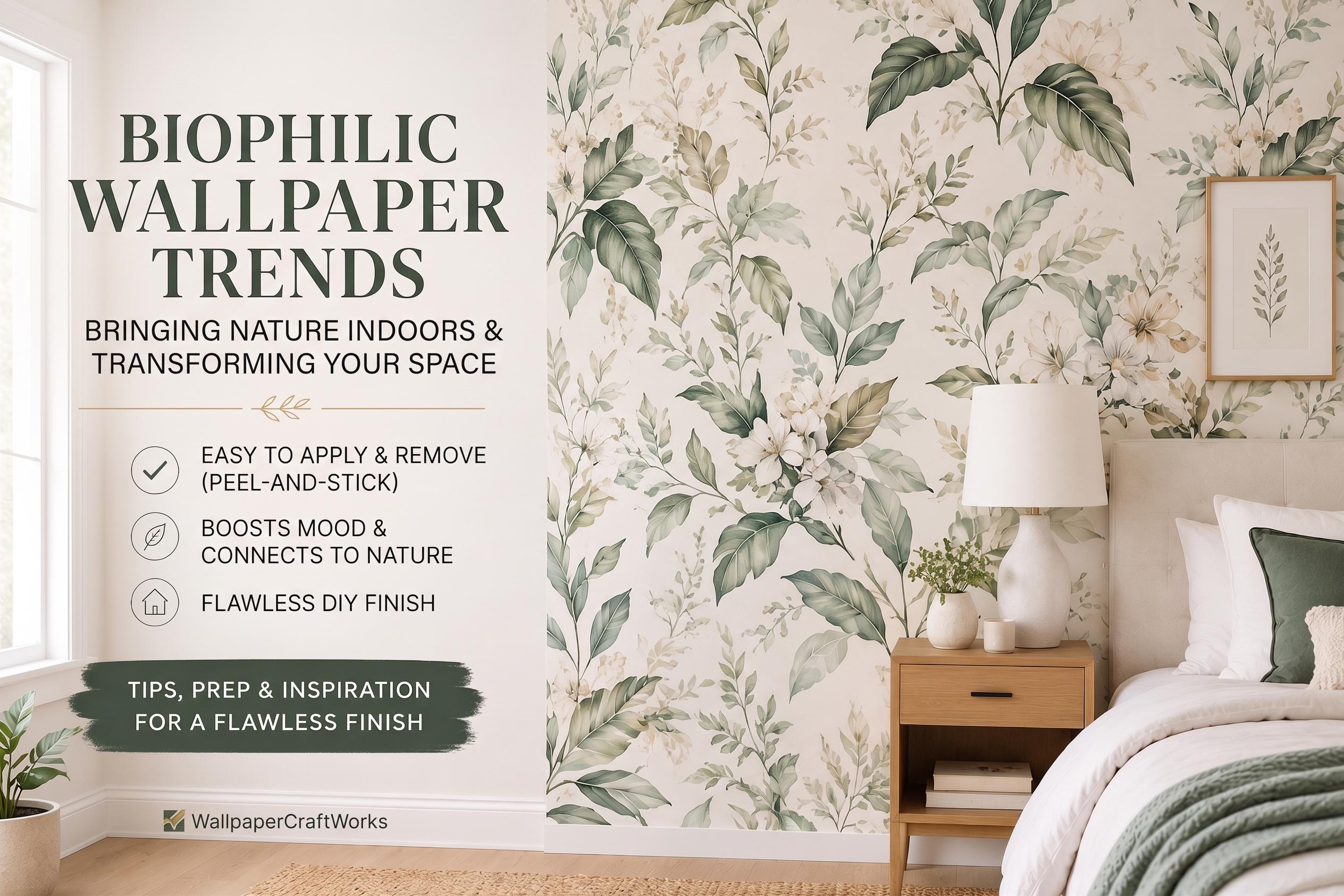
A blank wall can make a room feel unfinished. A wall filled with leafy branches, soft wildflowers, misty forest forms, or a sun-washed landscape can shift the entire mood before you add a single plant. That is why biophilic wallpaper trends are resonating with homeowners and renters who want rooms that feel more grounded, personal, and alive without taking on a major renovation.Biophilic design is often described as a connection to nature, but it does not require turning every room into a greenhouse. In wallpaper, the look can be literal or abstract: oversized banana leaves, vintage botanical studies, desert palms, watery garden scenes, organic linework, or calming mural-scale landscapes. The strongest choices reflect both the room's light and the way you want it to feel when you walk in.
Biophilic Wallpaper Trends Bringing Nature Indoors
The current direction is less about one perfect shade of green and more about atmosphere. Nature-inspired wallpaper is becoming warmer, more layered, and easier to tailor to real homes. Instead of a generic tropical print, shoppers are choosing designs with a clear point of view - a quiet woodland for a bedroom, a grand floral for a dining nook, or a playful safari scene for a child's room.
Moody botanicals with depth
Deep olive, moss, ink blue, charcoal, and muted clay are giving botanical patterns a more collected, grown-up character. These are not only for dramatic dining rooms. A dark leafy wallpaper behind a bed can make a bright bedroom feel restful, especially when paired with natural wood, linen bedding, and warm lamps.The trade-off is that dark patterns need some breathing room. In a small room with limited natural light, use one accent wall rather than wrapping every surface. Choosing a design with lighter stems, flowers, or a soft background keeps the wall from reading as a flat block of color.
Soft meadow florals and vintage field guides
Delicate wildflowers, pressed-botanical motifs, and illustrated garden prints continue to move beyond cottage-style interiors. Their appeal is in the detail: a wallpaper can make an entryway, powder room, or nursery feel intentionally decorated even when the furnishings stay simple.For a more current look, balance a vintage-inspired floral with clean-lined furniture or a modern mirror. If you prefer a calmer room, look for a limited palette such as sage and cream, dusty blue and sand, or terracotta and blush. A busier multicolor floral can be beautiful, but it will set the color direction for everything placed around it.
Landscape murals that create a sense of escape
Wall murals are a defining part of biophilic wallpaper trends because they offer something a repeat pattern cannot: perspective. A misty forest, rolling hills, tropical shore, mountain horizon, or watercolor garden creates visual depth and gives a compact room a more expansive feel.This approach works especially well behind a desk in a home office, where a nature view can soften the screen-heavy feel of the space. It also suits guest rooms and vacation rentals, where one memorable wall can make the room feel more considered in listing photos. Keep furnishings low and uncomplicated in front of a mural so the scene remains visible.
Organic abstracts for a quieter nature reference
Not every nature-inspired room needs leaves or flowers. Soft brushstrokes, mineral shapes, wavy lines, cloudlike color washes, and stone-inspired forms can deliver the same relaxed effect with a more modern edge. These designs are useful when you want biophilic influence but your home leans contemporary, coastal, minimalist, or luxury-inspired.Organic abstracts are also forgiving in multipurpose rooms. A subtle sand-toned mural can sit behind a work desk now and still work later if the room becomes a nursery or reading space. That flexibility matters when you want a high-impact update without a permanent design commitment.
Choose the Right Scale for Your Room
Scale is where a wallpaper idea either feels polished or overwhelming. Large leaves and mural elements tend to look best when you can step back and see them - behind a bed, across a dining-room wall, or in a living room with an open sightline. In a narrow hallway or small powder room, smaller botanical repeats can create rhythm without making the walls feel crowded.Ceiling height matters, too. A vertical branch pattern can emphasize height in a room with standard ceilings, while a wide landscape mural creates a horizontal, open feeling. Before ordering, measure the full width and height of the wall, including areas behind furniture. A custom-sized wallcovering is designed around the actual wall, not the guesswork of standard rolls.Color deserves the same practical attention. A wallpaper sample lets you see whether a sage print looks fresh or gray in your room, and whether warm cream reads as soft ivory or yellow beside your existing trim. Check it in morning light, evening lamp light, and the light you use most often in the space. Screens are helpful for browsing, but they cannot show every shift in color or material texture.
Where Biophilic Wallpaper Makes the Biggest Impact
A bedroom is an easy starting point because the goal is already comfort. Try a quiet forest mural behind the bed, a soft floral repeat on the wall facing the bed, or a moody botanical that makes the headboard wall feel like a destination. Keep the remaining walls neutral if you want the wallpaper to feel restorative rather than visually busy.In living rooms, biophilic wallpaper can define a seating area without adding architectural work. A leafy mural behind a sofa adds depth, while a refined botanical print can make a fireplace wall or built-in area feel more deliberate. If the room has strong window light, consider colors with depth rather than very pale prints that may disappear during the day.Home offices benefit from designs that feel calming but not sleepy. Landscapes, airy tree canopies, and restrained organic abstracts are often better choices than high-contrast jungle prints directly behind a monitor. For video calls, consider what will appear in the frame and avoid placing a very detailed motif where it may compete with your face.For nurseries and children's rooms, nature themes can grow with the child when they are handled with a little restraint. Whimsical safari animals, woodland scenes, starry skies, and gentle florals offer personality without relying on short-lived characters. A personalized name detail can make the space feel especially theirs while keeping the overall design polished.
Make Peel-and-Stick a Thoughtful DIY Project
Peel-and-stick wallpaper makes a dramatic wall update more approachable, but the surface still matters. It performs best on clean, smooth, fully cured painted walls. Textured walls, loose paint, dust, humidity damage, and fresh paint can affect adhesion, so preparation should never be treated as an afterthought.Order a sample before committing to a full wall, particularly for a large mural or richly colored print. It gives you a real-world check on color, texture, and adhesion. Since made-to-order wallpaper is produced to your selected dimensions and is typically non-returnable, measuring carefully and confirming the design choice upfront protects both your budget and your confidence.During installation, work slowly and align each panel before pressing it firmly into place. Having a second person helps with tall panels or wide mural layouts. The process is DIY-friendly, but it is not a race. A few extra minutes spent checking the first panel can make every panel after it easier.
Let Nature Feel Personal, Not Prescribed
The best biophilic room does not follow a formula. A renter may choose a removable palm print to make a temporary dining area feel joyful. A homeowner may prefer a quiet, foggy landscape that changes the feel of a primary bedroom. Someone else may use a bold floral to give a small bathroom the character it has been missing.Start with the feeling you want the wall to create, then choose a pattern scale and color palette that support it. With custom sizing, samples, and a smooth-wall-friendly peel-and-stick format, WallpaperCraftWorks makes it easier to let that one wall carry the transformation while the rest of the room simply has space to breathe.