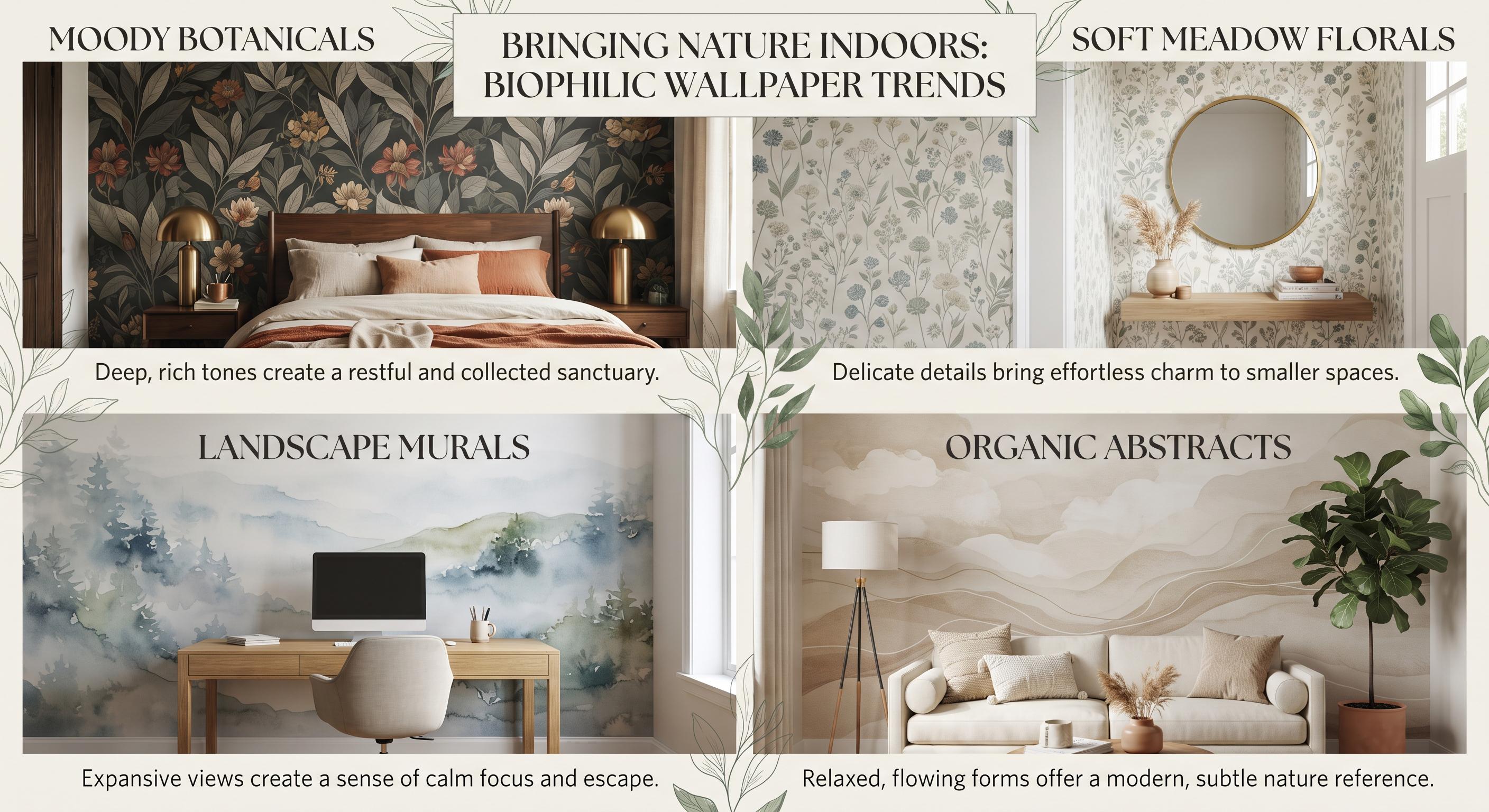
A room can have the right furniture and still feel unfinished. Often, the missing element is on the largest uninterrupted surface: the wall. Designer wallpaper gives that surface a point of view, whether you want a quiet botanical backdrop in a bedroom, a dramatic celestial office, or a playful safari scene in a child’s room.Unlike a generic paint color, a thoughtfully chosen wallcovering establishes mood quickly. It can make a rental feel more personal, give a compact entryway a memorable first impression, or turn a spare bedroom into a guest space people remember. With peel-and-stick material made for smooth walls, that visual change does not have to mean paste, contractors, or a permanent renovation.
What Makes Designer Wallpaper Feel Different?
Designer wallpaper is not simply wallpaper with a pattern on it. The difference is in the composition, scale, color story, and the way a design works with a room’s architecture and furnishings. A large-scale floral can feel like art. A softly textured abstract can add depth without competing with a favorite sofa. A personalized map mural can turn a wall into something that belongs specifically to your family.The most successful designs do more than fill blank space. They help define how a room is meant to feel. Vintage-inspired botanicals can bring collected, cottage-style warmth to a dining nook. Black-and-gold luxury-inspired patterns make a home office feel more polished. A moon-and-stars print can create a restful nursery without relying on a predictable theme.That does not mean every wall needs a bold statement. Sometimes the most design-forward choice is a neutral print with a little movement, such as a soft arch, linen-like effect, or delicate branch pattern. The goal is not to make every room louder. It is to make it feel considered.
Choose Designer Wallpaper by Room, Not Just by Trend
A saved image can be a helpful starting point, but the room should make the final decision. Think about how often you use the space, how much natural light it receives, and what you want people to notice first.
Living Rooms and Dining Spaces
In shared spaces, wallpaper often works best when it supports the room’s main gathering area. Try a mural behind a sofa, a botanical design around a dining table, or an elevated geometric on the wall facing the entry. These placements give the room structure without requiring every wall to carry pattern.If your furniture is already colorful or heavily patterned, choose wallpaper with a calmer palette or a more open layout. If the room is mostly neutral, a rich floral, dark celestial design, or expressive abstract can become the element that gives it character.
Bedrooms and Guest Rooms
The wall behind the bed is a natural place for an accent wall because the bed visually anchors the composition. Romantic florals, misty landscapes, muted abstract shapes, and subtle luxury prints all work well here. In a guest room, wallpaper can make a simple bed and nightstand setup feel intentionally styled rather than temporary.For a small bedroom, do not assume pale wallpaper is your only option. A darker design can feel cozy and sophisticated when balanced with light bedding, lamps, and a clear path around the bed. It depends on whether you want the room to feel airy or cocooning.
Nurseries, Kids’ Rooms, and Playrooms
Children’s spaces are ideal for a little imagination. Safari animals, woodland scenes, outer-space motifs, and name-personalized murals create a finished look while leaving room for the child to grow into the space. A removable option is especially practical when tastes change from dinosaurs to dance to a favorite color.Keep scale in mind. Tiny motifs can disappear behind furniture and toy storage, while an oversized mural may be best on one clear focal wall. For personalized designs, confirm spelling, placement, and measurements before ordering. Made-to-order products are created from the details you provide, so a careful review matters.
Home Offices and Vacation Rentals
A well-chosen wallcovering gives a work-from-home setup more presence on video calls and makes a small office feel separate from the rest of the house. Consider a refined abstract, vintage map, dark botanical, or clean arch pattern behind the desk.For vacation rentals, designer wallpaper can help a room stand out in listing photos without adding a complicated renovation project. Focus on a wall guests will see right away: behind a bed, in a breakfast nook, or near an entry. A distinctive backdrop photographs well, but it should still suit the rest of the space and be easy to live with between stays.
Get the Scale Right Before You Order
Pattern scale is one of the biggest reasons wallpaper looks either polished or off-balance. Large rooms with high ceilings can handle oversized leaves, broad brushstrokes, or expansive mural scenes. In smaller spaces, a large design can still work beautifully, but it needs a clear wall and fewer competing visual elements.Before choosing, look at the wall as a whole. Measure its width and height, then note doors, windows, outlets, sloped ceilings, and built-ins. Custom sizing helps avoid the frustrating guesswork of buying standard rolls and hoping the repeats land in the right place.For murals, think about the focal point. If a design includes a moon, city skyline, animal, name, or map detail, decide where you want that feature to sit once furniture is in place. A bed frame, credenza, or desk can hide the best part of a mural if the layout is not planned first.It is also wise to order a sample when color confidence matters. Screens can shift warm or cool, and a sample lets you see the print beside your flooring, paint, fabric, and lighting. It also gives you a chance to assess material texture and adhesion on your specific smooth wall surface before making a full-size commitment.
Peel-and-Stick Wallpaper: Beautiful, but Surface Matters
Peel-and-stick wallpaper makes a high-impact update more approachable, especially for renters and confident DIY decorators. It is designed to apply directly to a properly prepared smooth wall, with no traditional paste or professional installation required. But easy application does not mean every wall is automatically suitable.For the best result, the surface should be smooth, clean, dry, and fully cured if it has been freshly painted. Highly textured walls, dusty surfaces, peeling paint, and areas with moisture or heavy humidity can affect adhesion and the finished appearance. Bathroom conditions, rough plaster, and pronounced orange-peel texture deserve extra consideration.Preparation is part of the project. Clean the wall according to the material guidance, allow it to dry completely, and measure twice. During installation, work slowly from the top down, smoothing as you go and checking alignment before pressing each section firmly into place. A second set of hands can make larger panels easier to manage.The trade-off is straightforward: removable wallpaper offers more flexibility than pasted paper, but it still asks for a suitable surface and thoughtful installation. Taking time at the start is what makes the finished wall look crisp rather than rushed.
Make the Design Feel Built Into the Room
Wallpaper looks most convincing when the rest of the room acknowledges it. You do not need to match every color exactly. Instead, pull one or two tones from the design into a pillow, curtain, rug, lamp shade, or piece of art. This creates connection without making the room feel overly coordinated.If the wallpaper is detailed, let nearby textiles stay simpler. If it is subtle, add contrast through wood, brass, black accents, or textured fabrics. A botanical print can pair beautifully with warm oak and linen. A celestial mural may feel more grounded with deep navy bedding and soft cream lighting. A personalized children’s mural can be balanced with solid-color storage and natural woven baskets.WallpaperCraftWorks designs are made to order, which makes accurate dimensions and final design choices especially important. Because custom-produced wallcoverings are not a casual buy-and-return item, samples and a careful measurement plan are practical parts of the creative process, not extra steps.The best wallcovering choice is the one that still feels right after the first burst of inspiration. Choose the pattern that suits the way you want to live in the room, prepare the wall well, and let one thoughtfully designed surface do the work of an entire renovation.