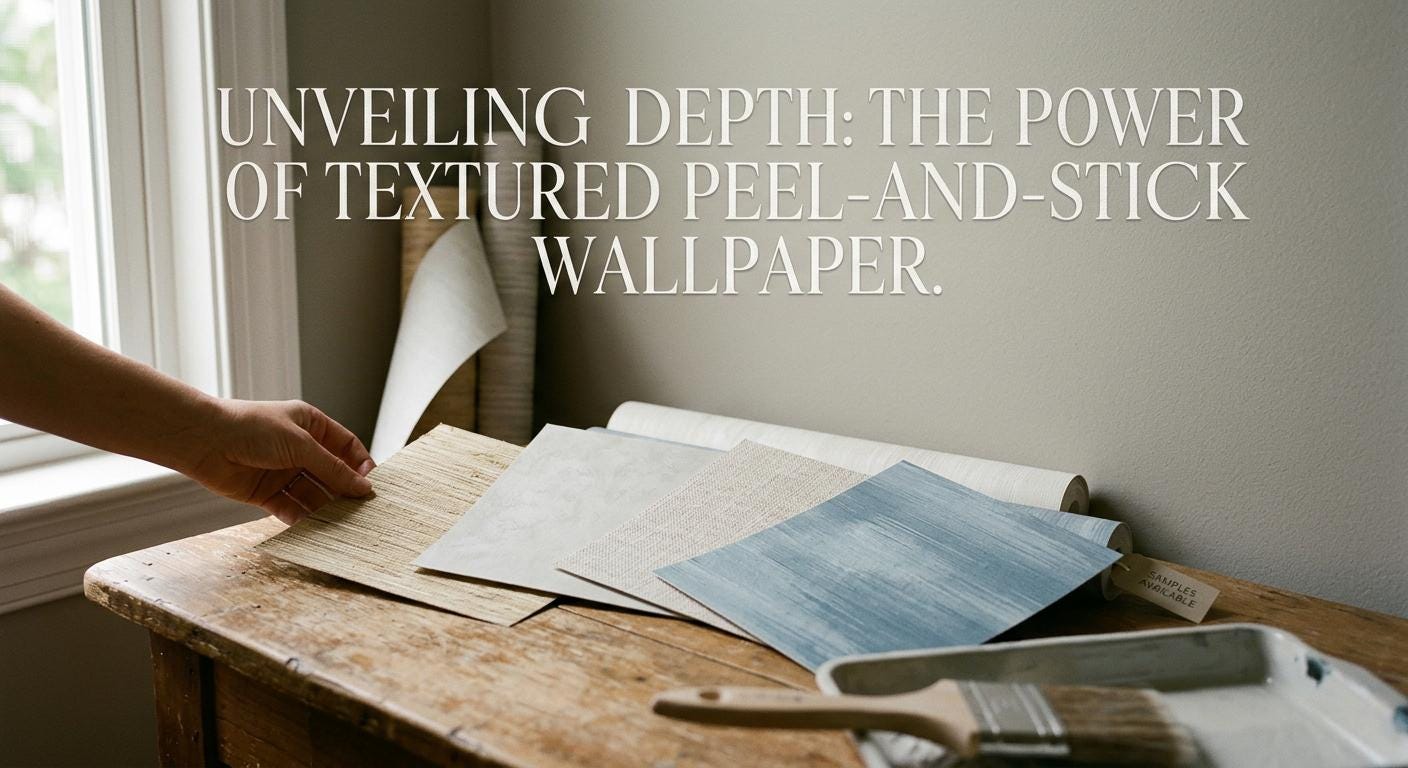
A wall can be painted in the perfect color and still feel unfinished. What it may be missing is depth: the quiet variation of linen, plaster, grasscloth, stone, woven fibers, or layered brushstrokes. Textured wallpaper adds that dimension without asking you to live through a major renovation or hire an installer for a weekend project.For renters, first-time homeowners, and anyone refreshing a room one wall at a time, peel-and-stick designs make texture more approachable. The right pattern can give a home office a more collected look, soften a bedroom, or make an entryway feel intentional before guests have even taken off their shoes. The key is choosing a texture that supports the room rather than competing with everything in it.
What Textured Wallpaper Can Change in a Room
Texture is often the detail that makes a space look layered instead of flat. A woven-look wallcovering brings warmth to clean-lined furniture. A plaster-inspired pattern can create a calm, architectural backdrop in a dining room. A subtle marble or stone effect can lend polish to a powder room or small commercial-style workspace without the cost, weight, or permanence of the real material.With peel-and-stick wallpaper, much of that effect comes from the printed design rather than a deeply embossed surface. That distinction matters when you shop. A high-quality textured look can create visual dimension from across the room while keeping the material practical for DIY application. If feeling the material in person matters to your decision, order a sample first. It is the clearest way to check color, finish, scale, and adhesion against your actual wall.Textured designs also work especially well when a room needs personality but not visual noise. A bold botanical mural tells a story. A grasscloth-inspired neutral lets artwork, wood furniture, and textiles do more of the talking. Neither approach is better. It depends on whether you want the wall to become the focal point or the foundation for the rest of the room.
Choosing Textured Wallpaper by Room
Bedrooms: favor softness over busyness
Bedrooms benefit from texture that feels restful at night and polished during the day. Consider linen-like neutrals, quiet watercolor movement, muted plaster effects, or delicate botanical layers. These options add dimension behind a bed without making the room feel overly decorated.If you are using wallpaper on every wall, keep contrast low and the repeat understated. For a single accent wall, you have more room for an expressive pattern. A moody stone look, vintage floral, or dark woven texture can frame the bed and make simple bedding look more considered.
Living rooms and dining spaces: create a backdrop with presence
In shared spaces, textured wallpaper can help furniture feel anchored. A warm beige, taupe, olive, charcoal, or soft blue design often complements multiple materials, from oak and rattan to velvet and black metal. This is useful when your decor is still evolving, because the wall remains flexible as pillows, rugs, and art change.For dining areas, consider a design with a more tailored look, such as a refined abstract, luxe marble-inspired pattern, or tonal geometric texture. If the room has limited natural light, avoid going too dark on all four walls. Use the deeper design as an accent wall instead, then let lighter surrounding walls keep the space open.
Home offices and rentals: make the background work harder
A textured wall is a smart choice behind a desk or in a video-call background because it reads as finished without looking distracting on camera. Fine linework, subtle plaster, cloudlike abstract patterns, and soft woven looks add visual interest at a distance.Vacation rentals can benefit from the same strategy. Guests remember spaces that have a point of view, but a highly specific pattern may limit how many people connect with the room. A nature-inspired texture, neutral mural, or modern organic pattern can feel distinctive while still photographing well and working with a wide range of furnishings.
Nurseries and kids' rooms: add texture with room to grow
For a nursery, textured wallpaper can bring warmth without relying on a theme that may feel dated in two years. Think soft clouds, hand-painted stripes, gentle botanical forms, or a light woven appearance. These styles pair easily with changing bedding, art, and furniture as a child grows.A playroom or older child's bedroom can take more color and motion. Safari scenes, celestial motifs, city maps, and personalized name murals offer a stronger decorative statement, while a textured background can make the design feel more dimensional. In either case, consider how the wallpaper will look from the doorway as well as up close.
Scale Matters More Than Most Shoppers Expect
A pattern may look subtle on a screen but appear much larger once it covers an eight-foot wall. Likewise, a fine texture can get lost in a large, open room if it does not have enough contrast. Before committing, measure the wall and picture the design at full scale, not as a small product image.Samples are particularly helpful for textured wallpaper because lighting changes everything. A warm wall color can pull beige tones from a woven print, while cool daylight may bring out gray or blue undertones. Place your sample on the intended wall and check it in morning light, afternoon light, and evening lamp light. Hold it beside flooring, curtains, cabinetry, and any paint that will remain in the room.This small step can prevent the most common decorating disappointment: choosing a color that looked perfect online but shifts once it meets your home's lighting.
Why Custom Sizing Makes the Finish Look Better
Generic wallpaper rolls often leave you calculating repeats, ordering extra material, and hoping the final seam lands somewhere forgiving. Custom-sized peel-and-stick wallpaper takes a more tailored approach. You provide the wall dimensions, and the design is produced for your space, helping you plan the placement before installation begins.Measure the widest point and tallest point of the wall, then account for features that affect the application, such as windows, doors, sloped ceilings, outlets, and built-ins. Do not assume an old house has perfectly square walls. Measuring twice is far easier than trying to stretch a design to make up for a missed inch.Because made-to-order wallcoverings are created specifically for your requested dimensions, it is worth confirming measurements, design choice, and color direction before placing the full order. Samples can reduce uncertainty, especially for a large feature wall or a project where matching existing decor matters.
Preparing for Peel-and-Stick Installation
Peel-and-stick wallpaper is designed to make a high-impact change feel manageable, but the wall surface still matters. Smooth, clean, dry, properly cured walls give the adhesive the best chance to perform as intended. Fresh paint should be allowed to cure fully according to the paint manufacturer's guidance before wallpaper goes up.Highly textured walls, loose or peeling paint, dusty surfaces, moisture-prone areas, and walls with heavy orange-peel texture can interfere with adhesion or create an uneven finished appearance. In those situations, a sample is more than a color check. It is a practical test of whether the surface is ready for the project.Take your time with the first panel. A level starting point sets up every panel that follows, especially with linear, woven, or geometric patterns. Work gradually, smooth from the center outward, and keep the backing paper under control rather than removing it all at once. For large walls, a second set of hands makes alignment easier and the experience less stressful.
Styling a Textured Wall Without Overdoing It
Once the wallpaper is installed, let the room breathe. Texture already brings visual movement, so furnishings do not all need to be patterned. Pair a grasscloth-inspired wall with simple upholstery and natural wood. Put a plaster-look accent wall behind a sculptural lamp or framed art. If your wallpaper is floral or abstract, repeat just one or two colors in pillows, throws, or a rug rather than matching every shade.The most successful rooms mix textures instead of duplicating them. A printed linen look can sit beautifully with smooth ceramic, boucle, aged brass, glass, and real wood. The contrast makes the wallcovering feel intentional instead of theme-driven.At WallpaperCraftWorks, made-to-order peel-and-stick designs are created for the wall you actually have and the atmosphere you want to create. Start with a sample when color or surface compatibility is uncertain, measure carefully, and choose the design that still feels like you when the rest of the room is quiet. That is usually the wall worth coming home to.