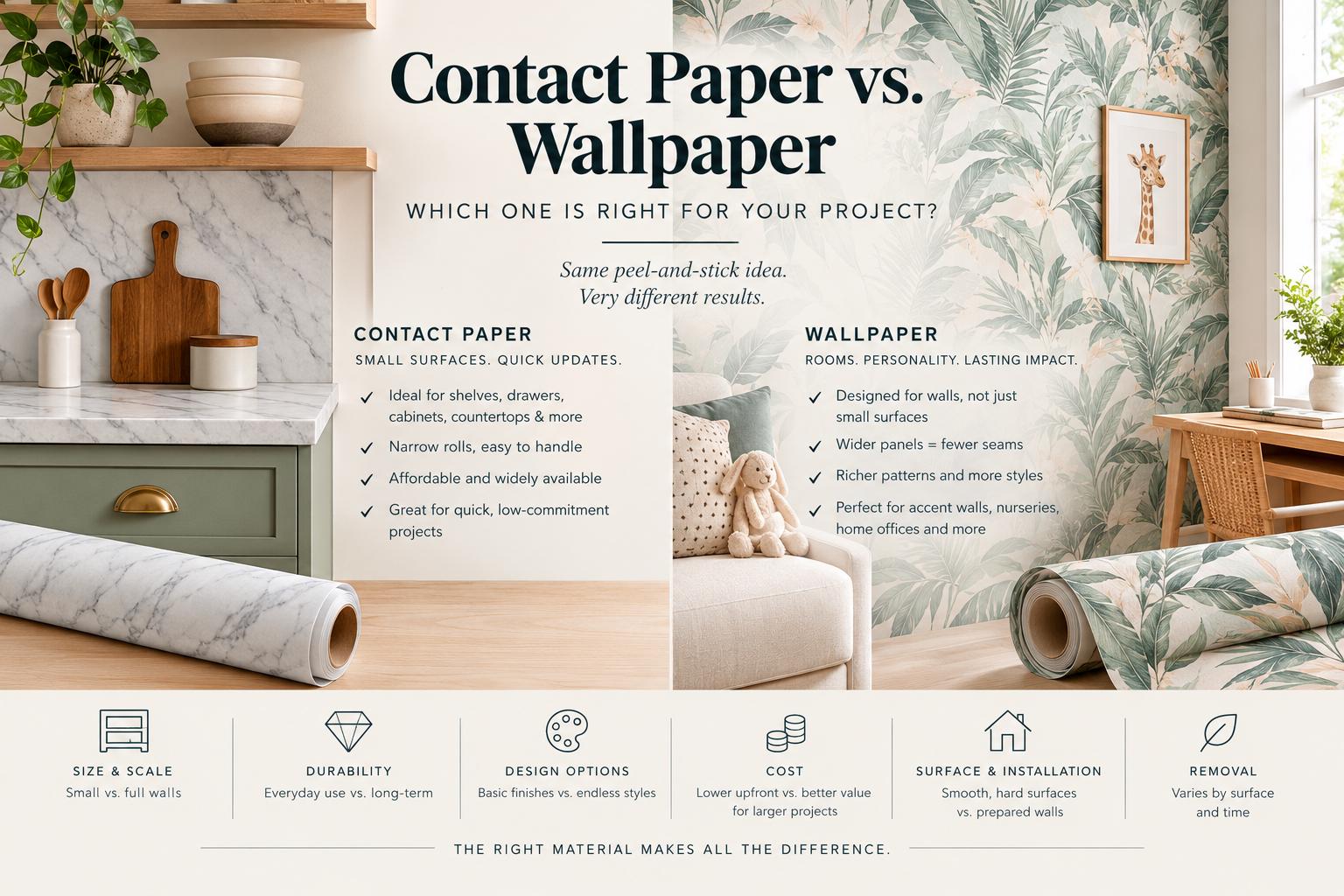
A quick roll of contact paper can make a tired shelf look better by dinner. But when the project is an entryway accent wall, a calm nursery, or a home office that needs personality, the contact paper vs wallpaper decision changes. These materials may both have peel-and-stick versions, yet they are made for very different jobs - and choosing the right one affects the finished look, how long it lasts, and how your walls fare when it comes down.For small surfaces, contact paper can be a clever, low-commitment fix. For walls, removable wallpaper is usually the more polished and dependable choice. The best option depends on the surface, the scale of the project, your design goals, and whether you want a temporary refresh or a room-defining transformation.
Contact Paper vs Wallpaper at a Glance
Contact paper is a self-adhesive decorative film, typically sold in narrow rolls. It was originally designed to line shelves, drawers, cabinets, countertops, and other hard, smooth surfaces. Many styles mimic marble, wood grain, tile, or solid color. It is affordable, easy to find, and useful when a small area needs a quick visual lift.Wallpaper is designed to cover walls. Traditional wallpaper uses paste, while peel-and-stick wallpaper has adhesive backing that applies directly to a properly prepared wall. It comes in wider panels or rolls, with patterns scaled for rooms rather than cabinet fronts. Made-to-order peel-and-stick wallpaper can also be sized for your specific wall, which means less guesswork around repeats, seams, and excess material.The overlap is real: both can be adhesive-backed and removable. The difference is in the material construction and intended use. Contact paper prioritizes hard-surface coverage. Wallpaper prioritizes visual continuity across a vertical wall.
Where Contact Paper Works Best
Contact paper earns its place in small, practical projects. A renter might use it inside a pantry, on the back of a bookcase, or over a worn desktop. It can add a temporary marble look to a vanity tray, refresh plain drawer interiors, or create a colorful backdrop in a glass-front cabinet.Because it is commonly narrow and has a thinner, more film-like feel, it is easier to handle in compact areas. If you make a mistake, replacing one short section is inexpensive. Its wipeable surface can also be helpful in places that see crumbs, pencil marks, or daily wear.That convenience has limits. Contact paper is prone to showing every wall imperfection, from tiny dents to a slightly bumpy paint finish. On a larger wall, it can look pieced together because you need many narrow strips. Its adhesive may also be stronger or less predictable than removable wallpaper adhesive, especially after heat, sunlight, or months of use. That is a risk worth considering in a rental or on freshly painted drywall.
Why Wallpaper Is the Better Choice for Walls
Walls need material that can handle scale. A pattern that looks charming on a 12-inch shelf liner can feel busy, repetitive, or visibly misaligned once it covers eight feet of wall. Wallpaper designs are developed with room proportions in mind, whether you want oversized florals behind a bed, a quiet neutral texture in a dining space, or a playful safari scene in a child's room.Peel-and-stick wallpaper also creates a more intentional finish. Wider panels mean fewer seams than narrow contact-paper strips. Quality wallcoverings have enough body to make application more manageable without feeling stiff, and the printed design is made to align from panel to panel. When installed carefully, the finished wall reads as a designed surface, not a workaround.For a personalized mural, wallpaper is the clear fit. A family name, city map, initials, or custom quote needs precise sizing and a layout that belongs to the full wall. Contact paper cannot offer that same tailored result without extensive cutting and a high chance of visible joins.
Design range matters
Contact paper tends to focus on utility finishes: faux stone, wood, basic prints, and simple colors. Those finishes have a purpose, especially for a shelf or a small furniture update. Wallpaper gives you more freedom to build a mood.A vintage botanical can soften a guest room. A celestial print can make a nursery feel imaginative without becoming overly themed. An abstract design can give a home office the visual energy of a boutique workspace. In a vacation rental, a memorable accent wall can make listing photos more distinctive while still feeling approachable for guests.If the goal is for a wall to become part of the room's personality, not just a covered surface, wallpaper offers more to work with.
Cost: Look Beyond the Roll Price
At first glance, contact paper usually costs less. That can make it tempting for a wall project, particularly if you are refreshing on a tight budget. But compare the total coverage, not only the price of one roll. Covering a full wall with narrow contact-paper rolls can require more material than expected, and matching a pattern from strip to strip can create waste.Peel-and-stick wallpaper has a higher upfront cost because it is a wall-specific decorative product. Custom sizing may cost more than an off-the-shelf roll, but it can reduce over-ordering and the frustration of figuring out how to make standard dimensions fit an unusual wall. For a feature wall you will see every day, that investment often makes sense.Samples are a smart part of the decision. Before ordering a made-to-order design, view the color in your actual room, check how it looks beside flooring and furniture, and feel the material. A sample also lets you test adhesion on the intended surface. Since custom wallcoverings are produced specifically for your order and are often non-returnable, this small step can prevent an expensive mismatch.
Installation and Surface Prep
Neither material can compensate for a poor surface. Peel-and-stick wallpaper performs best on smooth, clean, dry, fully cured painted walls. Dust, grease, texture, flaking paint, or moisture can interfere with adhesion. Fresh paint needs adequate curing time according to the paint manufacturer's guidance before you apply any adhesive wallcovering.Contact paper is especially unforgiving on walls because its thin material can telegraph texture underneath. A lightly orange-peeled wall may look acceptable before installation, then show an uneven pattern once the film is applied. It is better suited to smooth laminate, sealed wood, glass, metal, or other firm surfaces.For wallpaper, measure the wall at more than one point. Walls are not always perfectly square, and outlets, windows, and sloped ceilings need to be accounted for. Start with a level first panel, smooth from the center outward, and trim carefully at the edges. Working slowly matters more than rushing. A beautiful print deserves straight lines and clean seams.
Removal is not identical for every wall
Removable wallpaper is designed to peel away more easily than traditional pasted wallpaper, but removal is still surface-dependent. Paint quality, wall prep, humidity, installation time, and the existing condition of the drywall all play a role. Peel slowly at a low angle rather than pulling sharply.Contact paper can be more variable. Some products lift cleanly; others may leave adhesive behind or pull at weak paint. Heat from a hair dryer can sometimes help soften the adhesive during removal, but it is not a guarantee against damage. If preserving the wall is your top concern, test a small, inconspicuous area first.
Choose Based on the Project, Not the Trend
Choose contact paper when you are lining shelves, updating drawers, adding a small accent to furniture, or experimenting on a hard, smooth surface. It is a practical DIY material for projects where a narrow roll and quick replacement are benefits.Choose peel-and-stick wallpaper when you want to cover a wall, create an accent behind a bed or desk, transform a nursery, or bring a specific design story into a room. It is also the stronger choice for a polished rental refresh, provided your lease allows it and the wall is suitable.There are a few gray areas. The back panel of a built-in bookcase may work with either material, depending on the look you want. Contact paper may be enough for a simple solid color or subtle faux finish. Wallpaper is worth choosing when that bookcase is meant to become a focal point, especially if a floral, mural, or layered pattern will show behind styled objects.
A Better Way to Commit to a Wall
The easiest decorating decisions balance confidence with practicality. A contact-paper project lets you make a small change quickly. A wallpaper project lets you shape how an entire room feels. They are not interchangeable, and they do not need to be.At WallpaperCraftWorks, made-to-order peel-and-stick designs are created for smooth-wall transformations, from custom-sized statement walls to personal murals that make a room feel unmistakably yours. Start with the surface, measure carefully, order a sample when color or texture matters, and choose the material that gives your idea the finish it deserves.