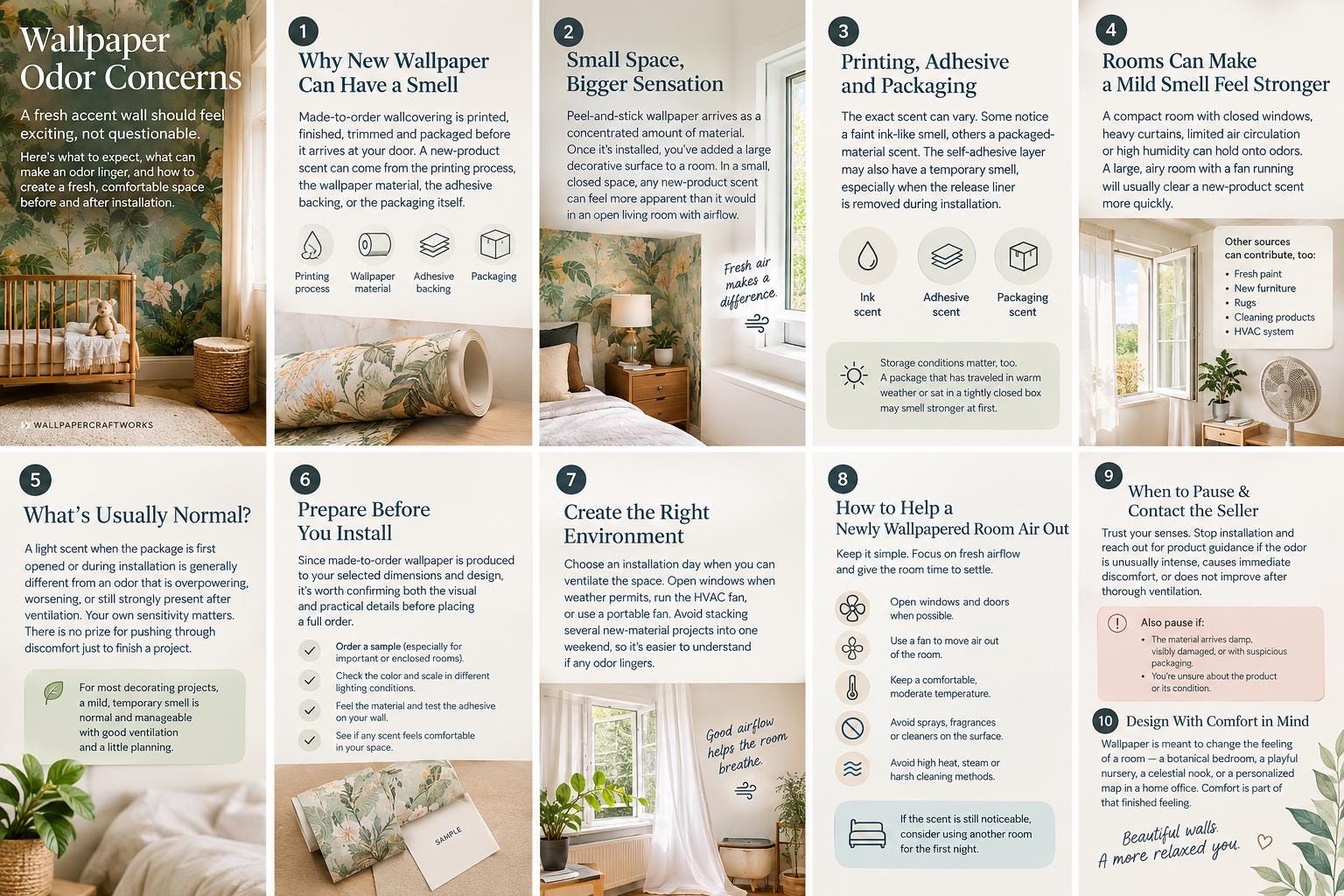
A fresh accent wall should feel exciting, not questionable. Wallpaper odor concerns can come up when you first open a newly printed peel-and-stick mural or bring it into a closed room, especially if you are decorating a nursery, bedroom, or home office. The good news is that a light, temporary new-product smell is often manageable with ventilation and a little planning. The key is knowing what is expected, what can make an odor linger, and when to pause before installation.
Why New Wallpaper Can Have a Smell
Made-to-order wallcovering is printed, finished, trimmed, and packaged before it arrives at your door. Like many newly manufactured home products, it may have a noticeable scent when first unrolled. That scent can come from the printing process, the wallpaper material, the adhesive backing, or the packaging itself.Peel-and-stick wallpaper also arrives as a concentrated amount of material in one package. Once the panels are installed across an accent wall, you have added a large decorative surface to a room. In a small, closed space, any new-product scent can feel more apparent than it would in an open living room with windows and airflow.A mild odor does not automatically mean there is a problem with the wallpaper. Still, it is reasonable to be thoughtful about the room, the people using it, and your comfort level. This is particularly true for nurseries, children's rooms, guest spaces, and rental properties where the room needs to feel welcoming right away.
Printing, Adhesive, and Packaging All Play a Role
The exact scent can vary. Some shoppers notice a faint ink-like smell when they first open a roll, while others notice more of a packaged-material scent. The self-adhesive layer may also have a temporary smell, particularly when the release liner is removed during installation.Storage conditions matter, too. A package that has traveled through warm weather or sat in a tightly closed box may smell stronger at first than one that has been stored in a cool, ventilated area. This does not necessarily reflect how the finished wall will smell after it has had time to air out.
Rooms Can Make a Mild Smell Feel Stronger
A compact room with closed windows, heavy curtains, limited air circulation, or high humidity can hold onto odors. Basements, interior bathrooms, and rooms that have been shut for days are common examples. A large, airy room with a fan running will usually clear a new-product scent more quickly.Before blaming the wallpaper, consider other recent changes in the space. Fresh paint, new furniture, rugs, cleaning products, and even a closed HVAC system can contribute their own odors. More than one source can make it difficult to identify what you are smelling.
Wallpaper Odor Concerns: What Is Usually Normal?
A light scent when the package is first opened, or during installation, is generally different from an odor that is overpowering, worsening, or still strongly present after the room has been ventilated for a reasonable period. Your own sensitivity matters here. There is no prize for pushing through discomfort just to finish a project.For most decorating projects, a practical approach is to unbox the wallpaper in a well-ventilated area and let the room breathe after installation. Open windows when weather permits, run the HVAC fan, or use a portable fan to move air through the space. Avoid sealing up a newly wallpapered room immediately, especially if it is small.If a household member has allergies, respiratory sensitivities, migraines, or a specific concern about new materials, plan ahead rather than making a last-minute decision. A sample can be useful not only for checking color and scale but also for experiencing the material in your own home before committing to a full wall or room.
A Smart Plan Before Installing Peel-and-Stick Wallpaper
A little preparation helps you enjoy the transformation without unnecessary stress. Since made-to-order wallpaper is produced to your selected dimensions and design, it is worth confirming both the visual and practical details before placing a full order.Start with a sample if the room is especially important or enclosed. Place it on the intended smooth wall surface for a short test period, following the sample instructions. You can view the color in morning and evening light, feel the material, assess how the adhesive performs on your wall, and see whether any scent feels comfortable in that particular room.Next, choose an installation day when you can ventilate the space. This is especially helpful for a nursery or bedroom. Installing on a mild day with windows open gives the room an easy head start. If outdoor conditions do not cooperate, use a fan and keep interior doors open to encourage air movement.It also helps to avoid stacking several new-material projects into one weekend. If you install wallpaper, paint furniture, unpack a new area rug, and assemble a flat-pack dresser on the same day, the room may have a mix of scents. Spacing out projects makes the source of any odor easier to understand and gives each item time to air out.
How to Help a Newly Wallpapered Room Air Out
There is no need for complicated fixes. Focus on fresh airflow and give the room time to settle. Keep the wallpaper dry and avoid spraying cleaners, fragrances, or odor-neutralizing products directly onto the surface. Those products can leave residue, introduce another scent, or affect the finish.For a simple setup, open the window and door when possible, then position a fan so it moves air out of the room rather than simply circling it around. Run the fan for periods throughout the day, and keep the room at a comfortable, moderate temperature. Very high humidity can make interiors feel stale, while steady ventilation supports a fresher result.If the wallpaper has just been installed in a bedroom, consider using another room for the first night if the scent is still noticeable to you. That is a comfort choice, not a requirement. Every home, climate, and sensitivity level is different.Do not use high heat, steam, or harsh cleaning methods in an effort to speed up the process. Peel-and-stick wallpaper is designed for smooth, properly prepared walls, and treating it gently protects both the printed surface and the adhesive bond.
When to Pause and Contact the Seller
Trust your senses. Stop installation and reach out for product guidance if the odor is unusually intense, causes immediate discomfort, appears different from a typical new-product smell, or does not improve after thorough ventilation. Take note of when you opened the package, how the product was stored, and whether the smell is coming from the wallpaper itself, the liner, or the room.It is also wise to pause if the material arrives damp, visibly damaged, or with packaging that suggests it may have been exposed to an unusual condition during transit. Do not install a product you are unsure about, especially because a made-to-order project deserves a confident start.For rental homes and vacation properties, build in a little extra turnaround time. A mural can create the memorable backdrop that makes a listing stand out, but installing it just before guests arrive leaves no room for ventilation, photography adjustments, or a careful final inspection.
Design With Comfort in Mind
Wallpaper is meant to change the feeling of a room, whether that means a soft botanical bedroom, a playful safari nursery, a celestial reading nook, or a personalized city map in a home office. Comfort is part of that finished feeling. Ordering a sample, choosing a well-ventilated installation day, and allowing the space to air out are small steps that support a more relaxed DIY experience.At WallpaperCraftWorks, custom peel-and-stick designs are made for expressive rooms and accessible installation on smooth walls. Give your project enough time to be both beautiful and comfortable, and the first thing you notice afterward can be the design you chose for the wall.