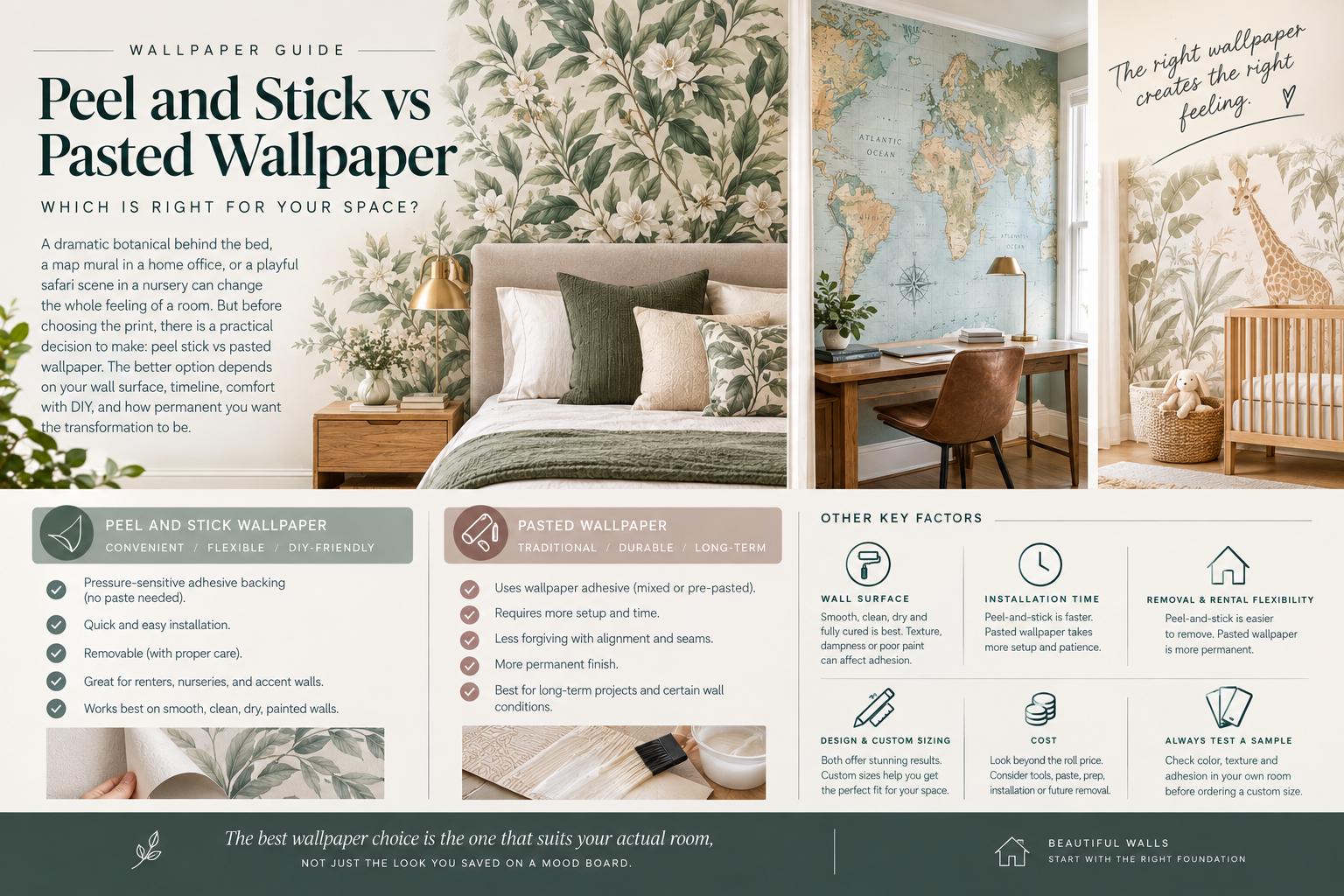
A dramatic botanical behind the bed, a map mural in a home office, or a playful safari scene in a nursery can change the whole feeling of a room. But before choosing the print, there is a practical decision to make: peel stick vs pasted wallpaper. The better option depends on your wall surface, timeline, comfort with DIY, and how permanent you want the transformation to be.For many homeowners and renters, peel-and-stick wallpaper offers the freedom to create a high-impact room without paste, specialized tools, or a long-term renovation commitment. Traditional pasted wallpaper still has a place, especially in certain wall conditions and for projects intended to stay put for years. Here is how to choose with confidence.
Peel Stick vs Pasted Wallpaper at a Glance
Peel-and-stick wallpaper has a pressure-sensitive adhesive backing. You position the panel, smooth it onto a clean wall, and trim it at the ceiling, baseboard, or outlet as needed. There is no paste to mix, no soaking time, and no need to book an installer for a straightforward accent wall.Pasted wallpaper comes as unpasted or pre-pasted material. Unpasted paper needs wallpaper adhesive applied to either the wall or the material, depending on the product. Pre-pasted paper has dried adhesive that must be activated with water. Both methods require more setup, greater attention to timing, and a little more patience when matching seams.Neither format is automatically better. Peel-and-stick is designed around accessible, flexible DIY decorating. Pasted wallpaper is generally a more permanent finish and can be a smart fit when a homeowner wants a wallcovering to remain in place through many years of use.
Installation: The Biggest Difference
If you are decorating a bedroom over a weekend, turning a bland entryway into a statement space, or refreshing a vacation rental between bookings, peel-and-stick is usually the more convenient choice. Panels arrive ready to apply. Once the wall has been prepared, the main tasks are measuring, leveling the first panel, peeling the backing gradually, and smoothing outward to release air.The first panel matters most. A slightly crooked start can carry across the whole wall, particularly with stripes, arches, grids, or other structured designs. Use a level rather than relying on a ceiling or corner, since many are not perfectly straight. Two people make large mural panels easier to handle, but a careful DIYer can often install a smaller feature wall alone.Pasted wallpaper asks more of the installer. Paste has to be mixed or applied evenly, paper may need time to relax before hanging, and excess adhesive needs to be wiped away promptly. The process can produce beautiful results, but it is less forgiving of rushed work. It also tends to be messier, especially around trim, outlets, and tight corners.For a first wallpaper project, peel-and-stick removes several variables. You can lift and reposition a panel during application if alignment needs adjustment, as long as you work carefully and avoid allowing the adhesive to fold onto itself.
Wall prep still matters
“Peel and stick” does not mean “stick to every wall.” The best surface is smooth, clean, dry, and fully cured. Fresh paint needs adequate curing time before wallpaper goes up. Dust, grease, humidity, and leftover residue can interfere with adhesion.Textured walls are the most common complication. Orange peel texture, rough plaster, deep grooves, flaking paint, or uneven repairs reduce the adhesive contact area and can make seams more noticeable. Traditional pasted wallpaper may perform better on some imperfect surfaces, depending on the material and installation method, but severe texture should be repaired or skim-coated for the cleanest result either way.A sample is one of the simplest ways to reduce uncertainty. Test it on your actual wall, in the room where it will live. This lets you see how the color shifts between morning and evening, feel the material, and assess adhesion on your paint finish and wall condition.
Removability and Rental Flexibility
This is where peel-and-stick wallpaper often earns its place. When applied to a suitable smooth wall and removed slowly and carefully, it is designed to come down without the soaking, scraping, and adhesive cleanup associated with traditional wallpaper. That makes it especially appealing for renters, temporary nurseries, evolving kids’ rooms, and anyone who loves changing a space as their style changes.Removable does not mean risk-free in every situation. Weak, damaged, improperly prepared, or very old paint can lift during removal. Walls painted with low-quality paint, walls with peeling areas, and surfaces that were not fully cured are more vulnerable. If you are renting, check your lease and test a sample in an inconspicuous spot before committing to a full wall.Pasted wallpaper is better suited to a long-term plan. It can be a satisfying choice for a forever home, but removal often involves water, stripping solutions, scraping, and possible wall repair. For a room you expect to redesign in a few years, that permanence may feel less like a benefit.
Design, Custom Sizing, and Visual Impact
Both formats can create an elevated look. The visual difference comes less from adhesive type and more from the design, scale, color, panel layout, and quality of installation. A large-scale floral can make a quiet guest room feel collected and romantic. A black-and-gold abstract can give a compact dining nook a more tailored mood. A personalized name mural can make a child’s room feel entirely their own.Custom sizing is particularly valuable with peel-and-stick murals. Instead of trying to make standard rolls work around a specific wall, window, built-in, or sloped ceiling, you can order for the dimensions of the space. Measure the widest and tallest points of the wall, then follow the product’s sizing guidance carefully. Include any needed overage for trimming, especially in older homes where ceilings and floors may vary.Because made-to-order wallpaper is produced specifically for your selected design and dimensions, measuring before ordering is essential. Take the time to confirm your numbers, wall condition, and design choice. Samples are helpful for color confidence, while painter’s tape can be used to mark the mural’s approximate footprint on the wall and check how its scale will feel in the room.
Cost: Look Beyond the Roll Price
The upfront material price is only one part of the project. Pasted wallpaper may look less expensive in some cases, but its full cost can include paste, tools, prep supplies, and professional installation. If your wall requires repair or priming, those costs apply regardless of wallpaper type.Peel-and-stick wallpaper is often a stronger value when you are handling installation yourself. The simplified process can save on labor, and the ability to remove it later can prevent a more involved renovation when tastes or needs change. For a rental property, an accent wall that photographs beautifully and can be updated between tenants may be worth more than a permanent treatment.That said, do not choose peel-and-stick solely because it sounds easier. If your wall is heavily textured, damp, unstable, or freshly painted, address those conditions first. The most beautiful pattern cannot overcome a surface that is not ready for wallpaper.
When Peel-and-Stick Is the Right Choice
Choose peel-and-stick when you want a design-forward change with a manageable DIY process, particularly on smooth interior walls. It is a natural fit for renters, first-time wallpaper users, home offices, nurseries, bedrooms, powder rooms with proper ventilation, and feature walls that deserve a little personality.It also works beautifully when you want the option to evolve. A toddler room can become a study space. A neutral living room can take on a moody botanical moment. A vacation rental can shift its look as guest preferences and local style change. WallpaperCraftWorks designs are made for these expressive, personal transformations without asking you to treat every decorating choice as permanent.
When Pasted Wallpaper May Be Better
Consider pasted wallpaper if you are working with a wallcovering professional, planning a finish for the long haul, or choosing a material that specifically requires paste. It may also be the more appropriate route for challenging surfaces after proper preparation, depending on the wallcovering and the installer’s recommendation.A permanent installation can make perfect sense for a formal dining room, a historic home renovation, or a space where you have no plans to redecorate soon. Just factor in the future removal process before you commit.The best wallpaper choice is the one that suits your actual room, not just the look you saved on a mood board. Start with a smooth, well-prepared wall, order a sample when color or adhesion is uncertain, and choose the format that gives you the freedom - or permanence - you genuinely want.