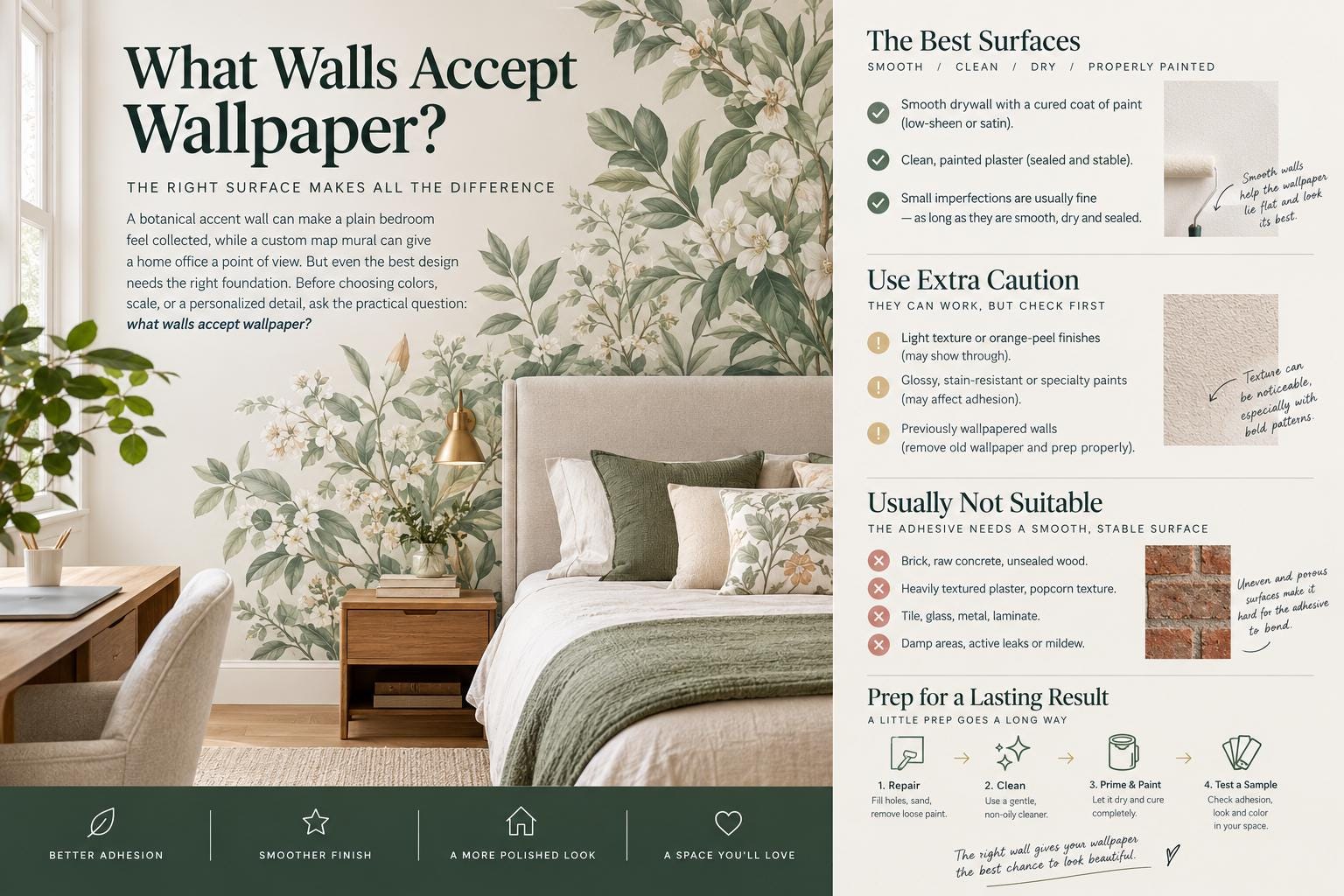
A botanical accent wall can make a plain bedroom feel collected, while a custom map mural can give a home office a point of view. But even the best design needs the right foundation. Before choosing colors, scale, or a personalized detail, ask the practical question: what walls accept wallpaper?For peel-and-stick wallpaper, the short answer is smooth, clean, dry, properly painted walls. The longer answer matters because paint type, texture, repairs, humidity, and even how recently the room was painted can affect adhesion. A few minutes spent checking your surface can help your project look polished from the first panel to the last.
What Walls Accept Wallpaper Best?
The most reliable surface for peel-and-stick wallpaper is smooth, sound drywall with a cured coat of paint. Walls finished in a low-sheen or satin paint are often a comfortable choice because they are smooth enough for close contact without being excessively slick. A clean, painted plaster wall can work well too, as long as it has been sealed and does not have crumbling areas, cracks, or powdery residue.Think of wallpaper as a large adhesive decal rather than a fabric that can disguise every wall flaw. It needs broad, consistent contact with the wall to stay in place. When the surface is smooth, each panel can lie flat, patterns can align cleanly, and the finished wall has the tailored look that makes an oversized floral, modern abstract, or nursery mural feel intentional.A wall does not have to be perfect to accept wallpaper. Small nail holes, hairline imperfections, and minor scuffs are usually easy to address. What matters is that repairs are smooth, dry, and sealed before installation.
Painted drywall is the go-to choice
Most residential accent walls are painted drywall, and this is typically the easiest surface for a peel-and-stick installation. The paint should be firmly attached to the wall, not bubbling, flaking, or chalky. Run your hand across it. If it feels smooth and leaves no dust on your fingers, it is a promising candidate.Freshly painted walls need patience. Paint may look dry within hours, but it continues curing and releasing moisture for weeks. Installing too soon can weaken adhesion or pull at paint when the wallpaper is removed later. Allow new paint to cure fully according to the paint manufacturer's guidance, which is commonly around 30 days.If you are preparing a wall specifically for wallpaper, choose a smooth finish and avoid textured paint additives. A simple, well-cured painted surface gives you the most flexibility for future design changes.
Smooth plaster can work beautifully
Older homes often have plaster walls, and they can create an excellent backdrop for wallpaper when they are stable and sealed. Check for loose material, flaking old paint, moisture marks, and uneven patches before you order. Any repair compound should be sanded smooth, primed, and allowed to dry completely.Plaster has character, but wallpaper will not erase deep waviness or cracks. A large-scale mural especially benefits from a flatter wall, since uneven areas may become more visible once a continuous image spans the surface.
Walls That Need Extra Caution
Some walls are not automatic no's, but they require a closer look and often a sample test. This is where a small amount of preparation can prevent the disappointment of a panel that lifts at the edges or reveals more texture than expected.
Light texture and orange-peel finishes
Light orange-peel texture is common in American homes. Whether it accepts wallpaper depends on how pronounced the texture is and how exacting you want the final look to be. Peel-and-stick material may adhere to a very subtle texture, but bumps can show through the surface and reduce full adhesive contact.For a graphic stripe, a clean geometric, or a close-up floral, texture is especially noticeable because crisp lines draw attention to the wall beneath. Smoothing the wall first will produce a more refined result. If you love the existing texture or do not want to prepare the wall, consider reserving wallpaper for a smoother focal wall instead.
Glossy, stain-resistant, or specialty paints
A smooth glossy wall may appear ideal, yet some high-gloss, stain-resistant, scrubbable, or low-VOC paint formulas can be difficult for adhesives. The issue is not always the sheen. Certain additives create a surface designed to repel stains and moisture, which can also limit adhesion.This is a smart situation for a sample. Apply it to a cleaned, inconspicuous area and leave it in place long enough to assess how it holds. A sample also lets you see how your room's daylight and evening lighting affect the design color before committing to a made-to-order size.
Previously wallpapered walls
Peel-and-stick wallpaper should be installed on the wall itself, not over old wallpaper. Existing seams, lifted corners, embossed patterns, and aging adhesive can show through or create unreliable spots. Removing the old covering, cleaning away residue, repairing damage, and priming as needed creates a far better surface.Wallpaper should also not be applied over a wall with loose paint. If painter's tape pulls paint away, wallpaper removal may do the same. Address adhesion problems with the paint first, rather than hoping a decorative layer will hold everything together.
Walls That Usually Do Not Accept Peel-and-Stick Wallpaper
Some surfaces are simply too uneven, porous, damp, or unstable for a dependable application. Peel-and-stick wallpaper is designed for accessible DIY installation on smooth interior walls, not for solving underlying wall conditions.Avoid installing directly on brick, raw concrete, unsealed wood, heavily textured plaster, popcorn texture, or unfinished drywall. Deep grooves and porous surfaces keep the adhesive from making even contact. Wood paneling can be a challenge as well, especially if the seams between boards are pronounced or the finish is oily.Tile, glass, metal, and laminate may seem smooth, but they introduce other concerns. Grout lines and seams will show through, while slick nonporous materials can make long-term adhesion unpredictable. In bathrooms, laundry rooms, or basement spaces, moisture and humidity deserve extra attention. Wallpaper can add personality to a powder room or a dry, well-ventilated bath wall, but it should not be placed where it will receive direct water spray or persistent condensation.If the wall has active leaks, mildew, soft spots, or recurring dampness, pause the decorating project. The moisture issue needs to be corrected before any wallcovering goes up.
How to Prep a Wall for Wallpaper
Good preparation is not complicated, but it should not be rushed. Start by removing nails, hooks, outlet covers, and any loose paint. Fill holes and dents with spackle, sand repairs until they feel flush, and wipe away sanding dust.Next, clean the wall with a gentle, non-oily cleaner and let it dry fully. Kitchen walls, entryways, and children's rooms can carry invisible residue from cooking, handprints, sprays, or everyday life. Adhesive works best on a clean surface, not one coated with dust or cleaning-product film.Take time to check the wall in side light from a window or lamp. This is when texture, ridges, and patchy repairs become easier to see. If the wall needs primer after repairs, let the primer and paint cure completely before installation.For renters, this prep step is also helpful protection. Document the wall's condition before you begin, follow the property's decorating rules, and test a sample in a discreet location. Removable wallpaper is designed for flexible decorating, but every paint job and wall surface has its own history.
Use a Sample Before Ordering a Custom Size
A sample is the most practical answer when you are unsure whether your wall will accept wallpaper. It lets you assess three things at once: adhesion on your specific paint, the look of the material against your wall texture, and the way the design color reads in your room.Apply the sample to a clean, dry area that represents the wall you plan to cover. Avoid a spot directly over a repair, near a heat vent, or in a damp corner. Check it after several days, paying attention to the edges. If it remains flat and secure, you can move forward with more confidence.This matters even more for custom-sized and personalized designs. Measure the full width and height of the wall carefully, including the areas behind furniture if you want a complete installation. Because made-to-order wallpaper is produced for your selected dimensions and may be non-returnable, confirming both the surface and your measurements before ordering is part of a successful project.
Choose the Wall That Lets the Design Shine
The best wallpaper wall is often not the largest wall in the room. It is the one that is smooth, dry, visible, and ready to support the look you want. A quiet bedroom wall behind the bed can carry a romantic botanical. A clean office backdrop can make a city mural feel purposeful. A smooth nursery wall can become a soft safari scene or a personalized space that grows with your child.If your favorite wall is not ready yet, that does not mean giving up on the idea. It may simply mean choosing another surface, doing a little prep, or testing a sample first. The right wall gives peel-and-stick wallpaper its best chance to look beautiful now and remain a decorating choice you feel good about later.