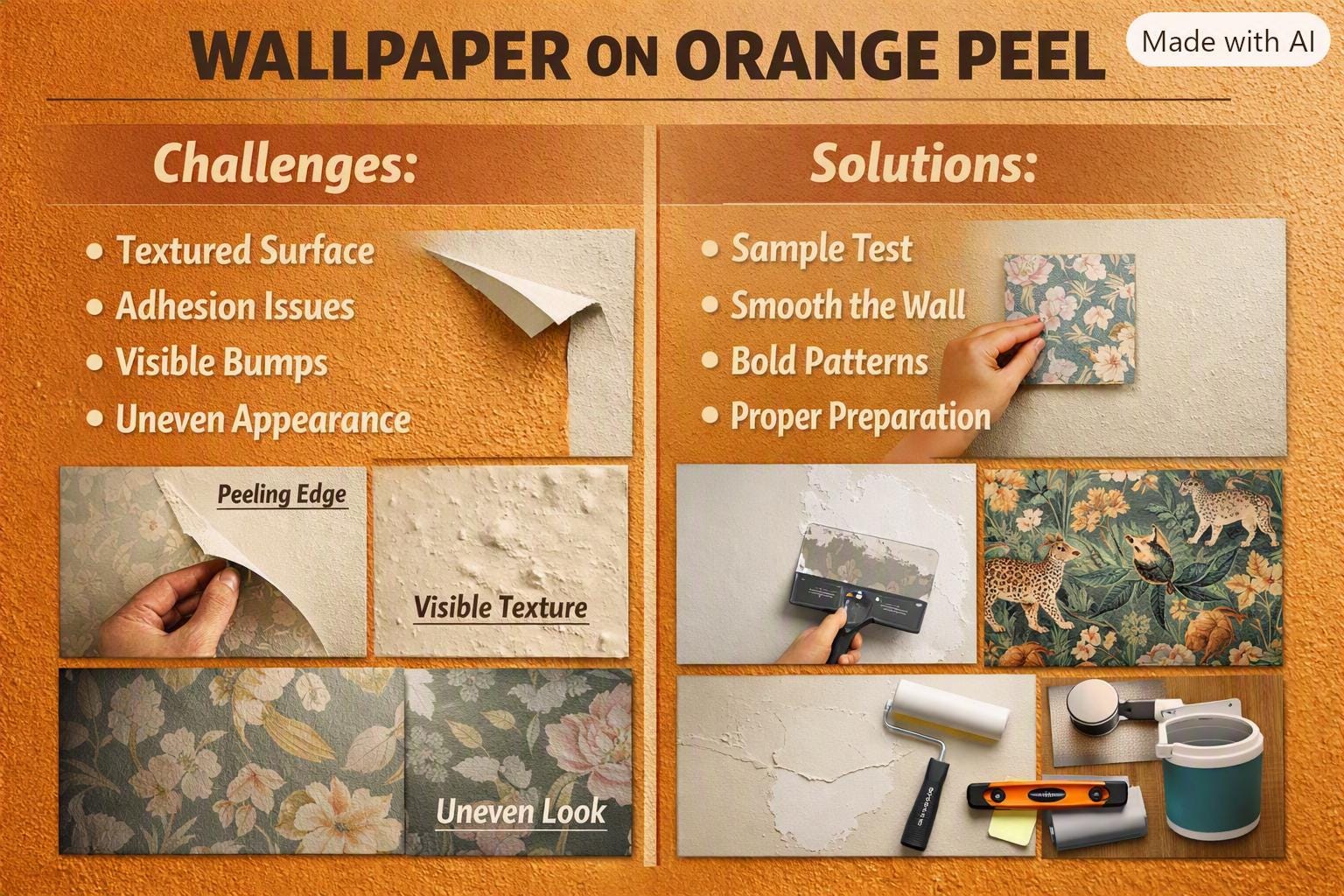
An orange peel wall can make a bold botanical, refined abstract, or personalized mural look less polished than you pictured. So, can wallpaper cover orange peel texture? Sometimes, but it is not the same as making the texture disappear. Peel-and-stick wallpaper may adhere over very light orange peel, yet the bumps can still show through and can affect how securely the material bonds over time.For the smooth, high-impact finish most homeowners want from a statement wall, proper surface prep matters just as much as the design. A sample is the smartest first step before ordering a custom, made-to-order wallpaper panel.
Can wallpaper cover orange peel without showing texture?
Wallpaper can visually soften a mild orange peel finish, especially with a busy pattern, darker color palette, or richly layered design. A safari scene, dense floral print, or abstract pattern may distract from subtle wall variation more effectively than a minimalist mural with large areas of solid color.But peel-and-stick wallpaper does not fill in texture. It lies across the surface, which means the raised pattern may remain visible in certain lighting or when viewed from the side. Smooth, pale, or high-contrast designs tend to reveal orange peel more clearly. A delicate line drawing or a soft neutral mural can look especially uneven if the wall underneath has noticeable texture.Texture is not only a visual concern. Peel-and-stick material needs broad, consistent contact with the wall to perform its best. On a textured surface, the adhesive touches the high points first instead of bonding evenly across the full panel. Mild texture may hold well in a low-humidity room, while heavier orange peel can create weak spots, lifted edges, or seams that need attention.
How to tell whether your orange peel is too heavy
Run your hand across the wall and look at it in light from a nearby window or lamp. If the surface feels lightly stippled but largely flat, it may be a candidate for a sample test. If you can clearly feel deep bumps, sharp peaks, or uneven patched areas, the wall should be smoothed before wallpaper installation.Another useful test is visual distance. Stand a few feet away and inspect the wall from an angle. If the orange peel is obvious before anything is installed, expect it to remain noticeable beneath wallpaper. Large murals and designs with open backgrounds generally need a smoother surface than small-scale, detail-rich patterns.Walls with peeling paint, old adhesive residue, chalky paint, cracks, or fresh drywall compound need prep regardless of texture level. Wallpaper should be applied to a clean, dry, cured, and sound surface. A beautiful design cannot compensate for a wall that is shedding, damp, or unstable underneath.
The best prep for peel-and-stick wallpaper on orange peel
If you love the flexibility of removable wallpaper but your wall has orange peel, smoothing the surface is the most reliable route to a refined result. It takes more effort upfront, but it protects the look of your investment and makes installation less frustrating.
For light texture, start with a sample
Order a sample and apply it to the actual wall, not a cabinet door or another smooth surface. Leave it in place long enough to see how it responds to normal room conditions. Check whether the sample settles into the texture, whether the edges remain secure, and whether the orange peel shows through more than you are comfortable with.A sample also lets you view the design color in your room's changing light. That is especially valuable when choosing a custom mural for a bedroom, nursery, entryway, or home office, where wall color, window direction, and furniture can shift the overall effect.
For moderate to heavy texture, smooth first
The preferred solution is a skim coat: a thin layer of joint compound applied across the wall to fill the low areas and create a flatter finish. Once it is fully dry, the surface is sanded smooth, cleaned, primed, and allowed to cure according to the primer manufacturer's directions.This is a practical DIY project for some homeowners, but there is no shame in bringing in a painter or drywall professional if the wall is large or the texture is pronounced. The goal is not perfection under a magnifying glass. It is a consistently smooth, clean foundation that gives peel-and-stick wallpaper full adhesive contact.Do not apply wallpaper over a wall that is still dusty from sanding. Wipe away all residue, let the wall dry completely, and use an appropriate primer if needed. Fresh paint and primer require adequate cure time before installation. Rushing this stage can lead to adhesion problems even on an otherwise smooth wall.
When wallpaper can still be a good choice
Orange peel does not automatically rule out wallpaper. It simply changes the decision from "Which design do I love?" to "Will this wall support the finish I expect?" If the texture is light, the wall is clean and well-painted, and you choose a pattern that works with a little surface variation, peel-and-stick wallpaper can still create a dramatic update without a permanent renovation.A busier design is often the more forgiving choice. Think layered vintage botanicals, playful children's scenes, celestial prints with star-filled detail, or a nature-inspired mural with varied color and movement. These styles can bring personality to a room while making minor wall texture less of a focal point.For rental homes, smoothing an entire wall may not be allowed or worth the effort. In that case, consider applying wallpaper to the smoothest available wall, such as a newly painted accent wall, a closet interior, or a section of wall that has already been repaired. A removable feature in the right spot can still transform a space without taking on a major project.
Designs and rooms that demand a smoother wall
Some projects deserve more surface preparation because the design itself puts the wall under a spotlight. Personalized name murals, city maps, architectural prints, oversized florals, and clean geometric patterns look best when the background is smooth. Their crisp lines and intentional scale can make texture more apparent.You may also want to smooth first in spaces where people spend time up close. A powder room, nursery, bedside accent wall, or home office backdrop is viewed at shorter distances than a large living room wall. If wallpaper will appear behind video calls or in listing photos for a vacation rental, a smoother finish creates the more elevated, camera-ready result.Humidity is another factor. Bathrooms with showers, laundry rooms, and walls near frequent moisture changes are less forgiving than dry bedrooms or dining areas. Orange peel plus humidity can make adhesion less predictable. Choose a dry, smooth wall whenever possible, and avoid relying on wallpaper to solve a surface issue in a high-moisture space.
A practical checklist before you order
Before choosing custom dimensions, measure the wall carefully and look beyond its height and width. Check for texture, repaired areas, outlets, vents, baseboards, and any moisture concerns. Decide whether the finish you want is relaxed and pattern-forward or crisp and mural-like, because that distinction should guide how much prep you do.Then test a sample in the intended room. It is a small step that can answer the questions photos cannot: Does the color work with your flooring? Does the material feel right? Does the adhesive hold on your wall? Most importantly, are you happy with how the texture reads beneath the design?WallpaperCraftWorks designs are made to order for a personalized fit, so confirming surface suitability before placing a full order helps you choose with confidence. If your orange peel is more than very light, treat smoothing as part of the design plan rather than an optional extra.The right wallpaper can make a plain room feel collected, imaginative, and completely your own. Give it a smooth enough canvas, and the pattern gets to do what it was chosen to do: make the wall worth looking at.