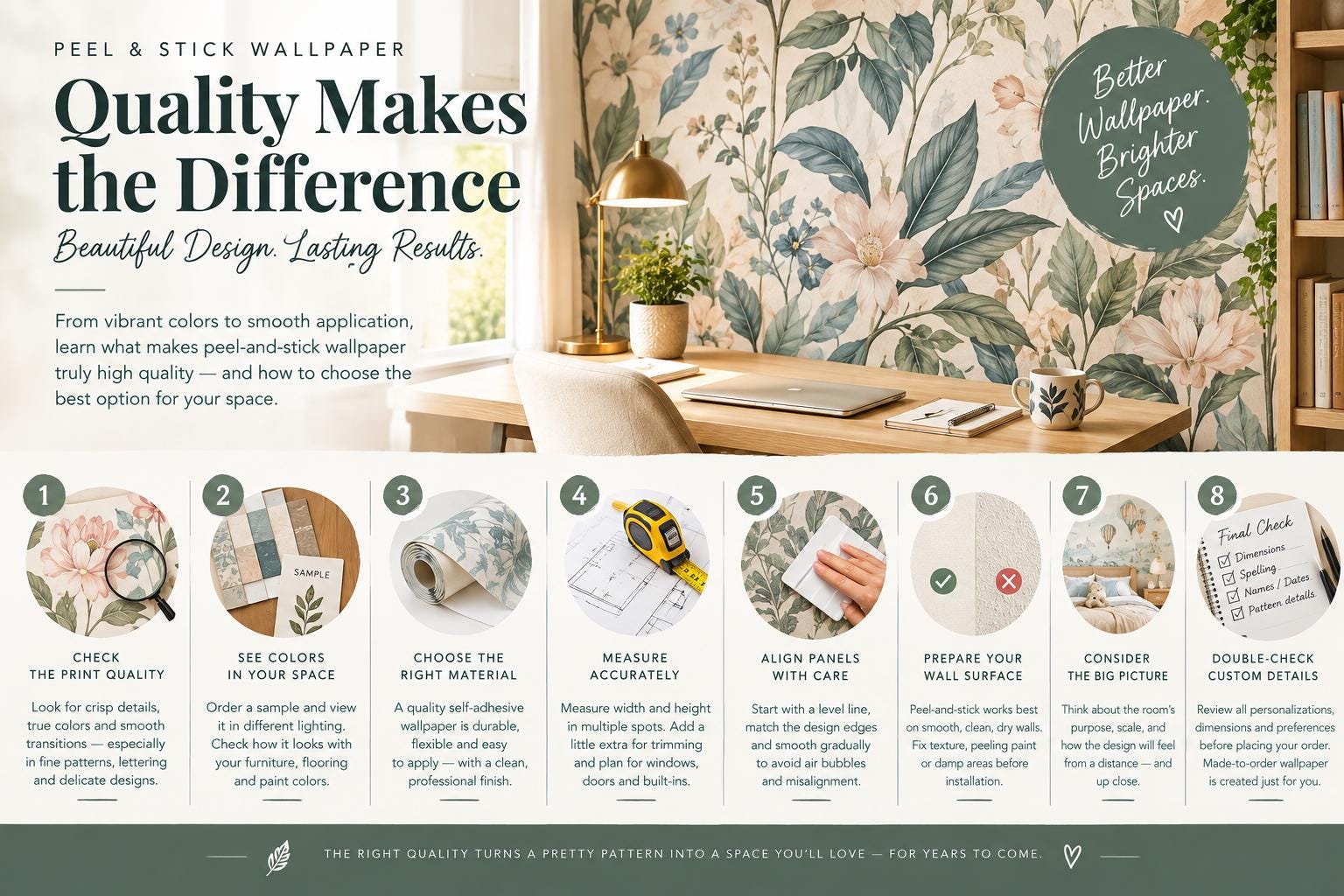
A dramatic mural can make a blank home office feel intentional. A soft botanical can give a nursery the warmth of a finished room. But wallpaper quality is what determines whether that first impression holds up once the panels are on your wall. It affects color clarity, how the material feels in your hands, how confidently it applies, and how polished the finished wall looks from across the room and up close.For peel-and-stick wallpaper, quality is not just about choosing a beautiful pattern. It is the combined result of a well-produced design, the right material, accurate custom sizing, careful wall preparation, and realistic expectations about the surface underneath. Get those pieces right, and a DIY accent wall can look considered rather than temporary.
What Wallpaper Quality Looks Like in a Finished Room
The easiest way to judge quality is to picture the wall after installation, not the listing image. A high-quality peel-and-stick wallpaper should have crisp detail, balanced color, and a material that lies smoothly against a suitable wall. Patterns should feel deliberate at the scale you ordered, whether you are working with a small entryway, a full bedroom wall, or a statement backdrop in a vacation rental.Print quality matters most in designs with fine linework, painterly florals, maps, city scenes, and personalized details. Tiny leaves should not turn muddy from a few feet away. Lettering in a name mural should be clean and readable. In abstract designs, color transitions should feel intentional rather than streaky or flat.Material quality shows up during installation and daily life. A well-made self-adhesive wallcovering should be substantial enough to handle with care during application, while remaining flexible enough to position panel by panel. It should create a clean decorative finish on smooth, properly prepared walls without requiring paste, water trays, or professional wallpaper tools.That does not mean every wall is a fit. Peel-and-stick wallpaper is designed for smooth surfaces. Heavy texture, loose paint, fresh paint that has not fully cured, dusty drywall, and damp areas can affect adhesion and the final appearance. A premium pattern cannot compensate for an unsuitable wall.
The Details That Shape Peel-and-Stick Wallpaper Quality
Color is more than a screen preview
Your phone, laptop, room lighting, and existing paint color all influence what you see. A blush floral may look warmer beside cream trim than it does on a bright product screen. A deep navy celestial print can feel moody in a bedroom with soft lamps but sharper in a sun-filled playroom.This is why samples are a practical part of buying made-to-order wallpaper, not an extra step for overly cautious shoppers. Place a sample on the intended wall and view it in morning light, afternoon light, and evening light. Hold it next to flooring, curtains, wood furniture, and fabric swatches. You are checking color, print scale, material texture, and how the adhesive responds to your specific surface.A sample is especially useful before ordering a large mural or a personalized design. Made-to-order items are created for your selected dimensions and details, so taking a moment to confirm your choice can prevent an expensive mismatch later.
Scale can make a beautiful design feel wrong
Wallpaper quality also includes the relationship between the pattern and the room. A large-scale tropical leaf can create a confident focal point behind a bed or dining table, yet overwhelm a narrow powder room if the visual density is too high. A small repeating print may bring gentle texture to a nursery, but it can disappear on a large living room wall.Consider what the wall needs to do. For a quiet bedroom, a soft neutral botanical or subtle abstract can add depth without taking over. For an entryway or rental photo backdrop, a bold luxury-inspired geometric, safari scene, or colorful city mural can create the memorable moment guests notice immediately.Personalized wallpaper deserves another layer of thought. Names, initials, quotes, and maps should be sized for the viewing distance. A phrase above a crib or desk needs comfortable spacing and clear contrast. A custom map mural should feel large enough to read as a destination piece, not a collection of tiny, hard-to-see details.
Accurate measuring protects the finished look
A custom-size order can reduce the excess and guesswork that come with standard rolls, but it still depends on accurate measurements. Measure the wall width and height in more than one place. Older homes and even newer construction can have walls that are slightly uneven, ceilings that slope, or trim that interrupts the usable area.Add a little extra allowance for trimming. It is better to trim a small amount at the ceiling, baseboard, or edge than to discover the material comes up short. Measure around windows, doors, built-ins, and outlets carefully, then plan your starting point so the most visible parts of the pattern land where you want them.For murals, this planning is particularly valuable. The artwork is composed across panels, so the wall dimensions guide how the final scene will appear. If you are uncertain, pause before ordering. Confirming measurements first is far easier than trying to stretch a custom design to fit later.
Panel alignment is part of the visual result
Even a beautifully printed design can lose impact if the panels are rushed. Peel-and-stick wallpaper is DIY-friendly, but a calm, methodical installation makes the difference. Start with a level reference line rather than relying on a corner, which may not be perfectly straight. Apply the first panel carefully, then align each following panel according to the design edges and instructions.Work gradually from top to bottom, smoothing as you go to reduce trapped air. Avoid pulling the material too aggressively, especially around corners or cutouts. If repositioning is needed, do it gently and early rather than forcing a panel into place after it has been pressed down firmly.It helps to have a second person for larger panels, tall walls, or mural installations. One person can hold and guide the panel while the other checks alignment and smooths it into place. That small bit of teamwork can protect the finish and make a statement wall feel much less intimidating.
How to Choose Better Wallpaper for Your Wall
Start with the room, then choose the design. A renter refreshing a bedroom may prioritize a removable-looking update and a manageable accent wall. A homeowner finishing a dining room may want a more immersive full-wall pattern. A parent designing a child’s room may focus on color, theme, and a personalized detail that can grow with the space.Next, be honest about the wall condition. Smooth, clean, dry walls give peel-and-stick wallpaper its best chance to perform well. If the wall has noticeable texture, peeling paint, or surface damage, address that first or choose another decorative approach. Adhesive wallcovering follows the surface behind it, so bumps and grooves may remain visible.Then order a sample when color, texture, or adhesion is uncertain. This is the best low-pressure way to see whether a dreamy cottagecore floral, warm neutral checkerboard, or dramatic celestial sky belongs in your actual room. It also lets you test the design against the lighting that matters most: yours.Finally, treat custom information as final before you submit the order. Double-check dimensions, spelling, capitalization, dates, names, and placement preferences. Made-to-order wallpaper is created specifically for your wall, which is what gives it such a tailored result, but it also means the details deserve a careful final review.
A Better Standard for Wallpaper Quality
The best wallpaper does more than cover a wall. It gives the room a point of view while fitting the realities of everyday decorating: changing tastes, rental-friendly goals, busy schedules, and a budget that does not include a full renovation crew.WallpaperCraftWorks approaches that balance with design-led, made-to-order peel-and-stick options sized for real spaces and intended for smooth-wall DIY installation. The result can be as playful as a safari nursery, as personal as a custom name mural, or as polished as a moody floral backdrop behind your dining table.Choose the design that makes you pause, but give the practical details equal attention. Measure twice, prepare the wall, test a sample when you can, and install without rushing. That is how a wallpaper choice becomes a finished space you will be glad to see every day.