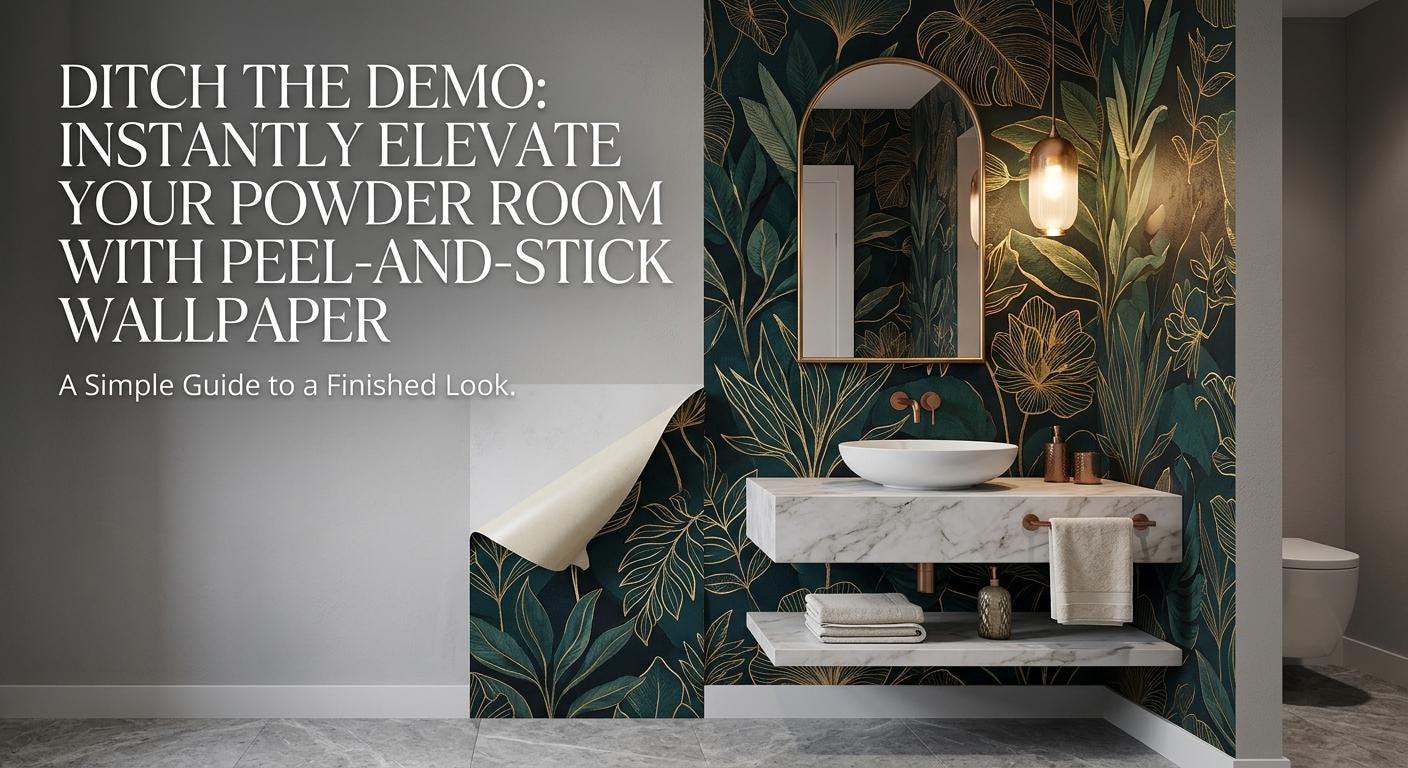
A bathroom can feel finished with little more than a well-chosen wall treatment. The right print turns a plain powder room into a jewel-box moment, gives a guest bath a considered boutique-hotel feel, or brings personality to the room where the day begins. If you want to decorate bathrooms with wallpaper, the secret is balancing visual impact with the realities of moisture, wall condition, and daily use.Peel-and-stick wallpaper makes that update far more approachable than a traditional renovation. You can choose a statement-making pattern, order the sizing you need, and create an expressive backdrop without paste, contractors, or a permanent-looking construction project. Still, bathroom wallpaper deserves a little planning. A beautiful design performs best when it is placed thoughtfully and applied to a suitable surface.
Start With the Bathroom’s Moisture Level
Not every bathroom asks the same thing of its walls. A powder room without a shower is the easiest place to be bold. There is usually less steam, fewer splashes, and more freedom to wrap every wall in a dramatic floral, a dark celestial print, or a refined geometric design.A full bathroom with a shower or tub can also work beautifully with wallpaper, but ventilation becomes part of the design plan. Use the exhaust fan during and after showers, open a window when possible, and avoid installing wallpaper where it will receive direct, repeated water spray. The wall inside a shower enclosure is not the place for peel-and-stick material. Areas immediately surrounding a tub or shower may also see more humidity than the rest of the room.Think of wallpaper as the decorative layer for the dry zones: behind a vanity, above wainscoting, on the wall opposite the shower, or around a toilet nook. If your bathroom stays damp for long periods or has no reliable ventilation, paint or tile may be the more practical choice for the most exposed walls.
Choose a Print That Fits the Room, Not Just the Trend
Bathrooms are often small, which means every pattern has a stronger presence. That is a benefit, not a limitation. A compact room is one of the best places to try a design you might hesitate to use across a large living room wall.For a light, fresh look, soft botanicals, delicate vines, and painterly florals pair naturally with white fixtures, warm wood vanities, and brass details. A vintage-inspired botanical can make a standard builder-grade bathroom feel collected and personal, especially when repeated in a hand towel or framed art.If your style leans more modern, choose an abstract print with a controlled palette, fine-line geometry, or a marble-inspired pattern. These designs can make a small bath feel intentional without competing with sleek faucets, black-framed mirrors, or contemporary tile.Dark wallpaper is especially effective in powder rooms. Deep navy, moody green, black, or charcoal backgrounds add depth and disguise the fact that the room is small. Pair them with a bright mirror, layered lighting, and a light-colored vanity so the space feels atmospheric rather than closed in.Scale matters as much as color. Large blooms or oversized palm leaves create drama and can visually blur awkward corners. Smaller repeats feel tailored and rhythmic, which works well in narrow bathrooms. If you are deciding between two options, order samples first. A sample lets you see the true color next to your tile, countertop, paint, and lighting before committing to a made-to-order wallcovering.
Where to Use Wallpaper in a Bathroom
A full-room installation creates the most immersive result, particularly in a powder room. Covering all four walls can make the room feel deliberately layered, even when the vanity and fixtures are simple. This approach suits classic florals, sophisticated luxury-inspired motifs, and playful prints that deserve to be seen from every angle.For a lower-commitment update, use wallpaper as an accent wall behind the vanity. It frames the mirror, makes everyday routines feel more polished, and turns a functional area into a focal point. A mural-style design can be especially striking here, provided the mirror placement does not hide the most interesting part of the artwork.Wallpaper above beadboard, tile, or painted wainscoting is another practical option. The lower treatment helps protect the wall from everyday splashes while the wallpaper carries the color and pattern higher up. This division also makes a busy print feel more grounded.Do not overlook the wall above the toilet or the space inside a water closet. These small surfaces are ideal for a bolder pattern, whimsical safari scene, or unexpected celestial design. In a rental, a single accent area can deliver a noticeable refresh while keeping the project manageable.
Prep the Wall for a Cleaner Peel-and-Stick Finish
Peel-and-stick wallpaper is designed for accessible DIY installation, but it needs the right foundation. Smooth, clean, dry walls are the best match. Textured surfaces, peeling paint, dusty walls, and fresh paint that has not fully cured can affect adhesion and make seams more visible.Before installation, wipe the wall clean and allow it to dry completely. Remove outlet covers, switch plates, hooks, and anything else that will interrupt the panels. Repair chips or cracks, then make sure the paint surface is stable and not chalky. In a bathroom, this step is worth the extra time because soap residue and humidity can leave more buildup than you realize.Measure each wall carefully, including any areas around windows, doors, sloped ceilings, or built-in cabinets. Do not assume opposite walls are identical. Made-to-order wallpaper is cut to your selected dimensions, so accurate measurements matter. Measure twice, then add a little breathing room if your design and ordering format allow for trimming.For the cleanest result, plan where your first panel will begin. A less noticeable corner is often a smart starting point, while a centered layout may be better for a mural or a symmetrical pattern behind a vanity. Match the pattern slowly as you apply each panel. Pulling a panel back to realign it early is easier than trying to correct a mismatch after pressing down the full length.
Coordinate the Details Around the Wallpaper
Wallpaper does not need matching accessories to look designed. It needs a few elements that echo its mood. Pull one or two quieter colors from the print for towels, a shower curtain, or bath mats. Let metal finishes act as the polish: warm brass complements earthy florals and traditional motifs, while chrome or matte black often suits graphic and modern patterns.Keep the countertop relatively edited if the wallpaper is detailed. A patterned wall plus crowded open shelving can make a small bathroom feel visually busy. Instead, use one tray for daily items, a simple soap dispenser, and textiles that support the palette without copying the pattern exactly.Lighting changes wallpaper more than most people expect. A print that looks soft and warm in daylight may appear cooler under bright white bulbs. Hold your sample up at different times of day, then check it with the vanity lights on. This small test can prevent an expensive color surprise.
When a Sample Is the Smartest First Step
Bathroom walls tend to sit beside hard finishes that are difficult to change: tile, stone, cabinetry, and fixtures. A sample helps you judge more than color. You can see the material texture, test the visual scale, and assess how the adhesive responds to your specific smooth wall surface.It is also useful for deciding whether you need a full-room treatment or a single feature wall. Tape the sample near the vanity and step back. If the print immediately gives the room a stronger point of view, you have found a direction worth building on. If it feels too busy beside your existing tile, a calmer pattern or smaller placement may be the better choice.A bathroom does not need a full remodel to feel memorable. Choose a design that makes you pause when you turn on the light, give it a dry, smooth wall and good ventilation, and let that one decorative decision set the tone for the whole room.