A dramatic botanical wall, a personalized nursery mural, or a softly textured abstract can change a room in an afternoon. But before choosing the pattern, a removable wallpaper adhesion test review should start with the wall itself. Peel-and-stick wallpaper is designed for easy DIY application on suitable surfaces, yet even the most beautiful custom design needs a clean, smooth, stable foundation to hold properly.This is not the glamorous part of planning an accent wall. It is the part that helps you order with confidence, especially when your wallpaper is made to your dimensions and printed just for your space. A simple sample test can reveal whether your wall is ready, whether prep is needed, or whether another surface may be a better fit.
What a Removable Wallpaper Adhesion Test Can Tell You
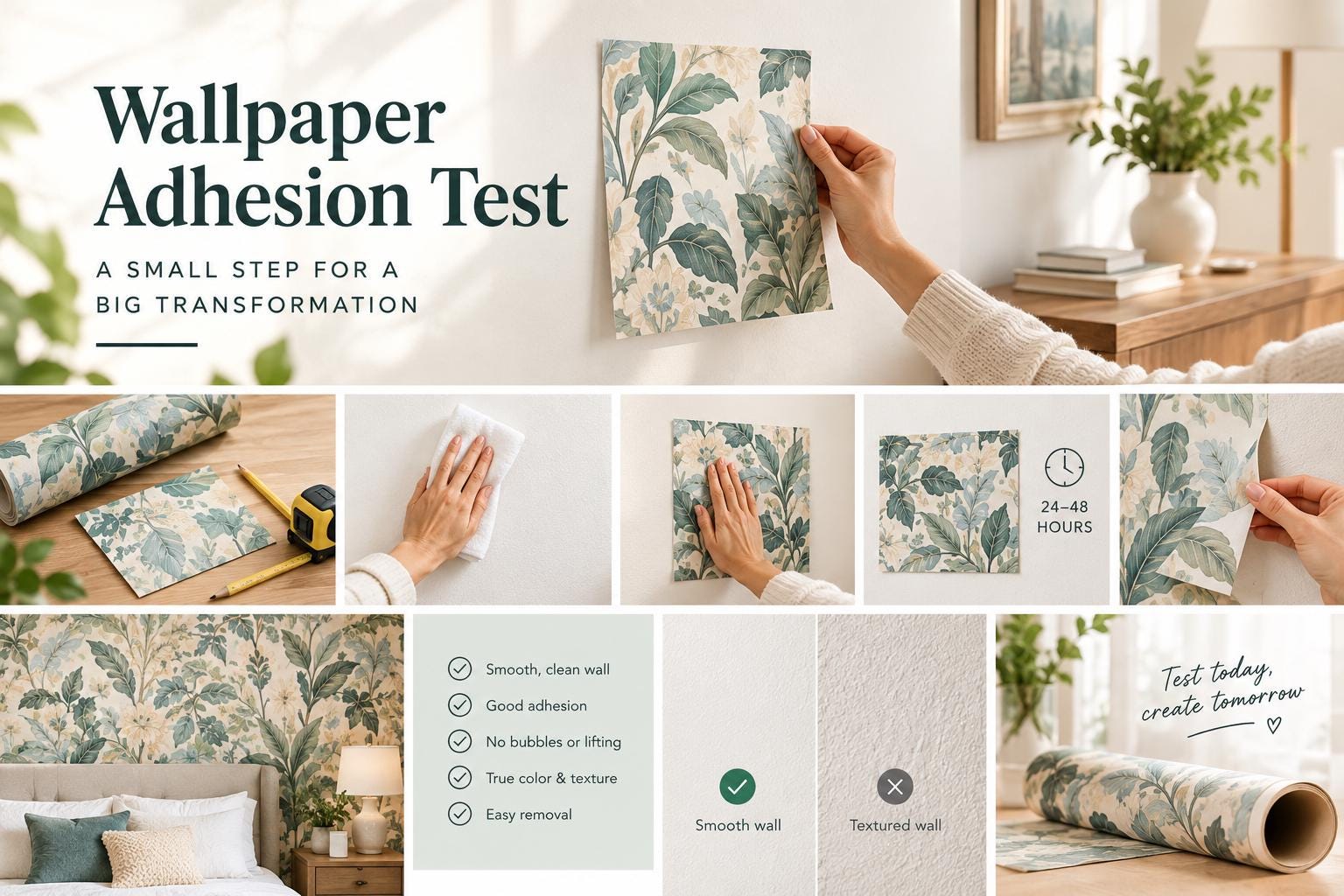
An adhesion test is a small-scale check of how a self-adhesive wallpaper sample behaves on your specific wall. It is not just about whether the material sticks in the first minute. The useful test considers whether the sample stays flat over time, whether the wall texture shows through, and whether the paint surface remains stable when the sample is gently removed.For most homes, smooth painted drywall is the best candidate. A wall that feels relatively even to the hand gives peel-and-stick wallpaper the broad, consistent contact it needs. Satin, eggshell, and well-cured low-sheen paint often perform well when the surface is clean and sound.The test also helps identify conditions that can compromise the result. Fresh paint, dusty walls, textured surfaces, peeling paint, heavy humidity, and residue from cleaning products can all affect adhesion. That does not mean your project is automatically off the table. It means the surface may need more preparation, more cure time, or a different application plan.
Start With a Sample, Not a Full Roll
A sample does more than help you compare colors in morning and evening light. It lets you see the print scale, material finish, and how the wallpaper feels against your wall. For a custom mural or a large-scale floral, that preview is especially valuable. What looks subtle on a screen can read much larger once it is on the wall.Choose a discreet but representative area for the adhesion test. A spot near the center of the planned installation is ideal, because it is more likely to reflect the wall condition across the room. Avoid testing only on a freshly wiped section if the rest of the wall has not received the same preparation.Apply the sample to a clean, dry wall using firm, even pressure from the center outward. Smooth away air as you go, then leave it in place for at least 24 to 48 hours. Rooms with fluctuating temperatures or higher humidity may benefit from a longer observation period.Check the edges after the sample has had time to settle. Are they lifting? Is the material lying flat? Can you see a pronounced wall texture through the design? These details provide a more realistic picture than an instant stick test.
What Good Adhesion Looks Like
A suitable wall should allow the sample to sit flat with no obvious edge curl or bubbles that reappear after smoothing. The wallpaper should feel secure under light pressure without needing constant re-smoothing. When you look at it from the side, the finish should appear intentional rather than visibly interrupted by texture, dents, or paint defects.Color is part of the review, too. Hold the sample against trim, flooring, upholstery, and nearby artwork. A warm white wallcovering can look different beside cool gray cabinetry, while a navy celestial design may appear nearly black in a dim hallway. Samples help you make that call before ordering a full custom size.
What a Warning Sign Looks Like
If the sample corners lift quickly, do not assume pressing harder will solve the issue. The wall may have dust, oils, cleaning residue, or a paint finish that does not offer reliable grip. A deep orange-peel texture, rough plaster, brick, and heavily textured walls may also prevent the adhesive from making even contact.Paint coming away with the sample is another signal to pause. Peel-and-stick wallpaper is intended to be removable, but wall paint quality and preparation vary widely. Older paint, poorly bonded paint, damaged drywall, and recently painted surfaces can be more vulnerable. Removal results depend on the condition of the wall beneath the wallpaper, not just the wallpaper itself.
Prepare the Wall Before You Judge the Product
A wall can look clean while still carrying invisible residue. Cooking oils, aerosol products, handprints around light switches, and leftover cleaner can interfere with adhesive performance. Wipe the installation area with a mild cleaner appropriate for your wall, then follow with a clean damp cloth if needed to remove cleaner residue. Let the wall dry completely before testing or installing.Do not apply wallpaper over a wall that has been freshly painted. Paint needs time to fully cure, and the exact wait time depends on the paint manufacturer, finish, ventilation, and room conditions. Check the paint guidance first. Rushing this step can create adhesion problems or increase the risk of paint disturbance during removal.Repair loose paint, flaking areas, nail holes, and uneven patches before installation. Once repaired, the surface should be smooth, dry, and fully cured. A peel-and-stick design can visually transform a wall, but it cannot correct an unstable one.Humidity deserves attention as well. A powder room, laundry area, or rental kitchen can be a wonderful place for a small feature wall, provided the chosen wall stays relatively dry and is not exposed to direct steam or repeated splashing. For bathrooms, avoid walls immediately next to showers or tubs. Consistent moisture and sharp temperature swings can challenge any adhesive wallcovering.
Test Removal Gently, Not Aggressively
After the sample has stayed on the wall for a day or two, lift one corner slowly and peel it back at a low angle, keeping the material close to the wall rather than pulling straight outward. This is the same careful approach that supports easier removal later.Look at both the wall and the back of the sample. A clean release from a stable painted wall is encouraging. If paint lifts, stop testing and assess the condition of the surface. The issue may be weak paint adhesion rather than the wallpaper sample itself, but either way, it is useful information before a full installation.For renters, this step is particularly worthwhile. Photograph the test area before and after if you need a record of the wall condition. More importantly, confirm your lease terms and property manager requirements before making any decorative change. Removable does not mean every landlord has the same policy.
When an Adhesion Test Is Not Enough
A sample test is a smart decision tool, but it cannot predict every variable across a large wall. A room may have one area with hidden patchwork, old paint repairs, or more texture than another. If the wall is wide, test more than one location, especially near windows, exterior corners, or areas that feel noticeably different.The test also cannot fix measuring mistakes. Measure the full width and height of the installation area, then account for the exact wall shape, sloped ceilings, doors, windows, and built-ins. For a mural, accurate dimensions matter because the artwork is scaled and produced for your order. Verify measurements before placing an order, since made-to-order wallcoverings are created specifically for your project and are generally non-returnable.If you are covering a home office backdrop or a vacation rental feature wall, think about daily use as well. A calm abstract behind a desk may need only a smooth surface and good lighting. A lively safari print in a playroom should be placed where it will not receive constant rubbing from furniture, backpacks, or busy little hands at the edges.
A Better Way to Commit to a Big Visual Change
The appeal of removable wallpaper is freedom: the freedom to bring in oversized florals, classic stripes, storybook animals, city maps, or a name mural without committing to pasted wallpaper and a major renovation. The adhesion test is what makes that freedom practical.At WallpaperCraftWorks, samples are a useful first step for seeing both design and surface compatibility before ordering a custom-sized piece. Treat the sample as a small rehearsal for your wall. Check the color, prepare the surface, give the adhesive time to settle, and remove it carefully.A few minutes of testing can protect the larger transformation you have in mind. Once your wall passes, you can focus on the satisfying part: choosing the design that makes the room feel unmistakably yours.