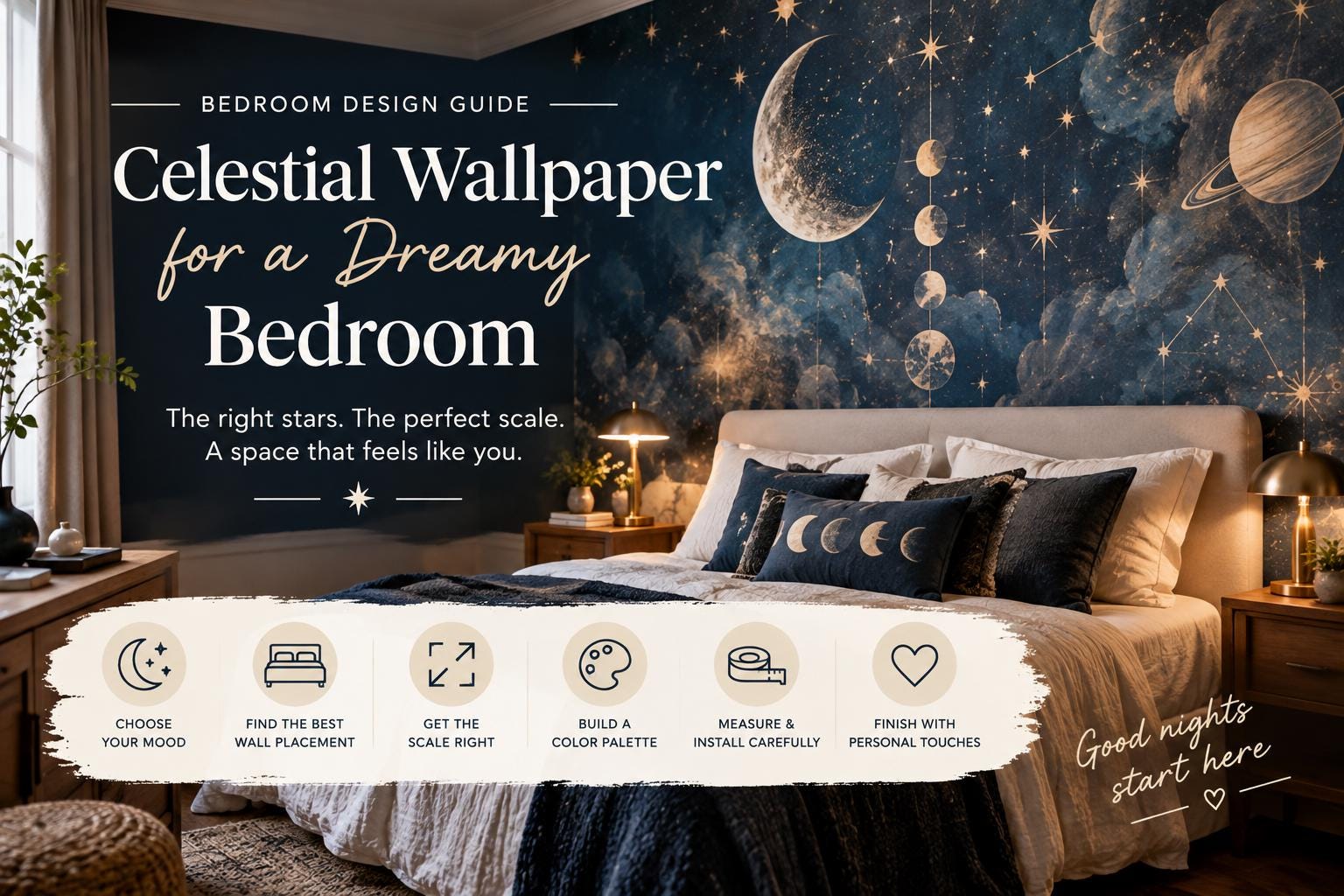
A bedroom should feel different after dark. It is the one room where a little atmosphere goes a long way, which is why celestial wallpaper for bedroom spaces has such staying power. Moon phases, soft constellations, painted planets, and star-filled skies create a setting that feels personal rather than overly themed - especially when the pattern, scale, and wall placement suit the room.The best part is that a cosmic look does not require repainting every surface or committing to traditional pasted wallpaper. A made-to-order peel-and-stick mural or wallpaper can turn one smooth wall into the room’s focal point while keeping the rest of the space calm, usable, and unmistakably yours.
Choose the Celestial Mood Before the Pattern
Celestial design is broader than a navy sky scattered with stars. The feeling you want should lead the choice. A deep indigo constellation print can make a primary bedroom feel cocooning and dramatic. A warm beige moon-phase design may feel more relaxed, modern, and easy to layer with natural woods and linen bedding. Watercolor planets and whimsical stars bring a softer energy to a child’s bedroom or nursery.Start by asking how you want the room to feel at night. If the goal is restful and grown-up, look for muted colors, fine linework, and plenty of breathing room around the motifs. If the room needs more personality, larger moons, hand-painted nebula clouds, or bold gold-look details can create the statement. Neither approach is better. It depends on the room’s light, furniture, and how much visual activity you enjoy around a bed.A celestial wallpaper design can also work with more interior styles than people expect. It pairs naturally with mid-century silhouettes, vintage brass accents, layered bohemian textiles, and modern neutral furniture. The key is repeating one or two colors from the wall in the bedding, rug, art, or window treatment so the room feels considered rather than costume-like.
Where Celestial Wallpaper for a Bedroom Works Best
For most bedrooms, the wall behind the bed is the natural choice. It frames the bed like a headboard, gives the room a clear center, and lets the design make an impact without wrapping every wall. This placement is especially useful in rentals or smaller rooms, where a single accent wall can deliver a noticeable refresh without crowding the space.If the bed sits below a sloped ceiling, a celestial mural can make that architectural angle feel intentional. A soft star field works well here because it follows the dreamy, upward pull of the room without competing with the bed. In a bedroom with high ceilings, a larger-scale moon or planet design can help the wall feel proportionate instead of empty.Full-room application can be beautiful, but it requires more restraint elsewhere. Choose simpler bedding, limit competing prints, and keep furniture finishes cohesive. A small bedroom with dark wallpaper on all four walls may feel wonderfully enveloping to one person and too enclosed to another. Ordering a sample first is the practical way to test whether the color deepens the room in a good way or simply makes it feel darker.For children’s rooms, consider the view from the bed. A wall mural positioned where a child can see moons and stars while settling down can make bedtime feel more inviting. In a shared room, a celestial design has another advantage: it is imaginative without being tied to one character, age, or short-lived interest.
Get the Scale Right
Scale is often the difference between a wall that looks custom designed and one that feels busy. In a compact bedroom, delicate stars, spaced-out constellations, or a single oversized moon tend to read more clearly than dozens of medium-size motifs. Small, high-contrast details can become visually noisy when seen across a narrow room.Larger bedrooms can carry more movement. Cloudy galaxies, oversized planets, or layered moon phases have room to breathe on a broad wall behind a king or queen bed. Before ordering, measure the full width and height of the wall, not just the open area above the headboard. WallpaperCraftWorks designs are made to order, so accurate dimensions help the artwork arrive sized for your actual space rather than forced into the limits of a standard roll.Remember to account for features such as windows, doors, closets, wall-mounted lights, and vents. You will trim around these elements during installation, but they still affect where the most important part of the design should land. If a large moon is the star of the mural, you likely do not want it centered behind a tall headboard or cut through by a window.
Build a Color Palette Around the Sky
Dark blue is classic, but celestial bedrooms do not have to be dark. Charcoal, black, plum, forest green, dusty blue, terracotta, sand, and soft gray can all create a night-sky mood. The most successful choice is usually the one that relates to the room’s existing fixed elements, including flooring, trim, and upholstered furniture.A dark wallpaper looks striking with crisp white bedding, but stark contrast is not your only option. For a quieter bedroom, layer tonal shades: navy with slate blue, charcoal with faded black, or midnight green with olive and warm ivory. Brass or antique-gold lamps bring out the glow in moon-inspired designs, while chrome and black accents create a cleaner, more contemporary direction.Natural daylight changes wallpaper color more than online photos can show. A north-facing room may make blue and gray backgrounds look cooler, while a bright south-facing room can reveal warmer undertones. Samples are useful here. View one on the intended wall in morning light, afternoon light, and with your bedside lamp on before committing to a full order. It is a small step that helps you judge color, material texture, and adhesion on your own smooth wall.
Plan for a Clean DIY Installation
Peel-and-stick wallpaper is designed to make a design-led update more approachable, but wall prep still matters. The surface should be smooth, clean, dry, and fully cured if it has been recently painted. Textured walls, peeling paint, fresh paint, and dusty surfaces can affect adhesion and the finished look.Measure twice before placing an order, then give yourself time to install with care. Start with a level first panel. That first section sets the alignment for every panel that follows, particularly with star patterns, stripes of moon phases, or artwork that continues across the wall. A second set of hands can make positioning easier on tall walls, although the project remains manageable for many DIY decorators.Because each wallpaper order is produced to your specifications, it is worth confirming dimensions, design choice, and wall conditions before purchase. Made-to-order wallcoverings are not the same as an off-the-shelf decor item you can casually swap later. A sample and a thoughtful measuring plan reduce the risk of ordering more or less material than your space needs.
Finish the Room Without Overdoing the Theme
A celestial wall already tells a story, so the rest of the room only needs to support it. One moon-shaped pillow, a brass bedside lamp, velvet curtains, or a softly textured throw can be enough. Avoid adding every possible star, moon, and galaxy accessory unless you want a deliberately maximalist room.In a primary bedroom, grounding the cosmic pattern with tactile, everyday materials keeps it sophisticated. Think woven rugs, wood nightstands, linen duvet covers, ceramic lamps, and framed art with simple lines. In a child’s room, a few playful layers such as a planet mobile or glow-in-the-dark ceiling details can extend the idea without overwhelming the wall.The most memorable bedrooms balance fantasy with comfort. Choose a celestial design that makes you pause when you walk in, then give it space to glow. Whether it becomes a peaceful moonlit backdrop or a full starry escape, the right wall can make bedtime feel a little more like a destination.