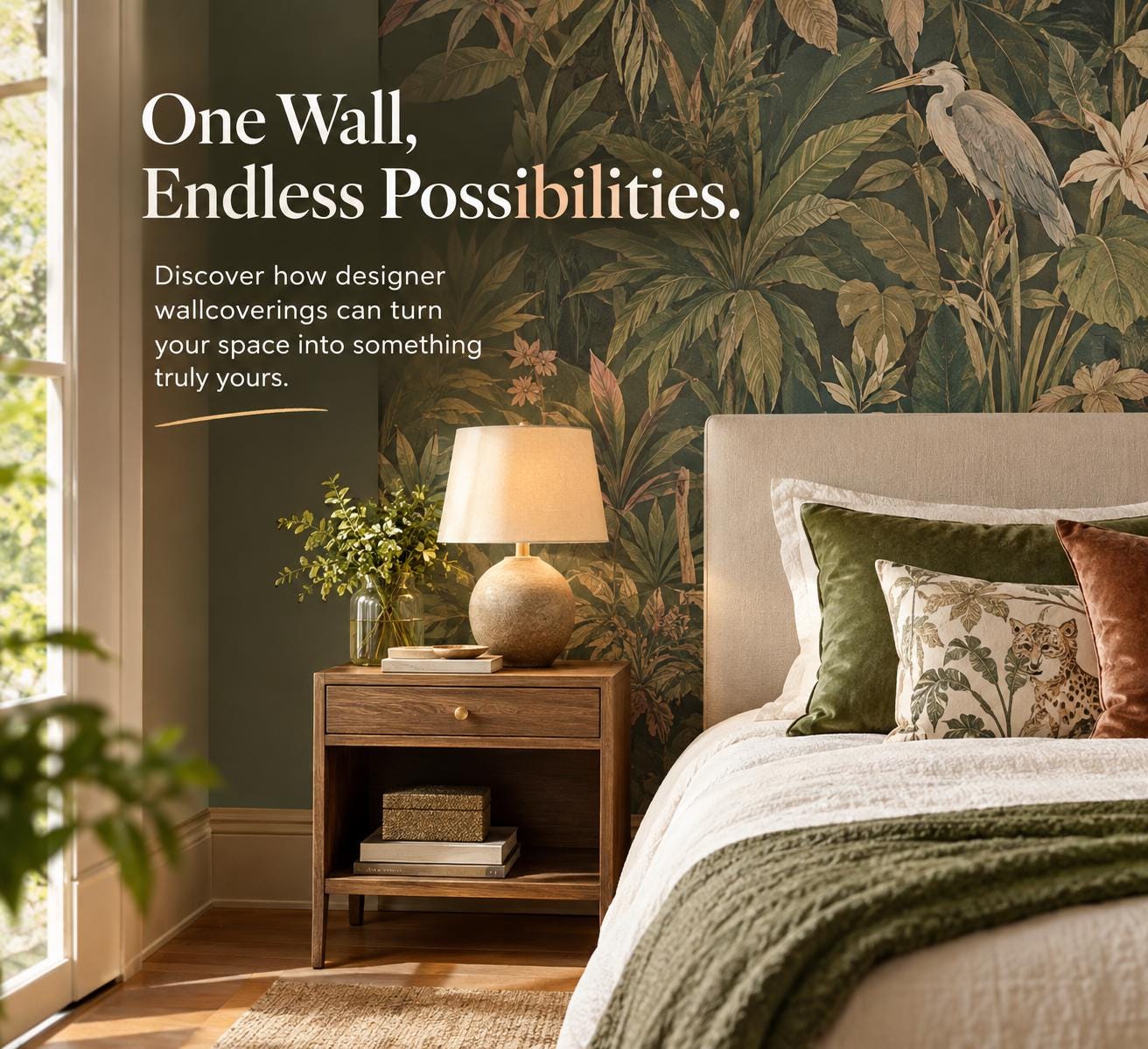
A single wall can do more for a room than a new sofa, especially when the design has personality. Designer wallcoverings turn an ordinary bedroom, entryway, nursery, or home office into a space with a clear point of view, without committing to messy paste, installers, or a full renovation.The best choice is not necessarily the boldest print in the room. It is the one that works with your light, furniture, wall dimensions, and the feeling you want to create. With custom-made peel-and-stick wallpaper, you can choose a look that feels considered and personal, then apply it on a smooth wall at your own pace.
What Makes Designer Wallcoverings Different?
Designer wallcoverings are about more than a repeated pattern. They bring an intentional visual language to a room, whether that means oversized vintage florals, a quiet textured abstract, a celestial night sky, or a personalized city map with meaning behind it.Unlike generic rolls that can feel disconnected from the rest of your home, design-led wallcoverings help establish mood. A moody botanical can make a powder room feel collected. A neutral arch pattern can give a home office more structure. A whimsical safari mural can turn a child's room into a place for stories, not just sleep.For many homes, peel-and-stick material makes this kind of transformation more approachable. It offers the visual impact of wallpaper with a self-adhesive backing designed for DIY installation on properly prepared, smooth walls. That matters for renters, first-time homeowners, and anyone who wants to refresh a room without taking on a permanent construction project.
Start With the Room's Job, Not Just the Pattern
A beautiful print has to work hard in a real home. Before choosing a color palette or motif, think about how the room is used and what you want it to feel like when you walk in.In a bedroom, soft florals, subtle landscapes, muted celestial patterns, and warm-toned abstracts can create a calmer backdrop behind the bed. If your bedroom has limited natural light, very dark designs can still look dramatic, but they may feel more intimate than airy. That can be exactly right for a cozy retreat, but it is worth considering before covering every wall.A home office often benefits from a design with rhythm but not too much visual noise. Linear patterns, soft geometric forms, classic botanicals, or a refined luxury-inspired print can add depth behind a desk and look polished on video calls. In a rental or a small workspace, an accent wall is often enough to make the room feel finished.For nurseries and kids' rooms, wallcoverings can carry the theme without requiring every accessory to match. Think watercolor animals, stars, woodland scenes, soft florals, or a personalized mural with a child's name. Choose a design your family will enjoy for more than one season. A sweet but adaptable print can grow from nursery to big-kid room with only a few decor changes.
Choose the Right Scale for Your Wall
Pattern scale changes everything. A large-scale mural or oversized floral can make a simple wall feel custom and expansive. A smaller repeat can bring detail and texture to a compact area, such as a hallway, reading nook, or bathroom wall.There is no rule that says small rooms need only small patterns. In fact, a confident large-scale design on one wall can make a small room feel more intentional. The trade-off is that large motifs are more visible, so accurate measurements and panel placement matter more.For feature walls, measure the full width and height of the area you plan to cover. Include the wall beneath windows or around doors if the wallpaper will continue there. Do not subtract every small interruption unless your ordering guidance specifically instructs you to do so. Extra material can be useful for matching panels, trimming around architectural details, and allowing for slight wall variations.Custom sizing is especially helpful for walls that do not fit standard roll dimensions. It reduces the guesswork of calculating multiple rolls and helps the finished installation feel planned rather than pieced together.
Use Color to Connect the Whole Room
Wallpaper does not need to match every pillow, curtain, or rug. It should relate to the room instead. Pull one or two colors from the design and repeat them in smaller ways: a throw blanket, frame finish, bedside lamp, upholstered chair, or painted trim.If you already own colorful furniture, a neutral or tonal wallcovering can bring balance. If your furnishings are simple, a rich floral, tropical scene, or art-inspired abstract can become the room's main decorative layer. Let the wall do the talking, then keep the surrounding pieces edited enough for the pattern to stand out.Samples are a smart step before ordering a made-to-order wallcovering. Screen colors can shift from device to device, and daylight can look very different from warm evening lamps. A sample lets you see the actual color, material texture, and adhesion on your wall before committing to the full design.Place the sample near trim, flooring, and major furniture. Check it in the morning, afternoon, and at night. That small pause can prevent a costly surprise, particularly with deep greens, warm neutrals, blush tones, navy, and black-based designs.
Plan for a Smooth DIY Installation
Peel-and-stick wallpaper is designed to simplify the process, but preparation still shapes the result. The surface should be smooth, clean, dry, and fully cured if recently painted. Textured walls, dusty surfaces, peeling paint, and fresh paint that has not cured properly can affect adhesion and panel alignment.Before installation, clear the wall and gather a measuring tape, level, smoothing tool, sharp utility knife, and clean cloth. Start with a straight first panel. If the first panel leans, every panel after it can follow that angle, even if the ceiling or trim is not perfectly level.Work slowly and peel back the backing a little at a time rather than removing it all at once. Smooth from the center outward as you go to reduce air bubbles. Most people find that a second set of hands is helpful for tall panels or wide murals, though smaller accent-wall projects can often be managed solo.WallpaperCraftWorks designs are made to order, so it is especially important to confirm your measurements, design selection, and surface suitability before placing an order. Made-to-order products are created for your specific project and may not be returnable for a change of mind, which makes samples and careful measuring part of the design process, not an afterthought.
Where a Statement Wall Has the Most Impact
The wall behind a bed, sofa, dining table, or desk is often the easiest place to start because it already has a natural focal point. A wallpapered entry can make even a small arrival space feel memorable. In a powder room, a dramatic print can be a joyful choice because you are not asking it to carry the visual weight of a large, open room.Vacation rentals also benefit from a recognizable wall moment. A personalized local map, city-inspired mural, coastal botanical, or playful retro pattern can give guests something to remember and photograph. The key is choosing a design that feels specific to the property without overwhelming the practical parts of the room.Full-room wallpaper can be equally beautiful, particularly in dining rooms, nurseries, and smaller enclosed spaces. If you are hesitant, begin with one wall. You can always build the rest of the room around that first layer of color and pattern.The most successful designer wallcoverings do not simply fill empty space. They make a room feel chosen. Order a sample, measure with care, and select the print that gives your everyday walls a reason to be noticed.