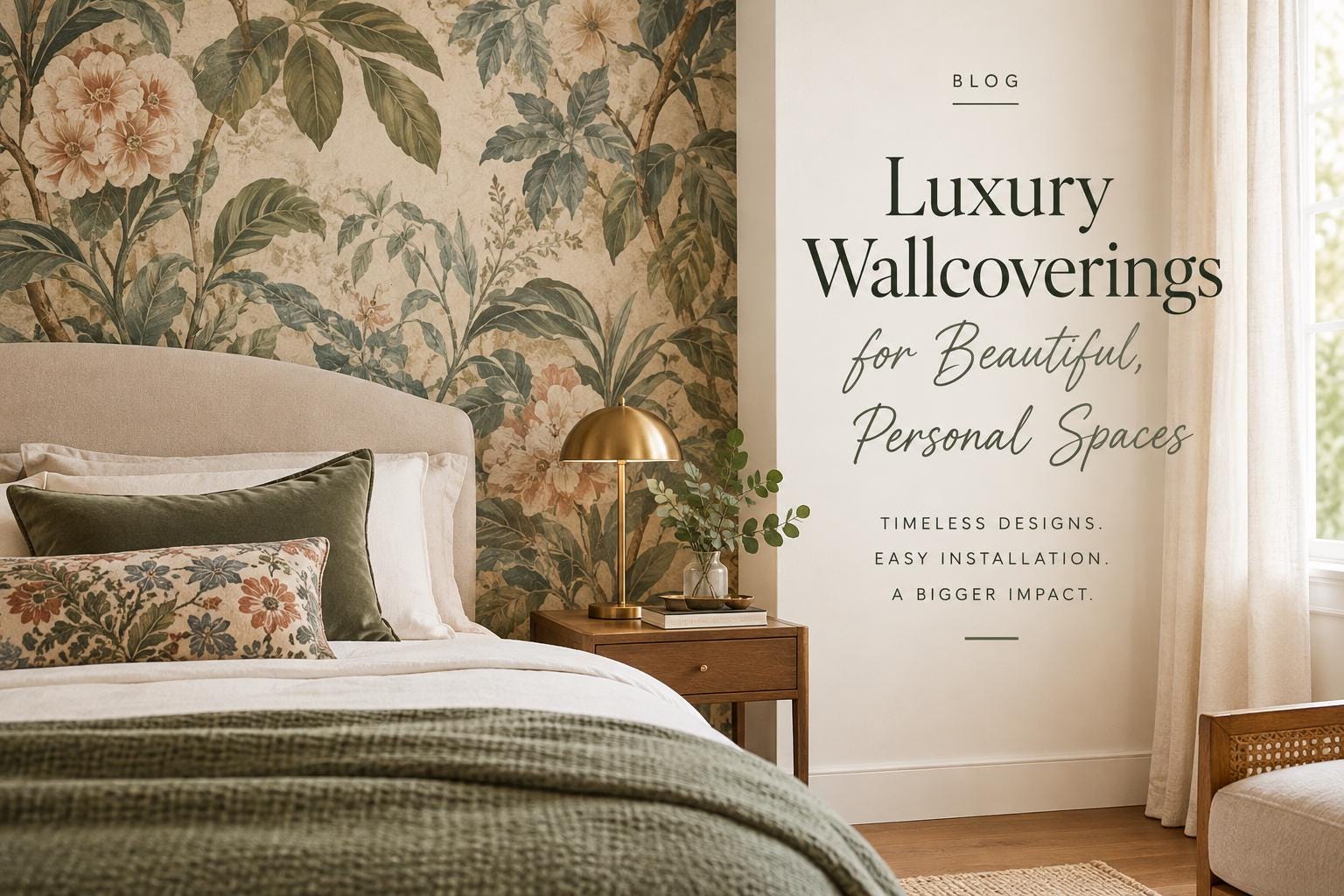
A room can have beautiful furniture and still feel unfinished until the walls carry some of the visual weight. This guide to luxury wallcoverings is for creating that finished, collected look without signing up for pasted wallpaper, a major renovation, or an installer-led project. The right peel-and-stick design can turn a plain bedroom, polished home office, entryway, or rental space into a room with a point of view.Luxury is not only about ornate patterns or a formal look. It is about intention: a scale that suits the room, colors that support the mood, and details that feel chosen rather than generic. With custom-sized, made-to-order wallcoverings, that level of intention can be practical, too.
What Makes a Wallcovering Feel Luxurious?
A luxury wallcovering usually earns its impact through design depth. Think layered botanicals with painterly color, warm neutral abstracts with movement, dramatic dark florals, refined geometric patterns, or a mural that creates a true sense of place. Even a playful safari scene or personalized children’s mural can feel elevated when the composition, color palette, and scale are thoughtfully matched to the room.Large-scale artwork often reads as more intentional than a tiny, repetitive print, particularly on an accent wall. A mural can make a standard bedroom wall feel custom-designed, while a repeating pattern can bring rhythm to a dining space or powder room. Neither option is automatically more luxurious. The better choice depends on whether you want one uninterrupted scene or a pattern that wraps the room in texture and atmosphere.Material matters as well, but it should serve real life. Peel-and-stick wallcoverings offer the visual presence of a high-impact wall treatment with a more approachable installation process. They are designed for smooth, properly prepared walls and can be a smart fit for homeowners who want flexibility and renters who need to avoid permanent renovation work.
Start With the Room’s Job
Before choosing a design, decide what you need the room to do emotionally. A living room may need warmth and conversation-starting character. A bedroom may call for a quieter, more cocooning backdrop. A home office can handle a confident abstract or a city-inspired mural that makes video calls feel a little more polished.For an entryway, choose a pattern that introduces your home’s personality right away. Botanical prints, vintage-inspired florals, and soft architectural motifs work especially well in smaller transitional spaces because they add detail without needing additional furniture. In a dining room, a deeper palette or a more dramatic pattern can make everyday meals feel occasion-worthy.Children’s rooms have their own version of luxury: thoughtful imagination. A softly colored celestial mural, an illustrated safari, or a personalized name design can feel special enough to anchor the room while still reflecting a child’s interests. Consider how quickly those interests may change. A broad theme, such as woodland animals or stars, tends to have longer staying power than a character-specific look.
Accent Wall or Full Room?
An accent wall is the easiest place to make a bold choice. It works beautifully behind a bed, sofa, desk, crib, or dining table because the furniture naturally frames the design. This approach also allows darker colors, oversized florals, and expressive murals to become a focal point without overwhelming the entire room.A full-room application creates a more immersive result. It is especially effective in powder rooms, nurseries, cozy bedrooms, and small offices where you want the walls to establish the mood from every angle. If you are covering every wall, consider a design with some breathing room in the background or a softer contrast level. A high-contrast, dense print can be stunning, but it may feel busy in a room already filled with open shelving, patterned textiles, or colorful furniture.
Choose Scale Before You Fall for a Pattern
The most common wallcovering mistake is choosing from a small screen image without considering pattern scale. A design with oversized leaves, flowers, arches, or brushstrokes can look calm and sophisticated on a broad wall, but it may feel crowded on a narrow wall beside a door. Conversely, a delicate print may disappear in a large, open living room.Look at the wall as a whole, including the furniture in front of it. If a headboard will cover the lower third of the wall, make sure the most interesting part of a mural will still be visible above it. For a repeating pattern, consider whether the motif will be partially interrupted by windows, shelves, or cabinets. That is not necessarily a problem, but it should be part of the plan.Samples are useful here because they let you see color, material texture, and adhesion in your actual lighting. A warm beige can appear creamy in a sunny room and slightly gray in a north-facing one. Deep green, navy, terracotta, and blush can all shift depending on the time of day and the bulbs in your fixtures. Viewing a sample next to your flooring, paint, curtains, and wood tones is far more reliable than making a color decision from a phone screen.
A Practical Guide to Luxury Wallcoverings: Measure Carefully
Custom sizing is one of the strongest advantages of made-to-order wall decor, but it requires accurate measurements. Measure the full width and height of the wall in inches, then measure again. Include the entire wall area rather than subtracting doors, windows, or built-ins unless the ordering guidance specifically calls for it. Extra material can help account for alignment, trimming, and walls that are not perfectly square.For a mural, confirm which side of the artwork contains the focal detail. If the bed, desk, or door placement matters, you want the composition to work with the room rather than place a key feature behind furniture. For repeating patterns, think about where the panels will begin and how the repeat will read at the edges.If you are unsure about a measurement, pause before ordering. Made-to-order pieces are produced for your selected dimensions, which means they are typically non-returnable except where required by policy or in the case of a production issue. That is not meant to make the process stressful. It is simply why a few careful minutes with a tape measure, plus a sample when needed, are worth it.
Prepare the Wall for a Clean Finish
Luxury is often visible in the details, and wall preparation is one of those details. Peel-and-stick wallpaper performs best on smooth, clean, dry, fully cured painted walls. Fresh paint needs sufficient curing time before installation, while dusty, textured, damaged, or newly patched surfaces can affect adhesion and the finished appearance.Wash away surface dust or residue and allow the wall to dry completely. Avoid installing over heavily textured finishes, peeling paint, or surfaces with moisture issues. If you are working in a bathroom, consider ventilation and select a wall away from constant direct water exposure.During installation, work slowly and keep the first panel straight. That first placement guides everything that follows. Use a smoothing tool as you apply the material, press out air gradually, and avoid pulling or stretching the panels. Peel-and-stick installation is approachable, but a second set of hands can make larger panels much easier to position accurately.
Style the Wallcovering Like Part of the Room
Once the wall is in place, let it guide a few supporting choices rather than trying to match every color exactly. Pull one or two secondary shades from the design for pillows, bedding, a lamp base, or artwork. This creates a connected look without making the room feel overly coordinated.With a bold floral or botanical wall, simpler bedding and furniture help the pattern stay elegant. With a quiet neutral abstract, you can introduce texture through linen, velvet, woven shades, brass, dark wood, or sculptural ceramics. A celestial mural might pair beautifully with soft cream textiles and natural oak, while a city map or personalized name mural can become the centerpiece of a thoughtfully edited office or child’s room.The goal is not to make every inch of the room loud. Luxury often comes from contrast: expressive walls balanced by clear surfaces, useful furniture, and a little visual rest.WallpaperCraftWorks designs are made for that kind of transformation: personal, high-impact, and approachable enough to take on without turning your home into a construction zone. Choose the design that makes you pause when you picture it on your wall, then give it the planning it deserves. A well-measured wall, a tested sample, and a design that suits how you live can make the finished room feel not just decorated, but distinctly yours.