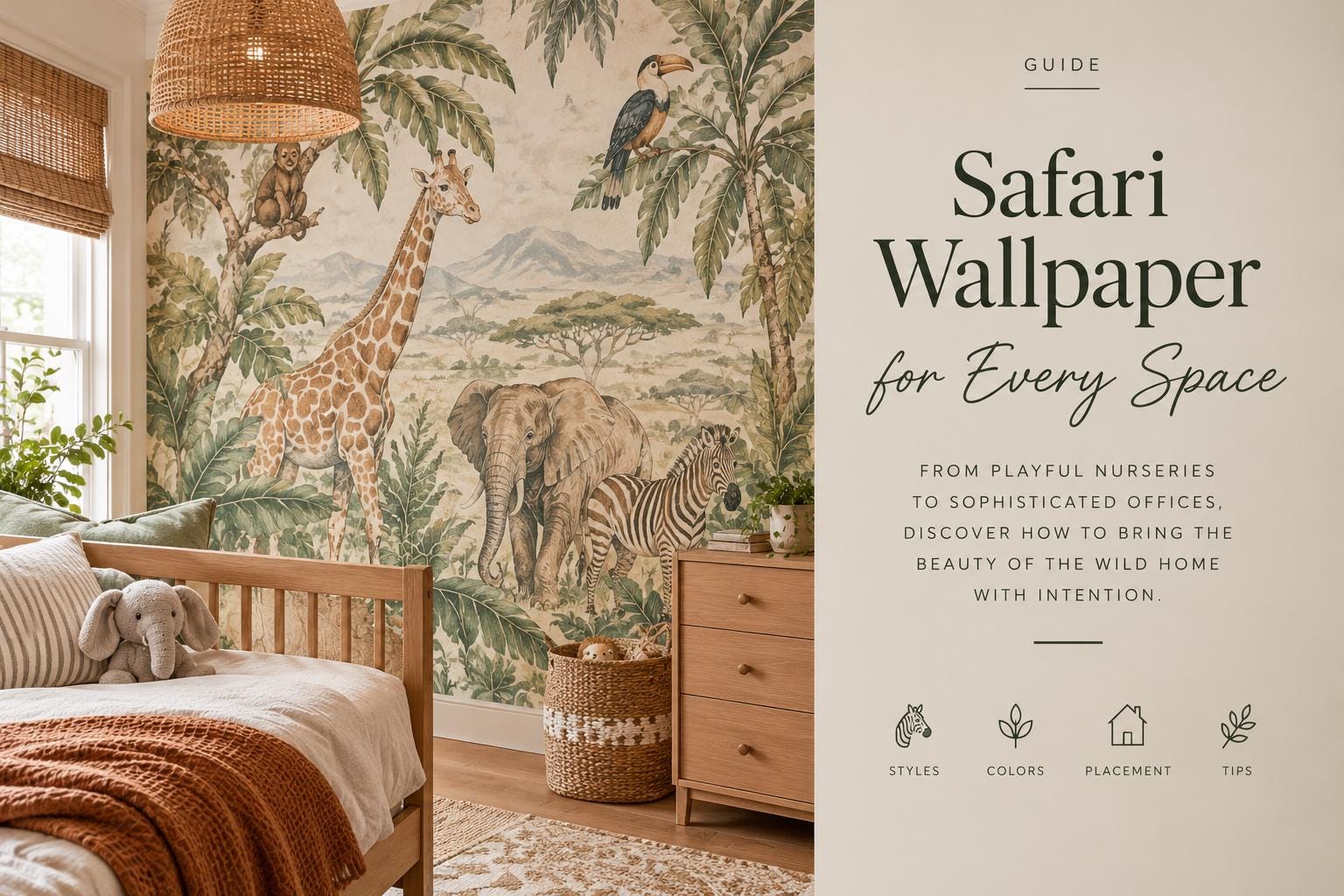
A well-chosen safari wall can make a room feel collected, curious, and far from ordinary without asking you to redesign every surface. This guide to safari wallpaper is for creating that effect with intention, whether you are styling a playful nursery, a polished home office, or a vacation rental guests will remember.Safari style is broader than cartoon animals on a beige background. It can be lush and botanical, softly vintage, bold and graphic, or quietly tailored with neutral wildlife silhouettes. The best choice comes down to the mood you want, the wall you have, and the amount of visual energy the room can hold.
Start With the Safari Mood You Want
Before measuring a wall or choosing an animal print, decide what your version of safari looks like. A children’s room may call for gentle elephants, giraffes, lions, or zebras among palms and soft clouds. A more grown-up space can lean into moody jungle foliage, antique-inspired illustrations, desert tones, or oversized animal portraits.Color does much of the work. Sand, ivory, camel, muted olive, and warm taupe create a calm, layered look that works especially well in bedrooms, reading corners, and relaxed living spaces. Deep green, ink blue, charcoal, and rust make safari wallpaper feel more dramatic and sophisticated. These richer palettes suit an accent wall behind a bed, dining banquette, or desk where the print can become a focal point.If the room already has patterned rugs, colorful bedding, or busy artwork, choose a safari design with open background space and a limited palette. If the furnishings are simple, a more detailed mural can carry the room. The goal is not to match every item exactly. It is to give the space one clear visual direction.
Guide to Safari Wallpaper Scale and Placement
The size of the artwork should relate to the wall, not just the room. Large palms and oversized animals often look striking on a broad, uninterrupted wall. On a narrow wall, a mural with one main scene can feel more balanced than a tightly repeated pattern, which may look chopped up around doors, windows, or shelving.For a bed wall, choose a design that frames rather than fights the headboard. A quiet lower portion with foliage or distant landscape works beautifully behind furniture because the most detailed elements remain visible above it. In a nursery, place a safari mural where it can be seen from the crib or rocking chair, rather than hiding its best section behind tall storage.An accent wall is often the easiest starting point, but it is not the only option. A small powder room can handle a full wrap of lively jungle animals because the enclosed scale makes the choice feel intentional. In an entryway, safari wallpaper on the wall facing the front door creates immediate personality. Home offices benefit from a calmer botanical safari print behind the desk, where it adds character on video calls without becoming distracting.For rentals, think about the first photograph guests are likely to take. A safari feature wall behind a bed, dining table, or reading chair can give a compact property a distinct identity without filling every room with themed decor.
Choose Colors That Live Well With Your Furniture
Safari wallpaper does not require matching animal-themed accessories. In fact, a lighter touch usually looks more elevated. Let the wallcovering provide the story, then support it with natural materials and a few grounded colors.Wood furniture, woven shades, rattan, linen, leather, and matte black accents all pair naturally with safari designs. A warm white duvet, oatmeal curtains, or a camel upholstered chair can make a lively print feel settled. For a children’s space, bring out one or two colors from the wallpaper with bedding or storage baskets instead of trying to repeat every shade.Consider the room’s natural light before committing to a dark design. A moody green jungle mural can feel enveloping and beautiful in a bright room. In a space with limited daylight, it may be better on one wall with pale surrounding paint and lighter furniture. Samples are useful here: colors shift noticeably from morning light to evening lamps, and screen images cannot fully show the material’s texture or undertones.