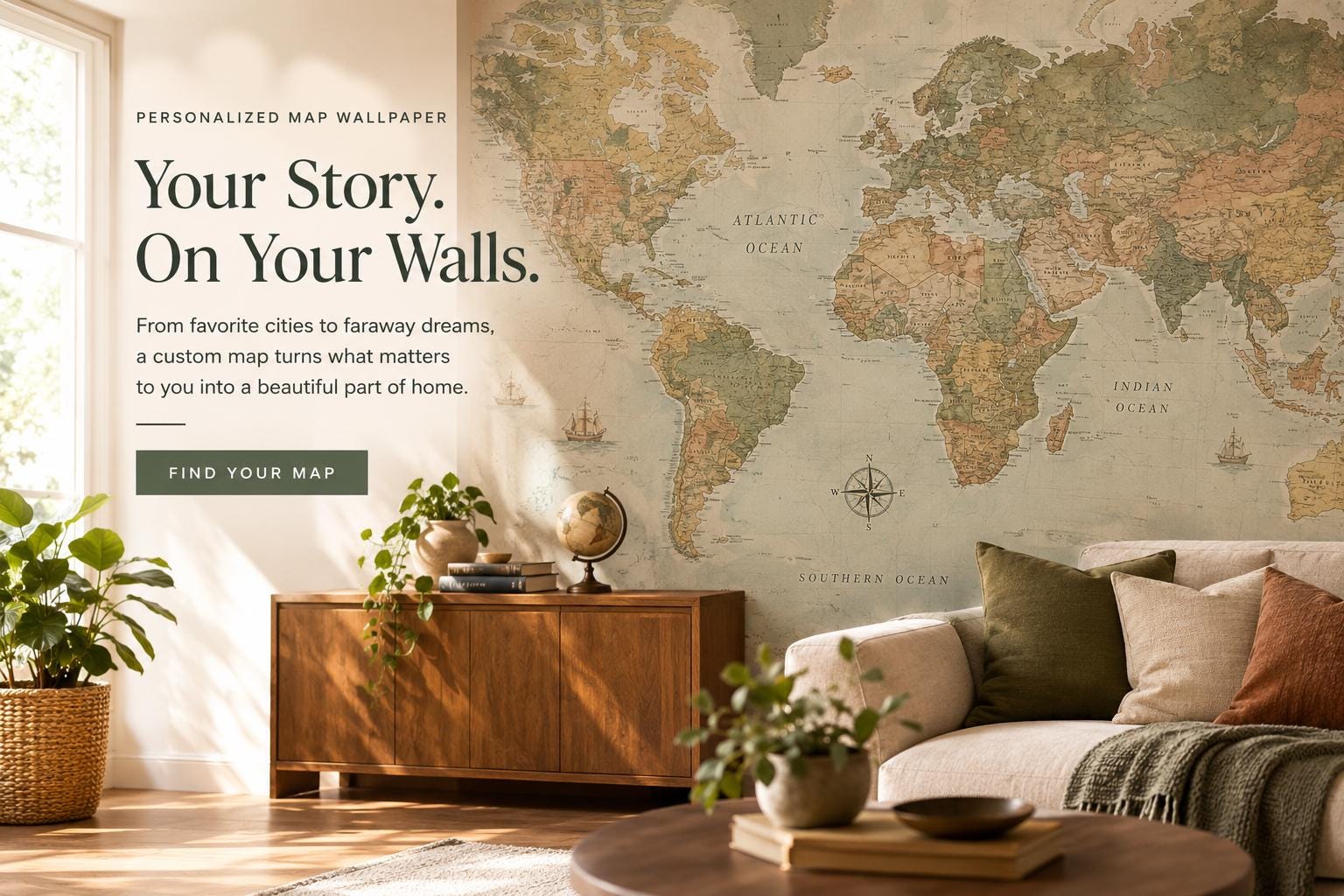
A map can hold more than streets and borders. It can mark the city where you met, the coastline that feels like home, a child’s favorite place, or the destination still waiting on the calendar. Choosing personalized map wallpaper turns that story into a room-defining feature, without committing to pasted wallpaper or a full renovation.The best choice is not always the busiest map or the largest possible mural. It is the design that feels intentional from across the room, suits the wall you have, and works with the way you live in the space. A custom peel-and-stick map mural makes that level of detail feel achievable, but a few decisions deserve attention before you order.
Start With the Story You Want the Map to Tell
A personalized map wallpaper looks most at home when it has a reason for being there. That reason can be sentimental, decorative, or practical. A city map in an entryway can welcome guests with a subtle sense of place. A world map in a home office can give a workday wall more perspective. In a nursery or child’s bedroom, a softer illustrated map can invite curiosity without making the room feel overly themed.Think about the room’s emotional job before choosing a location. A map centered on your hometown may feel right in a family room, while the neighborhood around a vacation rental can be a thoughtful feature for a guest space. For a couple’s bedroom, coordinates, names, or a meaningful destination can make the mural feel personal without adding clutter to the room.Personalization should support the design rather than compete with it. If you are adding names, a date, coordinates, or a short quote, keep the message easy to read and visually balanced. One meaningful detail often has more impact than several.
Choosing Personalized Map Wallpaper by Room
The same map design can feel entirely different depending on the wall behind it. Consider viewing distance, furniture placement, and the room’s existing color palette before settling on a layout.
Living rooms and entryways
A larger map mural can create a polished focal point in shared spaces. Choose a wall that is visible when you enter the room or sit down, ideally one that is not broken up by tall shelving, large windows, or a television. If the wall sits behind a sofa or console, leave enough open design visible above the furniture so the map still reads as a mural, not just a background.For a refined look, select tones that repeat elsewhere in the room. Warm beige, muted blue, charcoal, olive, and soft terracotta can all feel sophisticated when paired with pillows, rugs, wood finishes, or artwork already in the space.
Bedrooms and nurseries
Bedrooms invite a more personal choice. A map of a beloved city, a coastal region, or a meaningful travel route can set a calm, collected mood behind a bed. Avoid placing dense, tiny labels directly where pillows will hide the most interesting details. A wider-scale design with a clear central area usually works better.In nurseries and kids’ rooms, consider color and future flexibility. Whimsical world maps, animal-accented geography, and soft pastels can feel playful, while a neutral map with a child’s name may grow with them for longer. Peel-and-stick wallpaper is especially appealing here because it offers a high-impact update without the permanence of traditional wallpaper.
Home offices and rental spaces
A home office can handle a map with stronger lines or deeper colors, particularly behind a desk for a styled video-call background. Just make sure the location is not so detailed that it becomes visually distracting during work.For vacation rentals, a regional map can make a stay feel considered and memorable. Choose a design that reflects the destination but remains broad enough to appeal to many guests. A personalized local map can also help define a small sitting area, reading nook, or entry without adding extra furnishings.
Get the Scale Right Before Falling for a Design
Scale is where many beautiful wallpaper ideas become disappointing. A map with intricate roads and labels may look stunning in a product image, but it needs enough wall area to be appreciated. On a narrow wall, a less detailed design, a zoomed-in neighborhood view, or a map centered on one landmark may be the better fit.Start by measuring the full width and height of the area you plan to cover. Measure in more than one place, especially in older homes where walls may vary slightly. Include the whole wall rather than measuring only the open area around furniture, unless you specifically want a framed-panel effect.Custom sizing helps a mural fit your actual wall instead of forcing your room to work around standard rolls. Still, account for practical interruptions. Doors, windows, outlets, sconces, vents, and sloped ceilings all affect what will remain visible. If a key label, name, or map pin matters, position it away from a light switch or the edge of a doorway.A sample is a smart step when you are choosing between colors, materials, or levels of detail. It lets you see the print at home, next to your paint, flooring, and daylight, while also checking the adhesive on your specific wall surface. Made-to-order wallpaper is created for your selected dimensions and personalization, so confirming these details before ordering is worth the extra moment.
Choose Colors That Work in Real Light
Maps can be quiet and neutral or bold and graphic. Neither is automatically better. The right palette depends on the light in your room and the role you want the wall to play.A dark navy, black, or charcoal map can create striking contrast in a bright room with pale furnishings. In a low-light hallway or smaller bedroom, those same colors may feel heavier than expected. Lighter backgrounds with sand, ivory, sage, misty blue, or blush tones can open up a compact space while keeping the map visible.Pay attention to undertones. A creamy wall paint may clash with a map that has a cool gray background, even if both seem neutral on screen. Natural light changes throughout the day, and warm bulbs can deepen yellow or tan tones at night. Viewing a sample where the mural will be installed gives you a more reliable answer than comparing colors on a phone screen.
Make the Wall as Ready as the Design
Peel-and-stick wallpaper is designed to make installation more approachable, but the wall still matters. Smooth, clean, dry, properly cured walls provide the best surface for self-adhesive material. Fresh paint needs adequate curing time before application, and heavily textured walls may prevent the mural from adhering evenly or may show through the design.Before installation, clean away dust, oil, and residue, then let the wall dry fully. Repair loose paint, cracks, or raised imperfections first. If you are working around outlets or trim, plan your cuts carefully and take your time aligning the first panel. That first straight edge sets the direction for the entire mural.This is also where a map mural offers a practical advantage over permanent renovation. With careful application on a suitable surface, peel-and-stick material can give a wall a custom look without paste, professional installers, or the long-term commitment of traditional wallpaper. It is still a decorative product that benefits from patience, accurate measuring, and realistic surface expectations.
Let the Map Have Some Breathing Room
Once the wallpaper is up, resist the urge to cover every inch around it. A map mural already brings pattern, meaning, and movement to the room. Simple furniture, a few complementary textiles, and lighting that highlights rather than washes out the print will let it do its job.If the design includes names, coordinates, or a meaningful destination, treat it like the personal piece it is. Give it a wall where you will notice it often - not because every room needs a statement, but because the right one can make home feel more specifically yours.