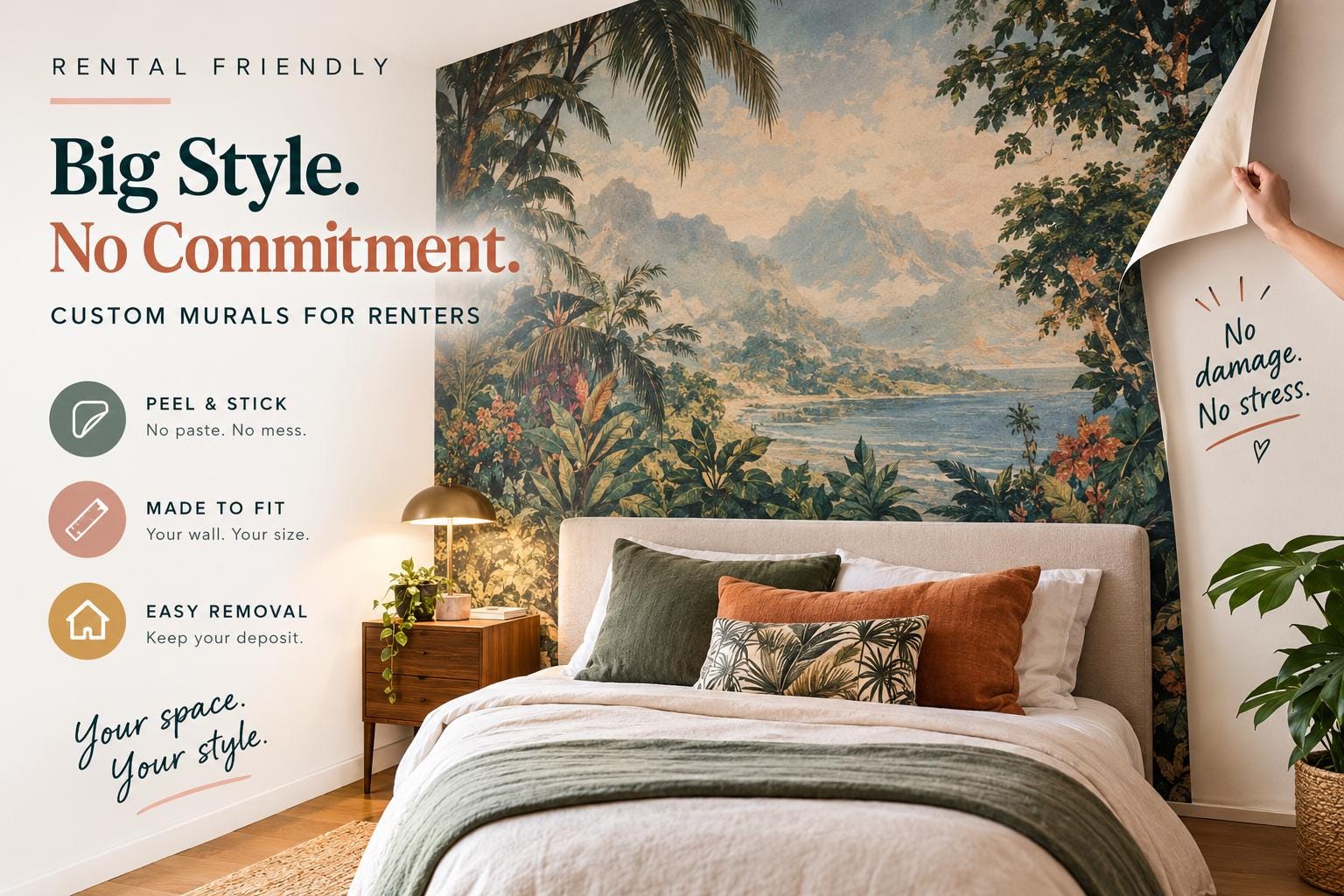
A blank rental wall can make even well-chosen furniture feel temporary. So, can renters use custom murals and still protect their security deposit? In many cases, yes. A removable peel-and-stick mural can create the kind of personal, finished room that traditional wallpaper rarely allows in a lease - provided the wall, material, and removal plan are right.The key is not treating every rental wall the same. Smooth, properly painted drywall is a very different surface from a freshly painted wall, heavy texture, aging paint, or a wall that has already been patched several times. A custom mural is an accessible DIY upgrade, but it deserves a little planning before it becomes the focal point of your bedroom, home office, nursery, or entryway.
Why custom peel-and-stick murals work for rentals
Traditional pasted wallpaper is designed to stay put. It can require paste, booking time, trimming skill, and sometimes professional removal. That makes it a difficult choice for a renter who may need to restore the room quickly when a lease ends.Peel-and-stick murals take a different approach. The self-adhesive backing applies directly to a compatible wall, so there is no paste, no soaking, and no long-term installation process. When it is time to move, the mural can generally be removed slowly from a corner. For renters, that means a bold visual change without committing to a renovation that belongs to someone else.Customization makes the idea even more useful. Instead of trying to make standard-size wallpaper rolls work around awkward windows, baseboards, or a narrow wall behind a desk, you can order a mural to fit the specific dimensions of your space. A soft botanical scene can bring life to a city apartment bedroom. A personalized name mural can make a child's room feel considered without repainting. A city map, celestial design, or oversized abstract can give a work-from-home backdrop more intention than a blank white wall.That flexibility does not mean every rental is automatically mural-ready. Peel-and-stick products are designed for smooth wall surfaces, and results depend on the paint condition and surface preparation.
Can renters use custom murals on any wall?
Not quite. The best candidates are clean, dry, smooth walls with sound paint. If you can run your hand across the wall and feel a mostly even finish, that is a promising start. Satin, eggshell, and properly cured low-VOC paint can often work well, though every paint formula and wall condition is different.Walls with pronounced orange-peel texture, knockdown texture, brick, unfinished plaster, or deep grooves are less suitable. Texture reduces the adhesive's contact with the surface, which can affect how neatly the mural sits and how long it stays in place. It may also leave the design looking less crisp, especially in areas with detailed linework, typography, or geometric shapes.Be cautious with walls that have flaking paint, water stains, active moisture issues, or previous wallpaper damage. A removable mural can only release as cleanly as the paint beneath it is stable. If paint is already loose, removal may pull up weak areas. In that situation, a framed art arrangement, a large mirror, or a freestanding decorative piece may be the better rental-friendly choice.Fresh paint needs time too. Even if it feels dry to the touch, paint can continue curing for several weeks. Applying adhesive material too soon may interfere with adhesion or make future removal less predictable. Follow the paint manufacturer's curing guidance, then test a sample before committing to the full wall.
Start with the lease, then choose the wall
Before selecting a mural, read the lease language on alterations and wall treatments. Some landlords welcome removable decor but ask tenants to return walls to their original condition. Others require written approval for anything beyond nails and picture hooks. A quick email can prevent an uncomfortable conversation later, especially if you are decorating a highly visible wall or a vacation rental property.When permission is unclear, explain the product plainly: a made-to-order, removable peel-and-stick wall mural intended for smooth painted walls, installed without paste. Let the landlord know that you will remove it carefully at move-out and address any existing wall condition before installation. Keeping a written approval is a smart extra layer of protection.Choose a wall that gives the design room to work. Behind a bed, sofa, dining table, or desk is often ideal because the mural reads as a deliberate backdrop rather than a competing pattern. A small entry wall can handle a dramatic floral, lush safari scene, or luxury-inspired abstract. For a nursery or playroom, a custom name, whimsical animals, or dreamy celestial pattern can define the room without requiring a full repaint.Avoid walls directly exposed to high humidity or frequent splashes, such as inside a shower area. Kitchens and bathrooms can work in some layouts, but ventilation, heat, and moisture levels matter. If you are unsure, a sample provides a more realistic read on the material, color, and adhesion than a screen ever can.
Measure for a made-to-order mural
A mural that fits beautifully begins with accurate measurements. Measure the full width and height of the wall in inches, then measure again. Include the area behind furniture unless you are certain the furniture will never move. Ordering for the complete wall gives the design continuity and avoids an odd unfinished strip above or beside a piece of furniture.For walls with a door, window, sloped ceiling, or built-in shelving, measure the overall wall rather than subtracting every interruption unless the ordering instructions specifically call for it. The mural can be trimmed during installation where needed. This usually produces a cleaner visual result because the pattern continues behind the opening instead of stopping and restarting.It helps to account for a little extra material around the edges. Walls are rarely perfectly square, even in newer apartments. A small amount of bleed gives you room to align the design and trim a straight finish at the ceiling, baseboard, and corners.Custom sizing is also a reason to order thoughtfully. Made-to-order murals are created for your selected dimensions and design, which means they are generally not a casual buy-and-return item. Confirm the measurements, review your chosen personalization for spelling and placement, and consider a sample first if color accuracy or wall compatibility is a concern.
Installation habits that protect the wall
Good preparation is less glamorous than choosing a mural, but it makes a visible difference. Clean the wall gently to remove dust, oils, and residue, then let it dry completely. Move furniture away from the wall and make sure you have enough open floor space to handle the panels without creasing them.Install with patience rather than pulling the entire backing away at once. Begin at the top, align the first panel carefully, and gradually smooth the material downward as you remove the backing. A smoothing tool helps push out air while keeping the surface flat. If a panel needs a minor adjustment early in the process, lift it gently and reposition rather than forcing it into place.Temperature can affect both the material and your working pace. Aim for a comfortable, dry indoor setting rather than installing during a very cold, humid, or unusually hot day. If you are working alone on a large mural, an extra set of hands can make alignment much easier. This is still a DIY project, but large panels are more enjoyable when someone can help hold and guide them.
How to remove a mural before move-out
Do not wait until the final hour before handing over the keys. Plan mural removal a few days before your move-out inspection so you have time to address small touch-ups if your lease requires them.Start at an upper corner and pull slowly at a low, steady angle, keeping the material close to the wall instead of pulling straight outward. Slow removal is kinder to the paint layer. If you encounter resistance, pause rather than yanking. Gentle warmth from a hair dryer on a low setting can sometimes help soften the adhesive, but keep heat moving and avoid overheating one spot.Once the mural is down, inspect the wall in natural light. Minor marks from daily life, pre-existing paint weaknesses, or small nail holes should be handled according to the lease. Take photos before installation and after removal, particularly if the wall had scuffs, chips, or repairs when you moved in. Those photos can be useful if questions arise about the security deposit.A rental does not have to look like a waiting room while you live there. With a smooth compatible wall, accurate measurements, a sample-first mindset, and a careful removal plan, a custom mural can make the space feel distinctly yours - right up until it is time for the next chapter.