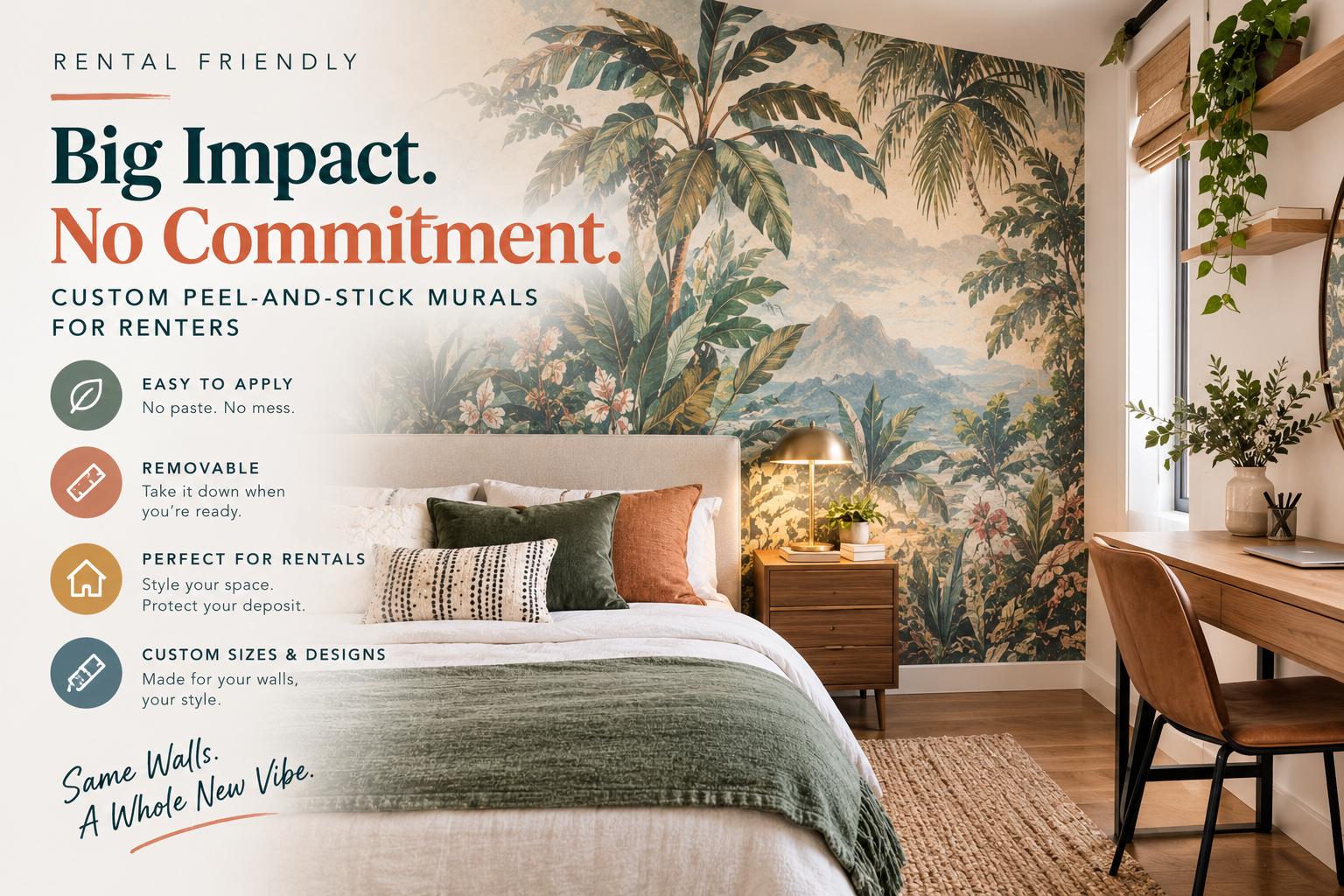
A rental can be perfectly functional and still feel like someone else’s space. Rental wallpaper changes that equation with color, pattern, and personality you can apply yourself - without committing to pasted paper, a major renovation, or a room that has to stay neutral forever.For renters, the appeal is not simply that peel-and-stick wallpaper is removable. It is the chance to create a home office that helps you focus, a bedroom that feels restful, or a nursery that looks considered rather than temporary. The right wallcovering can make a standard apartment wall feel like a deliberate backdrop for the life happening in front of it.
Why Rental Wallpaper Is Worth Considering
Paint can be restricted by a lease, traditional wallpaper can be difficult to remove, and many renter-friendly decorating ideas only go so far. A removable self-adhesive wallcovering offers a more complete visual shift. It covers a large surface, sets the room’s mood, and can be taken down when it is time to move, provided it is applied to a suitable wall and removed carefully.That last point matters. Removable does not mean risk-free on every surface. The best results generally come from smooth, clean, properly cured painted walls in good condition. Walls with heavy texture, loose paint, moisture damage, flaking finishes, or poor-quality paint may not provide dependable adhesion and can be more vulnerable during removal.Rental wallpaper is especially useful when you want your updates to feel specific. A vintage botanical can soften a plain bedroom. An abstract neutral print can give a small dining nook a polished look. A celestial design can make a child’s room feel imaginative without filling every shelf with decor. Instead of trying to make temporary furniture do all the work, the wall becomes part of the design.
Choose the Room Before You Choose the Pattern
A favorite print can be tempting, but the room should guide the decision. Think about what you want the space to do and how much visual energy it can hold.In a compact entryway, a lively floral, illustrated landscape, or luxury-inspired geometric can create an immediate welcome. Since the wall area is limited, this is often a smart place to choose a bolder pattern than you might use across a full bedroom. In a home office, consider a design that looks intentional on video calls while still supporting concentration. Soft botanicals, muted abstract patterns, and tailored linework can add depth without competing with the workday.Bedrooms offer more flexibility. Large-scale florals can feel romantic and expressive behind a bed, while a calm mural can add a sense of escape without taking up floor space. For nurseries and children’s rooms, safari scenes, stars, storybook motifs, and personalized name designs create a backdrop that feels special from day one. A removable format is particularly helpful here because children’s tastes and room needs change quickly.Vacation rentals and guest rooms benefit from wallpaper that photographs well and gives visitors a memorable sense of place. A city-inspired mural, warm botanical print, or elevated neutral pattern can make a listing feel more distinctive than a room furnished with basics alone. Keep durability and guest use in mind, especially near luggage, furniture edges, and high-touch areas.
Accent Wall or Full Room?
An accent wall is often the easiest starting point for renters. It gives a bed, desk, dining table, or sofa a focal point, uses less material, and lets you bring in a dramatic pattern without overwhelming the room. It can also be a practical choice if you are working around windows, doors, vents, or built-in storage.A full-room application creates a more immersive effect. This works beautifully in small powder rooms, nurseries, reading nooks, and spaces where the walls are mostly uninterrupted. The trade-off is that full-room installation requires more measuring, more panels, and closer attention to pattern alignment. If you are unsure about scale or color, start with a sample before ordering a full custom set.
Measure Carefully Before Ordering
Made-to-order wallpaper gives you the advantage of sizing for your actual wall rather than trying to force a standard roll to fit. That benefit depends on accurate measurements.Measure the widest point of the wall and the tallest point from floor to ceiling, even if the wall has a slope or minor variation. Measure in inches, then double-check both numbers. Do not subtract windows, doors, or other openings unless you have been specifically instructed to do so. Wallpaper panels are usually planned as a continuous design, and cutting around openings during installation helps keep the artwork or pattern aligned.It is wise to allow a small amount of extra material for trimming at the top, bottom, and sides. Walls are rarely perfectly square, particularly in older homes and apartments. A little excess gives you room to position the first panel straight, which makes every panel after it easier.Before you place an order, check where outlets, light switches, wall sconces, and shelves fall. You do not need to avoid them, but knowing their placement helps you visualize the finished wall and plan your cuts. For personalized murals with names, initials, quotes, maps, or city details, confirm spelling, capitalization, and the design preview information carefully. Made-to-order products are created for your selected specifications, so accuracy before production is essential.
Order a Sample When Color or Texture Matters
Screens are useful, but they cannot fully show how a color will behave in your room. Daylight, warm bulbs, cool LEDs, nearby furnishings, and existing paint colors can all affect what you see. A sample gives you a more reliable way to assess the print, material texture, color direction, and adhesion on your wall.Place the sample on the intended surface and look at it at different times of day. Hold it beside curtains, bedding, flooring, cabinetry, or the artwork that will share the room. If you are choosing between a soft cream and a crisp white background, this step can prevent an expensive surprise.Samples are also a practical wall test. They can help reveal whether a surface is smooth enough for a self-adhesive material and whether the wall’s paint is stable. If a sample does not adhere well, address the wall condition before ordering rather than hoping a larger installation will behave differently.
Prepare for a Clean DIY Installation
Peel-and-stick wallpaper is designed to make an elevated result more accessible, not to eliminate the need for preparation. Set aside enough uninterrupted time to work slowly, especially for your first panel. Rushing is the most common way to create avoidable bubbles, crooked seams, or a design that drifts out of alignment.Start with a smooth, dry, dust-free wall. Wipe away surface dirt and let the wall dry completely. Freshly painted walls need adequate curing time before wallpaper is applied, since paint that has not fully cured can affect adhesion and may be more sensitive during future removal. Remove switch plates when possible, gather a level, smoothing tool, sharp craft knife, measuring tape, and a stable step stool, and make sure the room has enough light to see the panel edges clearly.The first panel sets the installation. Rather than relying on a ceiling or corner that may not be level, use a level to mark a true vertical guide. Peel the backing gradually, smooth from the center outward, and work downward in sections. If you spot a bubble or slight misalignment, gently lift and reposition the panel before pressing it firmly into place. This is not a race.For a patterned design, check the repeat and seams as you add each panel. For murals, follow the panel order exactly so the image continues as intended. Trim excess material only after the panel is smooth and positioned correctly. A sharp blade and clean cuts will make the finished edge look far more polished.
Know the Trade-Offs Before You Commit
Rental-friendly wallpaper is a strong option, but it is not the right answer for every wall or every renter. Highly textured walls can show through the material or reduce adhesion. Humid areas require careful consideration, particularly if ventilation is poor. If your lease has strict rules, ask your landlord or property manager about removable wall treatments before installation rather than relying on assumptions.Removal should be slow and deliberate. Begin at a corner and pull the material back gradually, keeping it close to the wall rather than pulling outward at a sharp angle. The condition of the underlying paint, the wall preparation, and how long the wallpaper has been installed can all affect the outcome. Save a small sample or product information with your lease records so you know exactly what was used.There is also the question of permanence in a different sense: a custom design is made for your order. That makes custom sizing and personalized art more meaningful, but it also means taking time to verify dimensions, surface suitability, and design details before purchasing. A sample is a small step that can add a great deal of confidence.
Make the Wall Feel Connected to the Rest of the Room
Wallpaper looks most successful when it has company. Pull one or two colors from the print into pillows, bedding, curtains, a desk chair, or framed art. You do not need to match every shade. Repeating a warm clay tone, leaf green, soft blue, or brass-like accent is usually enough to make the room feel intentional.For patterned walls, leave a little visual breathing room nearby. Simple bedding, solid window treatments, and furniture with clean shapes let the wallcovering be the statement. For subtle wallpaper, you can layer more texture through rugs, woven storage, painted furniture, and artwork.The best rental wall is not one that looks permanently renovated. It is one that reflects your taste so clearly that, for as long as you live there, the space feels unmistakably yours.