A dramatic wall scene can make a plain bedroom feel like a private garden, turn a nursery into a safari adventure, or give a home office a more polished point of view. But before choosing the oversized florals, hand-drawn map, or celestial sky, many shoppers ask: are murals removable? For peel-and-stick murals, the answer is generally yes - provided the wall and paint are in good condition, and the material is installed and removed thoughtfully.That distinction matters. Removable does not mean every wall will react exactly the same way. Your wall’s surface, paint history, prep work, and the length of time the mural stays up all play a role in the result. Knowing what to expect before ordering makes it easier to create a high-impact space without making a permanent renovation decision.
Are Murals Removable From Painted Walls?
Self-adhesive, peel-and-stick wall murals are designed to lift away from smooth, properly painted walls without the paste, soaking, or scraping associated with traditional wallpaper. Rather than applying glue to the wall, you position the mural’s adhesive-backed panels directly onto the surface. When it is time for a change, you begin at a corner and pull slowly, keeping the material close to the wall instead of tugging straight outward.On a sound painted wall, this can be a straightforward DIY process. The mural typically comes down in panels, leaving the room ready for its next chapter - whether that means fresh paint, a different pattern, or a simpler look for a move-out.Still, the mural can only perform as well as the wall beneath it. Paint that is already peeling, poorly bonded, very old, or recently applied may lift during removal. Drywall with surface damage, unprimed patches, and textured finishes can also make adhesion and removal less predictable. This is not unique to murals; even low-tack decor can expose an existing paint issue.
The Wall Surface Makes the Biggest Difference
A smooth, clean, dry wall is the best starting point for a removable mural. Satin, eggshell, and semi-gloss painted surfaces are often practical choices because they are smoother and more stable than heavily textured finishes. Flat paint can work when it is fully cured and in good condition, but its more porous surface deserves extra care.Texture is the main trade-off. Orange peel texture, knockdown walls, brick, concrete, and rough wood create gaps between the adhesive and the wall. The mural may not sit smoothly, seams may be more visible, and removal may be less consistent. For the crisp, tailored effect that makes a custom mural look intentional, smooth walls are the better canvas.Fresh paint needs time, too. A wall may feel dry within a day, but paint needs a full curing period before it is covered. Applying a peel-and-stick mural too soon can interfere with adhesion or increase the risk of paint lifting later. Follow the paint manufacturer’s cure-time guidance, which is commonly several weeks, before installation.If you are unsure about your wall, ordering a sample is the smart first step. It lets you see the true color and finish in your room’s lighting while testing adhesion on an unobtrusive area. For renters, this small check can offer much more confidence than guessing based on a listing photo or a wall that has been repainted several times.
How to Remove a Peel-and-Stick Mural Carefully
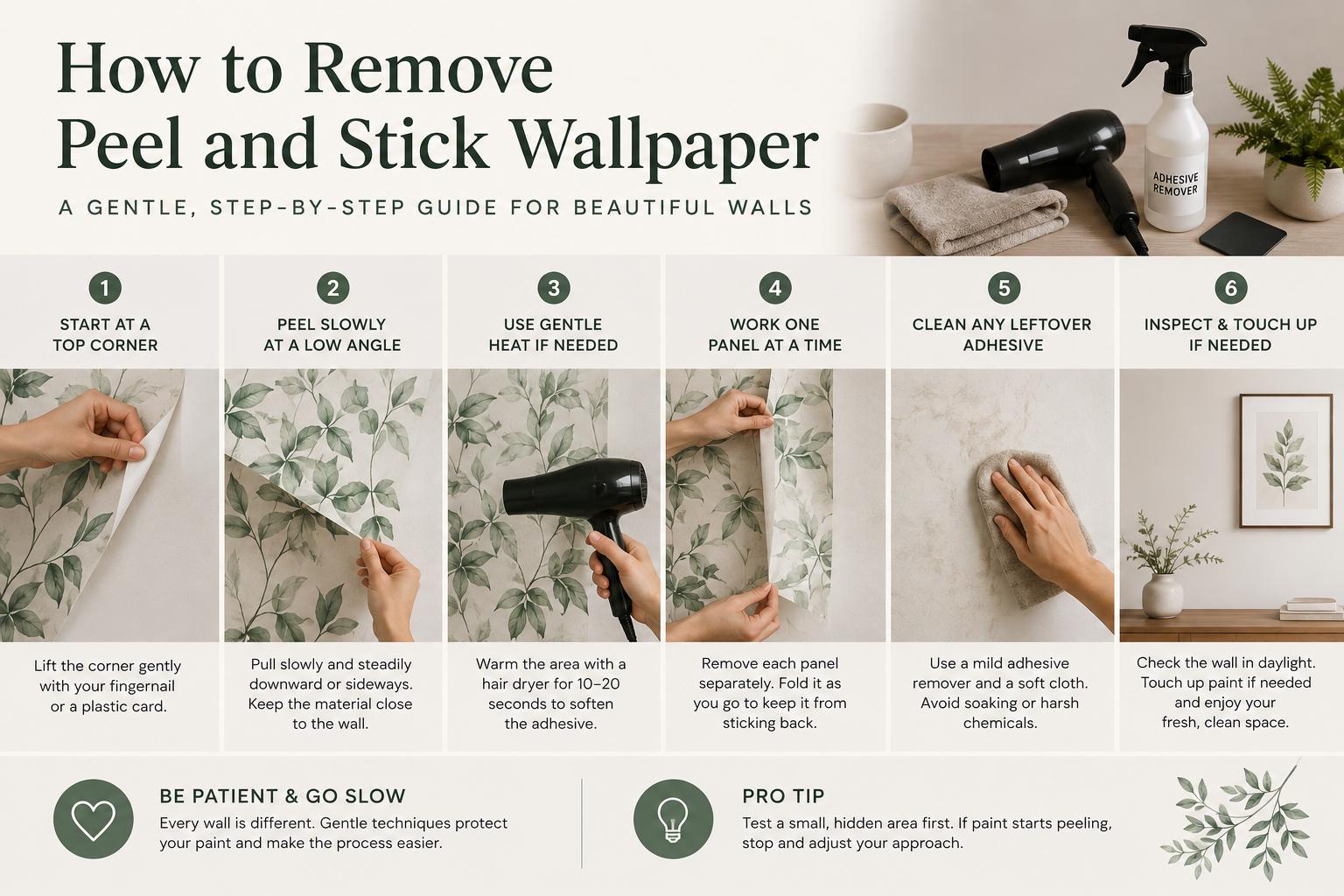
Removal is usually simple, but patience is part of the process. Avoid rushing, especially around corners, patched areas, or walls with unknown paint history. The goal is to release the adhesive gradually rather than force the panel away.Start at the top corner of one panel. Gently lift the edge with your fingertips, then pull downward at a low angle, keeping the panel close and nearly parallel to the wall. Slow, steady pressure is better than quick pulling. Continue working down the panel, supporting the material as you go so it does not fold back on itself or tear.If the mural feels unusually firm, warm the area lightly with a hair dryer on a low setting. Gentle warmth can soften the adhesive enough to help it release. Keep the dryer moving and do not overheat one spot, particularly on painted drywall.Once the panel is down, inspect the wall before moving on to the next section. If you see paint beginning to lift, slow down even more and adjust your pulling angle. A little extra time is worthwhile when you are preserving a rental wall or a newly painted room.
When Removability Has Limits
Peel-and-stick murals are a lower-commitment decorating option, not a guarantee against every possible wall issue. A mural can reveal weak paint adhesion that was already present, particularly if previous layers were not properly prepared. It may also be harder to remove cleanly from walls with moisture damage, flaking paint, patched drywall, or heavy texture.Humidity and room conditions matter as well. Bathrooms without adequate ventilation, damp basements, and walls exposed to frequent condensation are not ideal applications. Adhesive wall decor needs a dry, stable surface to look its best over time.There is also a practical difference between removing a mural shortly after installation and removing one after years on the wall. Quality peel-and-stick materials are made to be removable, but every home environment is different. For a long-term installation, keeping the wall in good condition from the start is the best protection.
Can You Reuse a Removed Wall Mural?
In most cases, a peel-and-stick mural should be treated as removable, not reusable. Once a panel has been taken down, it can collect dust, stretch slightly, curl at the edges, or lose some of its original alignment. Reinstalling it on a new wall often makes it harder to achieve the smooth, edge-to-edge finish you wanted in the first place.This is especially true for custom-sized designs. A mural created for one accent wall may not fit the dimensions, window placement, outlet locations, or lighting layout of your next room. If you are moving, it is usually better to plan a new design for the new space than to compromise the final look with a previously installed mural.
Plan for a Beautiful, Low-Commitment Update
The most successful mural projects begin before installation day. Measure the full width and height of the wall, including any areas above doors or around architectural features that will be covered. Check for baseboards, sloped ceilings, vents, switches, and windows. Custom sizing helps create a more polished result because the design is made for your wall rather than forced to fit a standard roll.Then think about the room’s purpose. A misty forest or soft botanical mural can give a bedroom a calm, layered feeling. A bold abstract design can define a home office behind a desk or video-call setup. Personalized names, maps, or playful animals can make a child’s room feel distinctly theirs without requiring a full renovation.WallpaperCraftWorks creates made-to-order peel-and-stick murals for that kind of personal transformation, but the same practical rule applies to every selection: choose a design you will enjoy living with, then give it the surface conditions it needs to perform well. Because made-to-order wall decor is created specifically for your chosen dimensions, measure carefully and use a sample to confirm color, material feel, and wall compatibility before placing the full order.A removable mural gives you permission to be more expressive with your walls. Choose the garden, the skyline, the stars, or the pattern that makes the room feel more like yours - and install it with the confidence that a future change of style does not have to mean a major renovation.