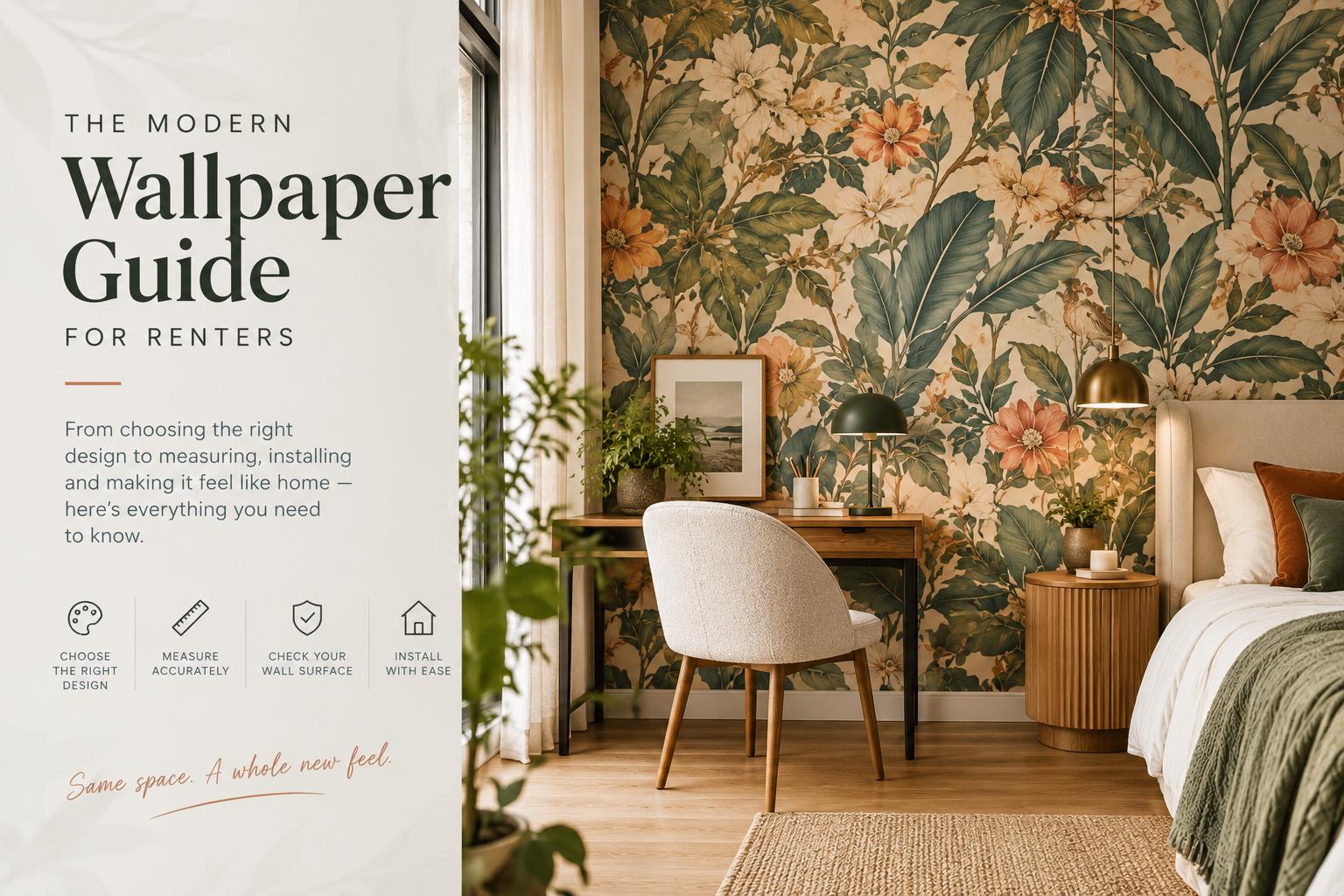
A blank wall can make a furnished room feel unfinished, while the right print can give it a point of view in one afternoon. This modern wallpaper guide is built for the real decisions behind that transformation: choosing a design you will still love next season, measuring accurately, and making sure peel-and-stick wallpaper suits your wall surface before you place a made-to-order order.Modern wallpaper is not limited to stark geometric patterns or neutral minimalism. It can be a moody botanical behind a bed, a soft safari scene in a playroom, an oversized abstract in a home office, or a personalized map that makes an entryway feel unmistakably yours. The best choice balances the mood you want with the size, light, and everyday use of the room.
Start With the Feeling You Want the Room to Have
Before narrowing down colors or patterns, decide what the wall should contribute. A wallpapered wall often becomes the visual anchor of a space, so it helps to begin with a clear role rather than scrolling by color alone.For a calm bedroom, consider misty florals, tonal botanicals, celestial motifs, or a low-contrast abstract. These designs add depth without asking for attention every time you walk in. In a dining room or powder room, a richer print can do more of the work. Deep florals, luxury-inspired marble effects, or graphic linework can create a polished look with relatively little furniture or renovation.A home office benefits from a design that feels personal but not distracting on video calls. A refined city map, a tailored neutral pattern, or a nature-inspired mural behind the desk can define the work zone without making it feel temporary. For rentals, peel-and-stick wallpaper offers a way to create that same sense of identity without committing to pasted wallpaper.Children's spaces allow more room for storytelling. Whimsical animals, stars, dinosaurs, or a personalized name mural can make a nursery or big-kid room feel considered from the start. The practical trade-off is longevity: a subtle botanical or celestial design may transition more easily as a child grows, while a character-driven theme creates a stronger early-years moment.
Use Pattern Scale to Work With the Room, Not Against It
One of the most common wallpaper concerns is whether a bold pattern will make a room look smaller. Pattern scale matters more than pattern intensity alone.Large-scale murals and oversized florals can look striking in compact rooms because they read as an intentional scene rather than visual clutter. They are especially effective on one uninterrupted focal wall, such as behind a bed, sofa, crib, or dining table. A mural with open sky, soft foliage, or a distant landscape can even create a feeling of added depth.Small, dense repeats create texture and can work beautifully in powder rooms, entryways, and full-room applications. In a larger living room, however, a tiny busy pattern may feel less impactful from across the space. If you want a full-room treatment, consider a print with breathing room between motifs or a color palette that stays close together.Ceiling height also changes how a design reads. Vertical movement, tall branches, elongated leaves, and upward-reaching arches can emphasize height. Horizontal landscapes or wide abstract sweeps can make a narrow wall feel broader. There is no rule that says dark colors are only for big rooms, either. A dark print can make a small room feel layered and cozy when balanced with good lighting, pale trim, or a bright ceiling.
Choose Colors That Belong With What You Already Own
Wallpaper does not have to match every pillow, rug, and piece of art. It should relate to the room's existing palette, then bring in a little contrast or character.Start with the colors that are hardest or most expensive to change: flooring, upholstered furniture, cabinetry, tile, and large rugs. Pull one or two colors from those elements into the wallpaper, then let the print introduce an accent shade. For example, a room with a camel leather chair and warm oak floors may suit a cream-and-olive botanical with touches of rust. A bedroom with cool gray bedding might come alive with navy celestial wallpaper or a soft blue-and-sand mural.Ordering a sample is the smartest step when color confidence matters. Screens can shift undertones, and natural daylight often reveals colors differently than warm evening lamps. Place the sample on the intended wall, then look at it morning, afternoon, and night. This also lets you see the material texture and test how the design relates to your paint, trim, and furnishings.
The Modern Wallpaper Guide to Measuring Correctly
Made-to-order wallpaper is designed around your wall dimensions, which helps avoid the generic-roll guesswork common with traditional wallpaper. Accurate measuring is still essential, especially for murals, where the composition is scaled to your space.Measure the full width and height of the wall in inches at more than one point. Walls are not always perfectly square, and ceilings or floors may slope slightly. Use the largest width and tallest height you find, rather than assuming one measurement applies to the whole wall.Before ordering, confirm these details:
- Measure around the widest and tallest points, including any slight variation across the wall.
- Note doors, windows, outlets, vents, and built-in features that may affect placement.
- Consider where the mural focal point should sit, especially behind furniture.
- Add photos of the wall to your planning notes so you can review obstacles and proportions.
You do not need to subtract every outlet or window from the total wall size. Wallpaper is generally installed across the wall and trimmed around those features during application. What matters most is ordering enough material to cover the complete surface cleanly.
Check Your Wall Before Choosing Peel-and-Stick
Peel-and-stick wallpaper is a practical DIY option, but it is not a universal fix for every surface. It performs best on smooth, clean, dry, fully cured walls. Fresh paint needs adequate curing time before wallpaper goes up, and dusty, textured, peeling, or moisture-prone surfaces can interfere with adhesion.Light orange-peel texture may be workable in some cases, but a heavily textured wall can show through the design and reduce contact with the adhesive. Brick, unfinished drywall, rough plaster, and damaged paint are not ideal installation surfaces. Bathrooms can also be more complicated because frequent steam and humidity affect wallcoverings over time.If you are renting, check your lease and test a small sample in an inconspicuous area when possible. Removability depends not only on the wallpaper but also on the paint quality, wall prep, and how long the product has been installed. Peel-and-stick is designed to be more flexible than pasted wallpaper, but no wallcovering can guarantee that weak or improperly prepared paint will remain untouched.
Plan the Installation Like a Small Project
A successful installation is less about advanced DIY skill and more about patience. Set aside enough uninterrupted time, clear furniture away from the wall, and work with clean hands and a clean surface. A second person is helpful for large panels, tall walls, and murals where alignment matters.Start with a straight reference line rather than relying on the corner of the room. Corners are often not perfectly plumb, and beginning from a true vertical line helps keep the rest of the panels aligned. Apply gradually from top to bottom, smoothing as you go instead of pulling a full panel away from the backing at once.Do not rush past the first panel. It sets the direction for every panel that follows. If it looks slightly off, gently reposition it before moving forward. For a polished finish, trim carefully around baseboards, outlets, and window frames only after the panel is fully smoothed into place.
Let One Wall Do the Talking
A dramatic mural does not require dramatic furniture. In fact, modern wallpaper often looks best when the surrounding room has a little restraint. Repeat one or two shades from the print through pillows, bedding, curtains, or decor, then leave some visual quiet around it.For a more custom look, place wallpaper where the room naturally asks for definition: behind a headboard, inside a reading nook, around a breakfast banquette, or on the wall visible first from the entry. In small commercial-style spaces and vacation rentals, a memorable accent wall can also make a listing feel more distinctive in photos.The most satisfying wallpaper choices are not the ones that follow every trend. They are the designs that make you pause at the doorway and feel that the room finally reflects the way you want to live there.