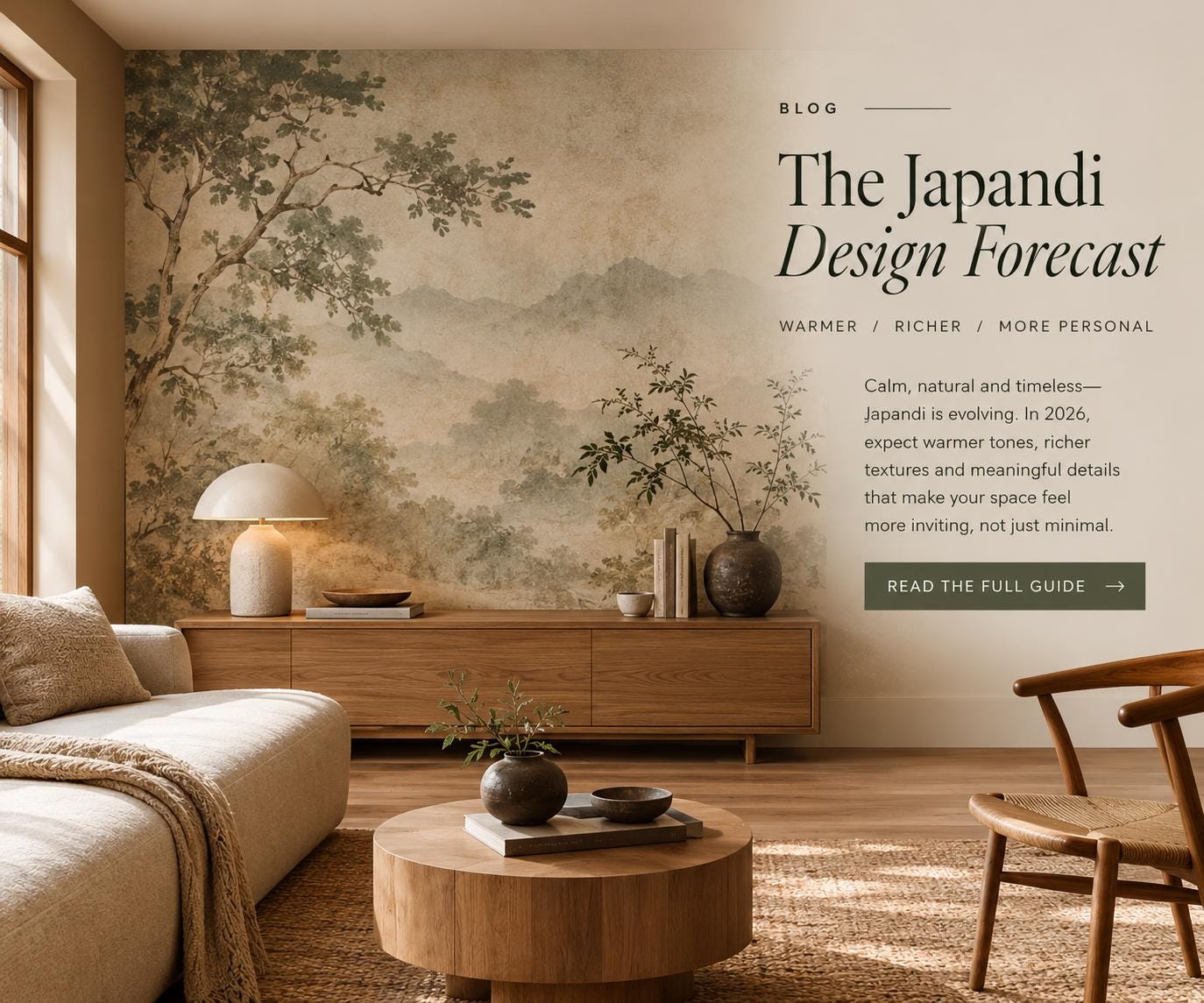
A low oak console, a softly curved lamp, and one wall with just enough visual depth to make the room feel finished - that is where the Japandi design forecast is heading. The look is still calm and edited, but it is becoming less stark. For 2026, Japandi rooms are expected to feel warmer, more tactile, and more personal, with walls doing more of the mood-setting work.For homeowners and renters, that shift is welcome. A serene interior does not have to mean blank white walls, matching beige furniture, and a room that feels too careful to live in. Japandi can be practical and expressive at the same time, especially when peel-and-stick wallpaper or a custom mural creates a polished focal point without permanent renovation.
Japandi Design Forecast: Warmth Replaces Sterility
Japandi blends Japanese restraint with Scandinavian comfort. At its best, it creates rooms that feel uncluttered but not empty, simple but never cold. The next version of the style keeps its familiar natural materials and clean lines while making space for softer color, quiet pattern, and objects with a personal story.The biggest change is a move away from high-contrast minimalism. Sharp black details, cool gray walls, and bare expanses can still work, particularly in modern homes, but they are no longer the default. The more inviting approach uses warm whites, mushroom, sand, putty, clay, olive, faded indigo, and deep brown. These shades make a room feel grounded in daylight and forgiving after sunset.Texture matters just as much as color. Think limewashed-looking finishes, woven textiles, matte ceramics, grainy wood, linen bedding, and wall patterns that suggest handmade paper, brushwork, or a landscape viewed through mist. A wallcovering does not need to imitate a material literally. Often, a muted botanical or a delicate abstract is enough to give a smooth wall the layered quality Japandi rooms need.
The 2026 Japandi Shifts Worth Watching
Organic pattern, used with restraint
Pattern is returning to Japandi spaces, but it is not loud maximalism. Look for trailing branches, sparse grasses, softened florals, watercolor washes, and irregular geometric marks. The scale can be larger than many people expect. A larger mural-scale design with open space between motifs often feels calmer than a tiny, repetitive print.For an accent wall behind a bed, choose a pattern with a quiet center rather than a busy all-over layout. In a dining nook or entryway, a more continuous botanical pattern can add movement while still feeling composed. The goal is not to make the wall disappear. It is to make it feel intentional.
Earth tones with a little depth
Cream and beige will remain core Japandi colors, but the forecast calls for more tonal contrast. Darker umber, cocoa, moss, rust, and inky blue can anchor a room when used selectively. A deep wallpaper behind open shelving, for example, can make pale ceramic pieces and natural wood stand out without adding visual clutter.This is a useful correction for rooms that feel washed out. If every surface is pale, a Japandi space can lose its shape. One deeper wall, a walnut side table, or charcoal hardware may be all that is needed to create definition.
Curves and imperfect lines
Furniture is moving further away from rigid, boxy forms. Rounded mirrors, arched floor lamps, sculptural stools, and softly shaped chairs add the gentle contrast that Japandi interiors need. On the walls, look for brushstroke forms, hand-drawn arches, and abstract compositions that feel slightly irregular.Perfect symmetry is not required. In fact, a carefully imperfect element can make a room feel more relaxed and collected. Pair a structured bed frame with a loose botanical mural, or balance a clean-lined desk with a wallpaper design that has a subtle hand-painted quality.
Personal details over showroom minimalism
The most livable Japandi rooms will not look copied from a catalog. They will include framed family photos, a few travel objects, books, handmade pottery, or a personalized design that means something to the people who live there. The style still benefits from editing, but editing is different from stripping away personality.This matters especially in bedrooms, nurseries, and home offices. A custom map mural, a child's name set in a soft neutral palette, or a city-inspired wall design can bring identity to the room while staying within a calm visual language.
Why Wallpaper Fits the New Japandi Look
Paint is useful for building a quiet palette, but wallpaper can deliver the dimension that makes a simple room memorable. The key is choosing a design that works like atmosphere, not decoration piled on top of decoration.A misty mountain mural, an understated botanical print, or a warm plaster-inspired abstract can create a finished backdrop for wood furniture and textured fabrics. It also helps define open-plan spaces. In a living room that shares space with a dining area, a single wallpapered wall can establish a restful seating zone without adding a physical divider.Peel-and-stick wallpaper is especially practical for this style because Japandi rewards thoughtful changes more than costly overhauls. You can refresh a smooth-wall bedroom, a rental-friendly office backdrop, or a vacation rental entryway without hiring an installer or committing to pasted wallpaper. Custom sizing helps reduce awkward seams and avoids the generic look of standard rolls.Still, material and surface preparation matter. Self-adhesive wallpaper performs best on clean, smooth, properly cured painted walls. Heavily textured surfaces, peeling paint, damp areas, and freshly painted walls can affect adhesion. Ordering a sample first is the best way to check color in your home's light, feel the material, and test compatibility in an inconspicuous spot.
Room-by-Room Ideas for a Softer Japandi Home
In a bedroom, place the strongest design behind the headboard. A pale olive branch pattern, muted sunrise mural, or warm taupe abstract can create a cocooning effect without requiring more furniture. Keep adjacent walls simple, then layer in crisp cotton, a woven throw, and bedside lighting with a warm bulb.For a home office, the most effective wall is often the one behind the desk. A subtle linework pattern or tonal mural gives video calls a more considered backdrop while helping the room feel separate from the rest of the home. Avoid a high-detail print if the space is small or you tend to feel distracted by visual activity.In a nursery or child's room, Japandi can be gentle without becoming bland. Soft safari scenes, watercolor animals, woodland botanicals, or a personalized name mural offer warmth and imagination. Choose a design with room to grow rather than a very age-specific theme, then add playful accessories that can be changed more easily over time.An entryway benefits from the same approach. A calming mural or delicate floral wallpaper turns a pass-through space into a small moment of welcome. Because the area may have limited natural light, order a sample and view it in the actual space before choosing between a creamy, warm neutral and a deeper earth tone.
What to Avoid When Interpreting the Trend
Japandi is not a rulebook requiring pale wood, beige upholstery, and a single black vase. Following the style too literally can create a room that feels flat or impersonal. It also does not mean every wall needs a muted pattern. If you have dramatic art, colorful textiles, or treasured furniture, use the wall treatment to support those pieces rather than compete with them.Consider scale before committing. A tiny, low-contrast print may disappear behind a large sofa, while an oversized mural can overwhelm a compact powder room. Color is equally dependent on the room. A cool gray-green may look serene in a sunny south-facing space but read chilly in a dim hallway. Samples are not an extra step - they are a smart design decision for a made-to-order wallcovering.The most lasting Japandi rooms will be the ones that choose calm over empty, natural texture over sameness, and personal meaning over a perfectly copied trend. Start with the wall you notice first, select a design that gives the room a softer point of view, and let the rest of the space unfold around it.