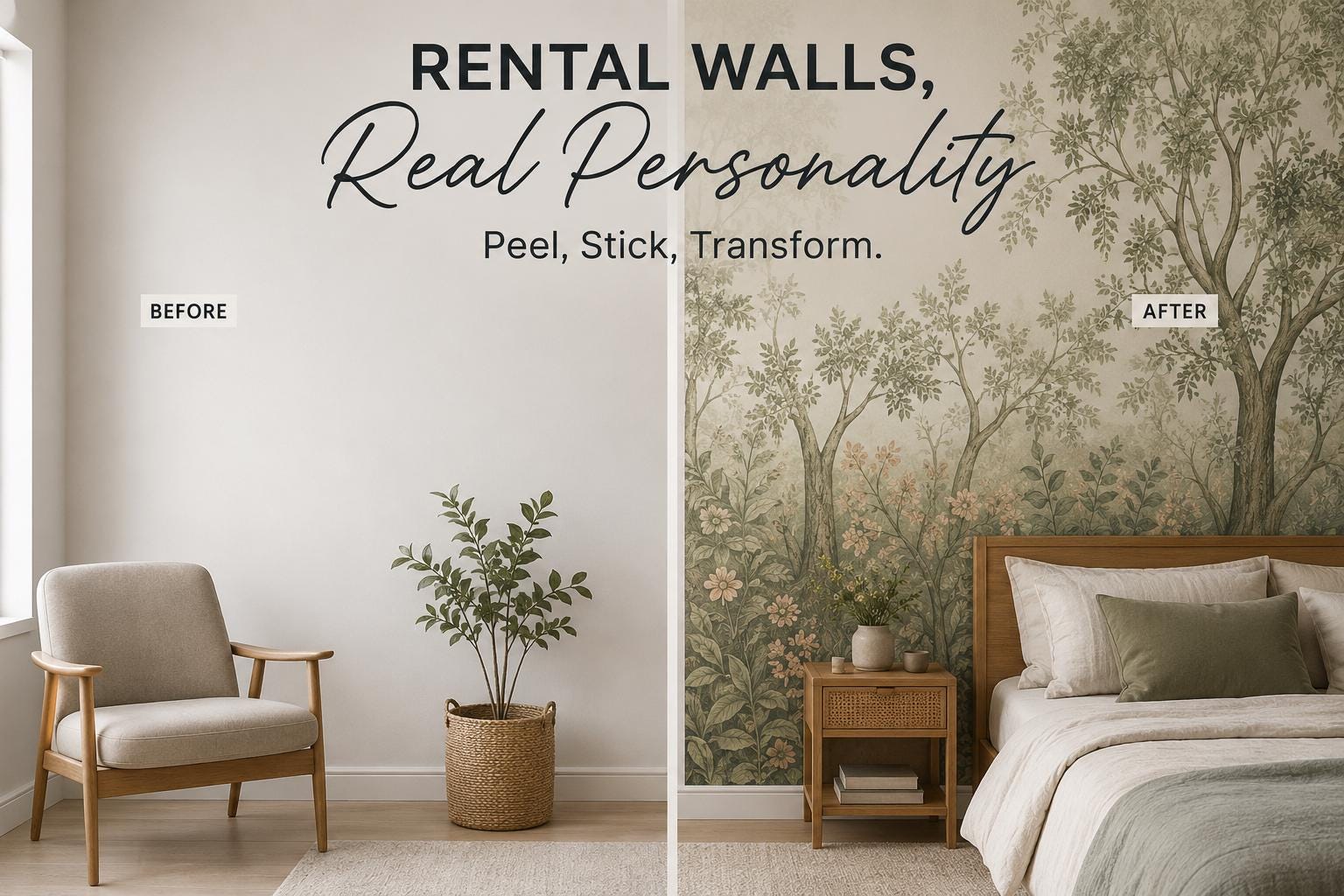
A blank rental wall can make even a well-furnished room feel temporary. Renter friendly wallpaper changes that feeling quickly, adding pattern, color, or a personalized focal point without the paste, mess, and permanence of traditional wallpaper. The right peel-and-stick design can make a studio entry feel intentional, turn a standard bedroom into a retreat, or give a home office the polish of a space designed just for you.The key is choosing a removable wallcovering with both the right visual impact and the right installation conditions. Peel-and-stick wallpaper is approachable DIY decor, but it is not a universal fix for every wall or every lease. A little planning protects your paint, your deposit, and the finished look.
What Makes Wallpaper Renter Friendly?
Renter friendly wallpaper is generally a self-adhesive, removable material designed to apply directly to a properly prepared wall. Rather than using paste, the wallpaper has an adhesive backing that is exposed as you install each panel. This makes it possible to refresh a room without hiring an installer or committing to a permanent renovation.For renters, the appeal is bigger than easy application. A removable design lets you create a room with personality now and revisit the choice later. Choose oversized botanicals for a soft bedroom backdrop, a warm abstract for a dining nook, a celestial print for a child's room, or a custom city map mural for a home office. When you move, you can remove the wallpaper carefully and take the visual memory with you, even if the material itself is not intended for reuse.That said, “removable” does not mean risk-free in every situation. Fresh paint, fragile paint, textured walls, moisture-prone areas, and walls with prior damage can all affect adhesion and removal. Review your lease, ask your property manager if you need written approval, and test your exact surface before covering a large wall.
Where Renter Friendly Wallpaper Has the Biggest Impact
An accent wall is often the smartest starting point in a rental. It gives one strong view a finished, layered look while keeping the project manageable. Behind a bed, sofa, desk, or dining table are natural choices because furniture frames the wallpaper and lets the design read as a deliberate feature.A small entryway can also benefit from a bold pattern. Since you only pass through it briefly, it is a great place for expressive safari scenes, vintage florals, dark celestial motifs, or a luxury-inspired geometric design that might feel too dramatic across four walls. In a compact powder room, use wallpaper only if the wall is smooth, dry, and away from direct splashing or persistent humidity.For families, peel-and-stick wallpaper can make a nursery or playroom feel more personal without a long renovation timeline. Soft woodland animals, playful stars, or a mural customized with a child’s name create a room that feels considered from day one. As their taste changes, the wall can change too.Vacation rentals and furnished rentals are another strong fit. A memorable mural behind the bed or in a breakfast nook can give guests a visual detail they remember, while custom sizing helps avoid the generic look of standard rolls. Just be sure the installation is completed carefully, especially in high-traffic spaces where lifted edges are more likely to be noticed.
Choose the Wall Before You Choose the Pattern
The most beautiful wallpaper cannot compensate for a surface that is not suited to self-adhesive material. Peel-and-stick wallpaper performs best on smooth, clean, dry, fully cured painted walls. Walls with heavy orange-peel texture, deep grooves, crumbling drywall, peeling paint, or slick stain-resistant finishes may prevent reliable adhesion.Newly painted walls need patience. Paint can feel dry to the touch long before it has fully cured, and applying adhesive wallpaper too soon may affect both adhesion and removal. Follow the paint manufacturer’s curing guidance, then order a sample to test the actual wall rather than relying on appearances alone.Samples are also useful for design decisions. Color shifts from room to room depending on daylight, bulb temperature, window direction, and surrounding furnishings. A warm beige botanical may look calm in a sunny bedroom but take on a different cast in a north-facing office. Seeing the material texture, print scale, and color in your own space is the easiest way to order with confidence.
How to Measure for a Made-to-Order Wall
Measuring is where a renter-friendly project becomes a polished one. Measure the full width and height of the wall at several points, because older apartments and new construction alike can have slight variations. Use the largest width and tallest height you find. Do not measure only the clear area between baseboards, trim, or furniture.For a mural, the finished composition matters as much as the dimensions. A large floral bloom, city skyline, or personalized name should sit where it can be seen rather than disappearing behind a headboard or tall cabinet. Take note of outlets, windows, doors, and wall-mounted lights before placing your order. These openings are trimmed during installation, but knowing where they fall helps you choose a layout that feels balanced.Custom sizing is especially valuable when a rental wall is narrow, extra tall, or interrupted by architectural details. It reduces unnecessary seams and helps your design feel made for the room rather than adapted from a one-size-fits-all roll. Because made-to-order wallpaper is produced to your selected dimensions and design, confirm measurements, spelling, and personalization details carefully before purchase. These items are typically not returnable simply because a measurement or preference changed.
Installing Peel-and-Stick Wallpaper Without the Stress
Installation is a straightforward project when you give it time and work methodically. Plan to install in a clean, dry room with good lighting, and avoid rushing through the last panel just because the room is nearly finished.Start by wiping the wall with a gentle, residue-free cleaner and letting it dry completely. Gather a measuring tape, level, pencil, sharp utility knife, smoothing tool, and a clean cloth. It helps to have a second person for wider or taller panels, particularly when aligning a mural image.Use the first panel as your guide for the entire wall. Mark a truly vertical line with a level rather than trusting the edge of a wall, ceiling, or door frame. Buildings are not always perfectly square, and a slightly crooked first panel becomes more obvious with every panel that follows.Peel back only a small section of backing at the top, align the panel, and smooth it from the center outward as you continue. Remove backing gradually instead of exposing the full adhesive sheet at once. This gives you more control and helps prevent bubbles, wrinkles, and accidental sticking. Match the design from panel to panel, smooth the seams gently, and trim excess material at the ceiling, baseboard, and around fixtures with a fresh blade.If a panel looks misaligned, pause early. Carefully lift and reposition it before pressing the full length into place. Pulling aggressively after it has been firmly smoothed can create unnecessary tension on the material and the paint beneath it.
Removal: Treat Your Walls Gently
When it is time to move or refresh the room, begin at a top corner and pull the wallpaper downward slowly, keeping it close to the wall instead of pulling straight out. Slow, even pressure is kinder to both the paint and the adhesive. Avoid yanking, especially around patched areas, aged paint, or drywall that has been repaired before.Removal results depend on the condition of the underlying paint, the wall preparation, how long the wallpaper has been installed, and whether the wall was properly cured before application. In some rentals, small touch-ups may still be needed. Keeping a record of the original paint color or asking your landlord for it before installation is a practical move.WallpaperCraftWorks designs are made to bring that high-impact, custom-room feeling within reach for renters who want more than temporary decor. Start with a sample, measure the wall with care, and choose a design that makes your everyday space feel unmistakably yours.