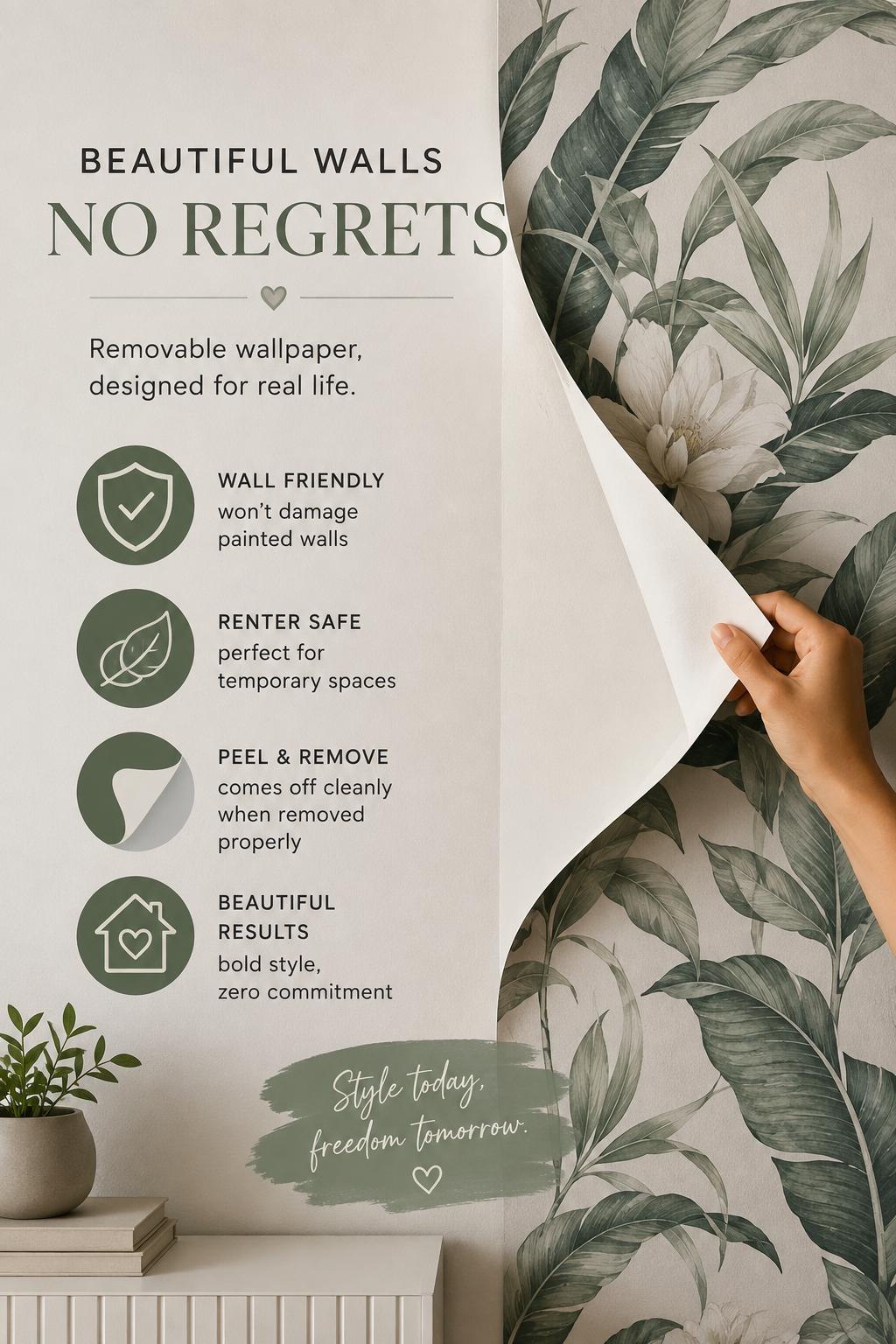
A statement wall should feel like a design decision, not a risky renovation. So, does removable wallpaper damage walls? On a properly prepared, smooth, fully cured painted wall, quality peel-and-stick wallpaper is designed to come down cleanly. But the honest answer is that wall condition, paint quality, surface texture, and removal technique all matter.Removable wallpaper gives renters, homeowners, and vacation-rental hosts a flexible way to bring in bold botanicals, tailored murals, playful nursery scenes, or a polished abstract print without paste or professional installation. It is forgiving compared with traditional wallpaper, but it is not magic. Knowing where and how to use it is the best way to protect both your walls and your finished look.
Does removable wallpaper damage walls when removed?
Most removable wallpaper will not damage a sound, clean, smooth wall when it is installed and removed as directed. The adhesive is made to hold securely while allowing the material to peel away later, rather than permanently bonding like pasted wallpaper.The exceptions usually begin with the wall, not the wallpaper. If paint is already peeling, chalky, poorly bonded, or damaged by old repairs, the adhesive can lift loose paint with it. Walls painted very recently may also be vulnerable because the paint has not had enough time to cure and fully adhere to the surface beneath it.A peel-and-stick panel can reveal an existing problem that was easy to miss before installation. If a strip of paint comes away during removal, that does not automatically mean the wallpaper caused the issue. It may mean the paint layer was not well attached to the drywall, primer, or previous coat of paint.For the lowest-risk result, apply removable wallpaper to walls with durable, fully cured paint and remove it slowly. This is especially worth considering in older homes, rental units with unknown paint history, and rooms that have been painted several times.
The wall surfaces that work best
Peel-and-stick wallpaper is created for smooth, flat interior walls. A standard wall with a smooth painted finish is the ideal canvas for a custom mural, a soft floral accent, or a dramatic dark pattern behind a bed or desk.Satin, eggshell, and semi-gloss paints generally provide a better surface than very flat or matte paint. They are easier to clean, tend to shed less surface dust, and offer a more stable finish for self-adhesive material. Glossy paint can work, but it should be cleaned thoroughly first so the wallpaper can make even contact.Freshly painted walls need patience. Let new paint cure completely according to the paint manufacturer's guidance before applying wallpaper. Dry to the touch is not the same as cured. Installing too early can affect adhesion and increase the possibility of paint lifting when the wallpaper is eventually removed.Textured walls are less predictable. Orange peel texture, heavy knockdown, stucco, brick, and rough plaster leave small gaps between the wall and the adhesive. That can cause edges to lift, seams to appear less smooth, and removal to be less consistent. A peel-and-stick design is most successful when the wall feels smooth under your hand, not visibly bumpy.High-moisture areas also deserve extra thought. A well-ventilated powder room may be suitable, but walls near direct shower spray, persistent condensation, or dampness are not an ideal setting for self-adhesive wallpaper. Moisture can compromise adhesion over time.
What can cause paint to lift?
Paint lifting is the concern behind most questions about removable wallpaper. The following conditions make it more likely:
- Paint that is old, brittle, flaking, or applied without proper surface preparation
- Recently painted walls that have not fully cured
- Flat paint or low-quality paint with a powdery, weak surface
- Walls with patched areas that were not primed and repainted evenly
- Existing wallpaper, loose caulk, damaged drywall, or unstable wall coverings beneath the surface
A small sample is one of the simplest ways to reduce uncertainty. It lets you see the color and finish in your actual lighting, but it can also help you assess whether your wall accepts the material comfortably. Apply the sample to a discreet area of a clean, smooth wall, leave it briefly, then peel it away slowly to check the paint condition.This is particularly useful when you are planning a full mural in a home office, a personalized name wall in a nursery, or a large-scale design in a rental. A sample gives you confidence before ordering a made-to-order size.
Prepare the wall before installation
Good preparation is not complicated, but it makes a visible difference. Start by wiping the wall with a clean, slightly damp cloth to remove dust, cooking residue, hairspray, or everyday grime. Let the wall dry completely before installation. Avoid strong cleaners that can leave residue behind.Inspect the surface in bright light. Fill small holes, smooth rough patches, and address peeling paint before you begin. If you repair an area, prime and paint it so the finish is even and fully cured. Wallpaper will not hide a raised patch or crumbling paint edge, especially in a room with side lighting.Plan your layout before peeling the backing. Measure the width and height of the wall, note outlets and windows, and decide where the first panel will begin. Starting with a straight first panel matters more than trying to correct alignment later. For large patterns and murals, working slowly with a second person can make placement easier.WallpaperCraftWorks designs are made to order, so careful measuring is part of creating a tailored finish. Order a sample first when color matching, wall texture, or surface condition is a concern, then confirm your dimensions before production begins.
How to remove peel-and-stick wallpaper safely
Removal should be calm and gradual, not a fast pull from the corner. Begin at the top edge of one panel and gently lift a small section. Pull the wallpaper down and back against itself at a low angle rather than straight out from the wall. This reduces tension on the paint surface.If the material feels resistant, slow down. In a cool room, allowing the space to warm naturally can make the adhesive a little more flexible. You can also use a hair dryer on low heat from a safe distance, moving it continuously across a small area. Do not overheat the wall or concentrate heat in one spot.Keep pulling in a steady motion, supporting the panel close to the point where it meets the wall. Avoid yanking, scraping aggressively, or using sharp tools. If a tiny bit of adhesive remains, start with a soft cloth and mild soapy water. Test any stronger adhesive remover in an inconspicuous place first, since cleaners can affect paint finishes.
When removable wallpaper may not be the right choice
Removable wallpaper is a smart option for many interiors, but it is not the best fit for every surface. If your walls are heavily textured, damp, crumbling, freshly painted, or coated in unknown and unstable paint, wait until the surface is repaired or choose another decorative approach.Likewise, do not apply it over loose wallpaper or a wall that already shows peeling paint. The goal is a beautiful, reliable accent wall, not a temporary cover for a surface that needs maintenance first.For renters, it is also wise to review your lease before installation. While removable wallpaper is designed for temporary decorating, building rules and paint conditions vary. Taking photos of the room before you start and testing a sample in a hidden area are practical safeguards.
A beautiful wall starts with a sound surface
Removable wallpaper can make a bedroom feel more personal, turn a plain entryway into a memorable first impression, or give a child's room a look that grows with their imagination. The key is choosing a smooth, stable wall and giving the material the same care you would give any finish in your home.When the surface is ready, the wallpaper is installed thoughtfully, and removal is slow and gentle, peel-and-stick designs offer the freedom to change the mood of a room without treating that change like a permanent commitment.