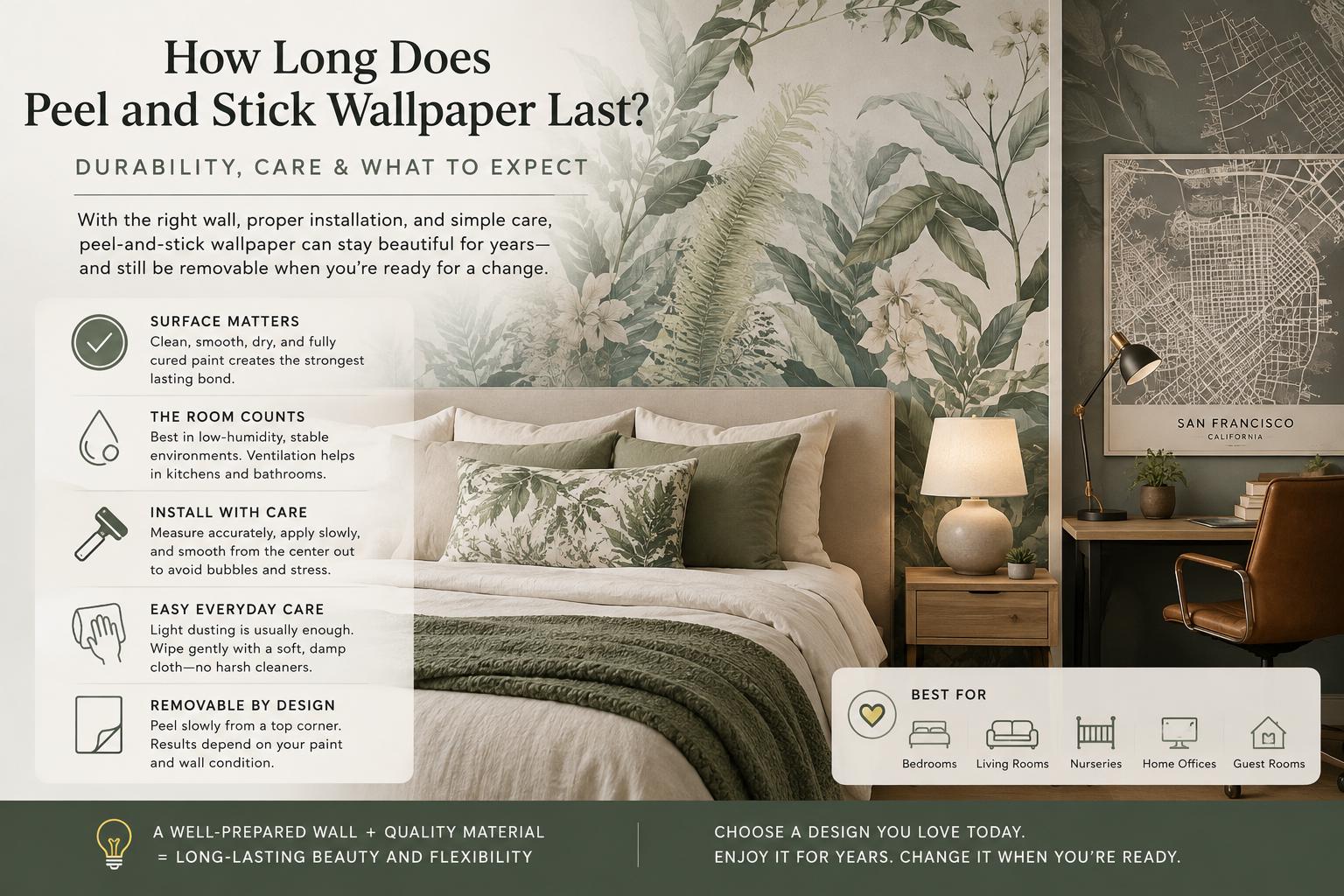
amatic botanical wall behind the bed or a custom map mural in a home office should feel like a finished design choice, not a short-lived decorating experiment. Wallpaper durability is a practical concern for anyone choosing peel-and-stick wallpaper, especially renters, busy families, and homeowners creating a room they will enjoy every day.The honest answer is that longevity depends on more than the pattern itself. The surface beneath it, the room’s moisture level, installation care, and everyday use all influence how well a self-adhesive wallcovering performs. On a properly prepared smooth wall in a typical dry interior space, peel-and-stick wallpaper can remain beautiful for years while still offering the flexibility to remove it later.
What Determines Wallpaper Durability?
Peel-and-stick wallpaper is designed to adhere firmly without the paste, water, and mess associated with traditional wallpaper. Its durability comes from the relationship between the wallpaper adhesive and your wall surface. When that surface is clean, smooth, dry, and properly painted, the adhesive has the consistent contact it needs to stay in place.Texture is the biggest variable. Walls with heavy orange peel texture, deep knockdown texture, rough plaster, or raised imperfections create tiny gaps between the adhesive and the wall. That can lead to lifting at panel edges or a less polished finish. Smooth painted drywall is the ideal canvas for both installation and long-term performance.Paint condition matters just as much. Fresh paint may look ready for decor, but it needs time to fully cure. Installing wallpaper too soon can interfere with adhesion and may increase the chance of paint lifting when the wallpaper is eventually removed. A clean wall with fully cured, sound paint gives you the best starting point.
How Long Does Peel-and-Stick Wallpaper Last?
There is no single lifespan that applies to every room. A peel-and-stick mural in a low-traffic guest room will have a very different experience than an accent wall in a sunny playroom or a busy vacation rental entryway. With appropriate installation and normal indoor conditions, quality peel-and-stick wallpaper is intended to be a lasting decorative finish rather than a temporary party decoration.For many customers, the appeal is not that wallpaper must come down quickly. It is that the choice remains theirs. You can enjoy a floral feature wall through several seasons of redecorating, then remove it when your style changes, a nursery becomes a big-kid room, or a lease ends.That flexibility comes with a trade-off. Self-adhesive wallpaper is not the right choice for every surface or environment. Extremely humid bathrooms, walls with persistent dampness, unfinished drywall, damaged paint, and heavily textured surfaces can compromise adhesion. If your room has those conditions, a sample is a smart first step before committing to a full custom order.
The Room Makes a Difference
Bedrooms, living rooms, dining areas, hallways, nurseries, and home offices are usually excellent locations for peel-and-stick wallpaper. These spaces tend to have stable temperatures and lower humidity, which supports a reliable bond.Kitchens can work beautifully for a statement wall away from direct heat, cooking splatter, and frequent steam. Bathrooms require more caution. A powder room with good ventilation may be suitable, while a shower-adjacent wall that stays humid is a tougher environment for any adhesive wallcovering.Sunlight is another consideration. Bright natural light can make an abstract print, celestial mural, or luxury-inspired pattern look especially striking, but constant intense direct sunlight may affect printed color over time. Window treatments can help protect walls that receive strong afternoon sun every day.
The Installation Choices That Help Wallpaper Last
A thoughtful installation sets the stage for lasting results. Before hanging your first panel, clean the wall to remove dust, grease, residue, and anything else that could get between the adhesive and the paint. Let the surface dry completely.Take time to measure the wall accurately, including any areas around windows, doors, outlets, or sloped ceilings. Made-to-order wallpaper is created for your selected dimensions, so careful measuring helps avoid rushed adjustments during installation. Ordering a sample can also help you assess the material, color, finish, and adhesion on your actual wall before moving ahead with a larger design.When applying each panel, begin at the top and work downward slowly. Peel back the backing gradually instead of removing it all at once. Use a smoothing tool or a clean, soft cloth to press the wallpaper into place as you go, working from the center outward to guide out air pockets.Avoid stretching the material as you install it. Pulling too firmly may make alignment more difficult and can put unnecessary tension on panel edges. A calm, methodical pace is more useful than speed, particularly with a detailed mural, a repeating pattern, or personalized wallpaper where every element needs to land exactly as intended.
Give New Wallpaper Time to Settle
Once the panels are in place, resist the urge to constantly press, pull, or reposition them. Adhesive needs stable contact with the wall to settle properly. Keeping the room at a normal indoor temperature and avoiding excess humidity right after installation will support the process.If you notice a small edge that needs attention, gently smooth it back down rather than tugging on the panel. Addressing a minor lift early can help preserve the clean, tailored look of the installation.
Everyday Care for a Beautiful Finish
Wallpaper does not need complicated maintenance. In most rooms, occasional light dusting is enough to keep the surface looking fresh. Use a dry, soft microfiber cloth and avoid abrasive scrubbers that could dull the printed finish.For a small mark, start with the gentlest method possible. A lightly damp, soft cloth may be appropriate, but do not saturate the wallpaper or allow water to sit at seams and edges. Skip harsh cleaners, solvents, bleach, and aggressive rubbing. These products can affect both the print and the adhesive over time.In family spaces, placement can be part of the care plan. A playful safari design is perfect for a child’s room, but a wall directly behind a craft table or within reach of a splash-prone sink may need more protection. Consider placing the statement wall where it can be seen and enjoyed without becoming the room’s most frequently touched surface.For vacation rentals and home offices, wallpaper can be a high-impact way to create a memorable backdrop without a major renovation. Choose a wall that is visually prominent but less likely to receive luggage scuffs, chair bumps, or repeated contact. A custom city map behind a desk or a bold floral wall behind a headboard often delivers more visual impact with less everyday wear.
Will Removing It Damage the Wall?
Peel-and-stick wallpaper is designed to be removable, but no wallcovering can guarantee identical results on every wall. Removal depends heavily on the paint underneath. Well-bonded, fully cured paint on a properly prepared smooth wall is the best scenario.To remove wallpaper, begin at a top corner and pull slowly back against itself at a low angle. Avoid yanking it straight away from the wall. Working gradually gives the adhesive time to release and reduces stress on the painted surface.Older paint, weak paint adhesion, unprimed walls, and walls that already have peeling or damaged areas carry a greater risk of paint lift. This is why surface testing matters. A sample lets you evaluate both adhesion and removability before you transform an entire room.
Choose Durability That Still Leaves Room to Change
The most durable decorating choice is not always the one that lasts forever. It is the one that fits your wall, your lifestyle, and the way you want a room to feel right now. A well-prepared smooth wall gives peel-and-stick wallpaper the foundation it needs to look polished for years, while custom sizing and removable installation leave space for the next version of your home.Whether you are creating a calm nursery, a confident home office, or a memorable guest room, start with the wall itself. Then choose the design that makes you happy to see it every day.