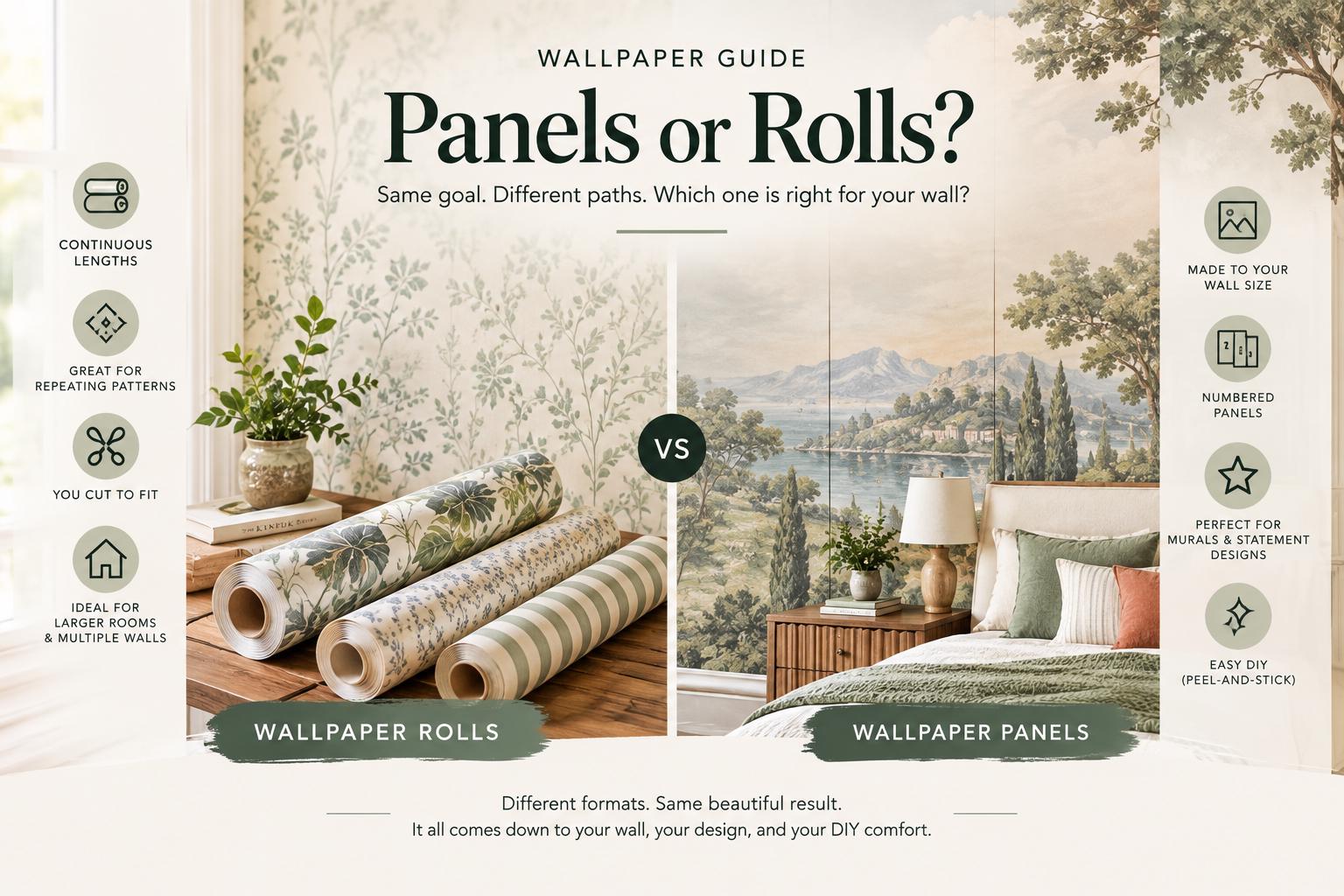
A wall can look dramatically different by the end of an afternoon, but the format you choose shapes how that transformation begins. When comparing wallpaper panels versus rolls, the real question is not which option is universally better. It is which one suits your wall, your design, and the level of DIY control you want.Traditional wallpaper rolls remain a familiar choice for repeating patterns and large-scale projects. Custom peel-and-stick panels, meanwhile, are designed around your wall dimensions and arrive as individually numbered sections. For an accent wall, a nursery mural, a home office backdrop, or a personality-filled rental refresh, that difference can make planning and installation feel far more approachable.
Wallpaper Panels Versus Rolls at a Glance
Wallpaper rolls are long, continuous lengths of material that you cut to fit during installation. They are commonly used with pasted wallpaper, although peel-and-stick roll options also exist. A repeating pattern runs along the length of the roll, so the installer lines up each strip to continue the design across the wall.Wallpaper panels are separate vertical pieces produced for a specific wall size. With a mural, the image is divided across the panels so a city map, oversized botanical, safari scene, celestial sky, or personalized name design comes together once installed. For repeating designs, panels can also be sized and supplied in a sequence that reduces on-the-spot measuring and cutting.That makes panels especially useful when the wall itself is the project. Rather than buying material by the roll and calculating what is needed, you provide the wall dimensions and receive a layout designed to cover that space.
Why Rolls Still Work for Some Rooms
Roll wallpaper has a practical place in decorating. If you are covering several walls with a small repeating print, such as a subtle stripe, tiny floral, or textured neutral, rolls can be a sensible format. The pattern is meant to repeat, so the design does not depend on one precisely positioned image.It can also be easier to find ready-to-ship rolls in a broad range of price points. For someone comfortable with paste, booking an installer, trimming around openings, and managing pattern repeats, rolls offer flexibility. They are a familiar material for experienced wallpaper installers, particularly on straightforward, square rooms.The trade-off is that a roll is not automatically tailored to the wall. You need to calculate coverage, account for repeat matching, allow extra material for cutting, and decide what to do with leftover lengths. A bold pattern with a large repeat can create more waste than expected because each new strip may need to start at a specific point to align with the previous one.Traditional pasted wallpaper also asks more of the installation process. Paste, booking time, wet material, and removal later are all factors to consider. That does not make rolls a poor choice. It simply means they tend to suit buyers who want a conventional wallcovering process or are working with an installer.
Where Custom Wallpaper Panels Shine
Panels make the most sense when the design has a composition, not just a repeat. Think of a watercolor garden that opens across the wall, a world map behind a desk, an abstract statement in a dining area, or a child’s name layered into a dreamy sky. Cutting a mural from generic rolls would disrupt the image. Numbered panels preserve the intended artwork from left to right.Custom sizing is another major advantage. A made-to-order panel set can be created around the width and height you provide, which helps you avoid the guesswork of estimating roll quantity. This is particularly helpful for one focal wall behind a bed, sofa, crib, or work-from-home desk, where visual placement matters as much as total coverage.For DIY decorators, peel-and-stick panels bring another benefit: they are dry-applied. You peel back the backing gradually, position the top edge, smooth the material onto a clean wall, and continue panel by panel. There is no paste to mix and no wet paper to stretch or tear. If placement needs a small correction during installation, the material can be carefully lifted and repositioned before it is fully pressed down.That easier process is why panels are popular with renters and homeowners who want an expressive update without turning the room into a renovation zone. Removable peel-and-stick wallpaper can offer a more flexible path than traditional paste, provided the wall surface is suitable and the material is removed carefully according to instructions.
Panels are not automatically easier on every wall
Even a DIY-friendly product needs the right foundation. Peel-and-stick wallpaper performs best on smooth, clean, dry, fully cured painted walls. Heavy texture, peeling paint, dusty surfaces, moisture-prone areas, and freshly painted walls can affect adhesion and the finished look.Walls with many windows, doors, angled ceilings, outlets, or deep trim also require thoughtful measuring and trimming. Panels reduce material planning, but they do not eliminate careful installation. Measure the widest and tallest points, check for obstacles, and add the requested allowances when ordering if the product guidance calls for them.
Design Changes the Panels Versus Rolls Decision
The pattern you choose should influence the format. A repeating checkerboard or small-scale botanical can look beautiful in either rolls or panels because the repeat is forgiving. A large mural, oversized floral, sweeping landscape, or personalized design is better suited to panels because each section is part of a complete image.Scale matters, too. On a narrow entry wall, a single oversized motif may look intentional and artful. On a wide living room wall, a mural divided into panels can create a continuous, immersive backdrop. With rolls, you may need to work around where the pattern begins and ends. With custom panels, the layout is planned for the width of your wall.Color confidence is just as important as pattern scale. Screen colors vary, and daylight can make a soft beige read warmer or cooler than expected. A sample lets you assess the print, material texture, color, and adhesive performance on your own wall before committing to a full made-to-order set. It is a small step that can prevent a disappointing mismatch with flooring, upholstery, or existing paint.
Cost Is More Than the Price of Material
A lower upfront roll price does not always mean a lower project cost. Add enough material for pattern matching, potential waste, paste and tools, or professional installation, and the total can change quickly. On the other hand, rolls may be cost-effective for a large room covered in a simple, readily available repeat pattern.Custom panels may cost more per project because they are produced to your dimensions and design selection. But that cost can include the convenience of a made-for-your-wall layout, numbered sections, and peel-and-stick installation. For a single accent wall, the value often lies in achieving a polished, high-impact result without buying extra rolls or hiring help.The right comparison is not simply panels versus rolls by square foot. Consider waste, installation supplies, time, future removal, and whether the format supports the exact look you want.
How to Choose the Right Wallpaper Format
Start with the room’s job. A temporary home office background, a vacation rental feature wall, or a child’s bedroom may benefit from a removable peel-and-stick panel set that is easy to install and visually specific. A formal dining room wrapped in a classic repeat across every wall may be a better candidate for rolls, especially if professional installation is already part of the plan.Next, look at the design. Choose panels for murals, personalized artwork, and large-scale scenes. Consider rolls for continuous repeats where the design can start and stop without changing the overall effect.Then be honest about the installation experience you want. If you prefer to avoid paste and want the reassurance of working with numbered sections, panels are the more comfortable DIY route. If you have wallpapering experience, a reliable installer, or a simple repeat pattern to cover a large area, rolls can be a strong fit.Finally, measure before falling in love with a layout. Record the wall’s width and height in inches, note doors and windows, and order a sample when color or surface adhesion is uncertain. Because custom wallpaper is made to order and may not be returnable, those few minutes of planning matter.A beautiful wall treatment should feel like a creative decision, not a construction project. Whether you choose traditional rolls or custom peel-and-stick panels, select the format that lets your favorite design look intentional, fit confidently, and feel right for the way you live in the room.