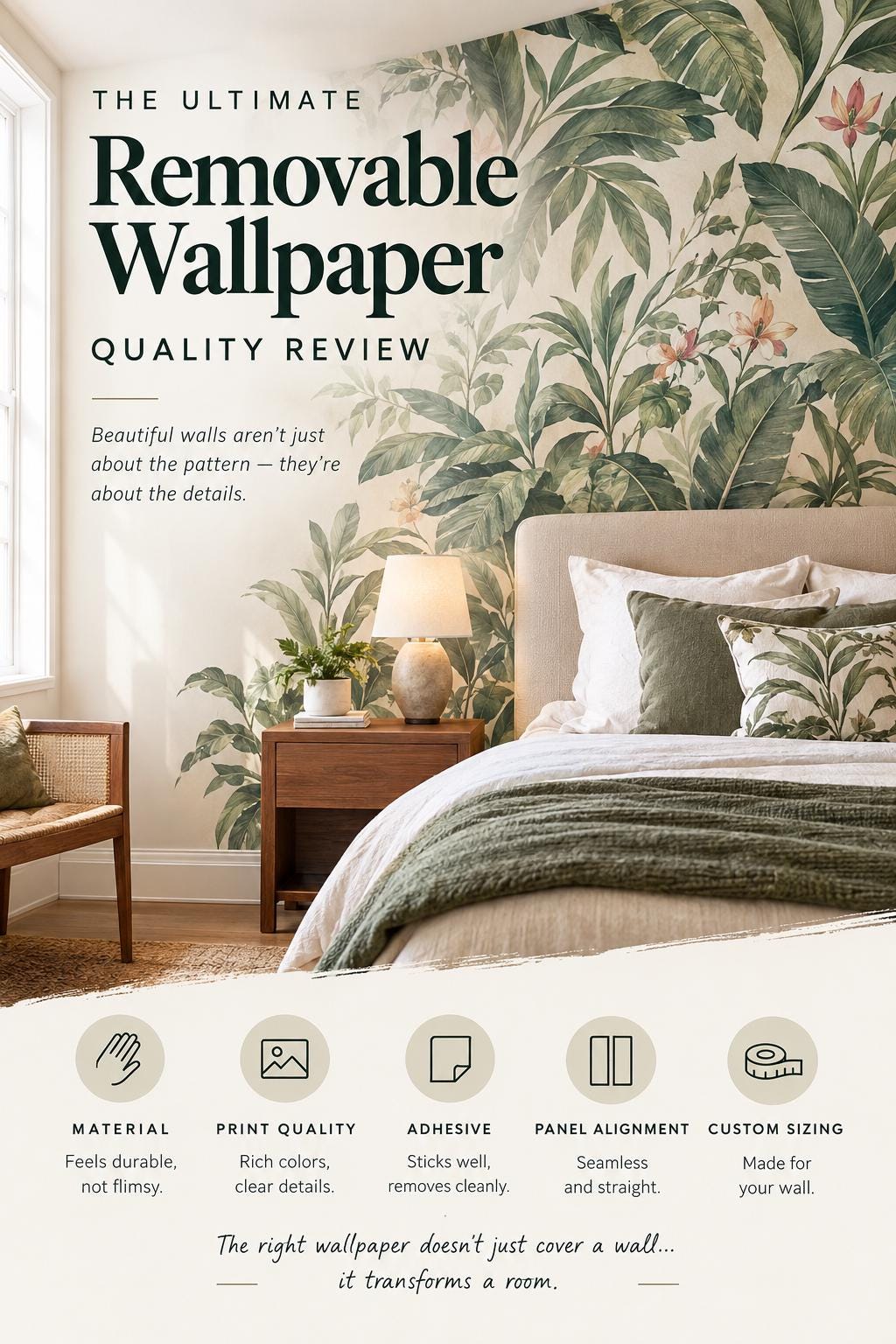
A dramatic botanical behind the bed or a personalized map in a home office should feel like an upgrade, not a risky weekend project. That is why a removable wallpaper quality review needs to look beyond the pattern on a screen. Quality shows up in the material under your hands, the clarity of the print, the accuracy of the sizing, and how confidently the panels apply to your specific wall.Peel-and-stick wallpaper makes a high-impact room refresh more approachable, especially for renters, first-time decorators, and anyone who does not want paste, professional installation, or a permanent renovation. But not every removable wallcovering is made for the same conditions. The right choice depends on the surface, the scale of the design, and the care taken before ordering.
What Defines Quality in Removable Wallpaper?
A quality peel-and-stick wallpaper is both a decorative finish and a practical material. It should deliver the visual mood you chose - whether that is soft vintage florals, polished marble-inspired geometry, a whimsical safari, or a custom name mural - while remaining manageable to install on a properly prepared smooth wall.The most useful way to assess it is to consider five connected details: material feel, print quality, adhesive performance, panel alignment, and made-to-order accuracy. A beautiful pattern cannot make up for a poor surface match, and strong adhesive alone is not helpful if the mural is incorrectly sized for the wall.
Material should feel substantial, not flimsy
Peel-and-stick wallpaper is designed to be handled during installation, so the material matters. A good product should feel durable enough to position carefully without behaving like an overly thin sticker. It should lay smoothly when applied and have enough body to make pattern matching and panel handling less stressful.Texture also changes the finished look. Matte or lightly textured materials tend to create a more elevated wallcovering effect than a glossy, decal-like finish. They can help soft watercolor florals, hand-drawn nursery artwork, and detailed celestial scenes look more at home in a room rather than like a temporary poster.That said, removable does not mean indestructible. Peel-and-stick material can stretch, crease, or collect dust at an exposed edge if it is handled roughly. Treat the panels like a finished decorative surface, not packaging material, and work slowly during application.
Print quality is about color, detail, and scale
A quality review should always include the print itself. Fine lines in a city map, small leaves in a botanical pattern, facial details in animal artwork, and tonal shifts in an abstract design need to remain clear at room scale. Colors should feel intentional and balanced rather than muddy or overly harsh.Screen images are useful for narrowing down a style, but they are not a perfect promise of how a color will appear in every home. Daylight, warm bulbs, cool LEDs, nearby paint colors, and even wood flooring can shift the way a wallpaper reads. A beige background may look warmer beside walnut furniture and cleaner next to crisp white trim.For that reason, ordering a sample is one of the most practical quality checks you can make. Place it on the intended wall, look at it in morning and evening light, and hold it near textiles, paint, or furniture already in the room. It is a small step that can prevent a large made-to-order purchase from feeling uncertain.
Removable Wallpaper Quality Review: Adhesion and Wall Prep
The adhesive is often where expectations need the most context. High-quality removable wallpaper is made for clean, smooth, dry, properly cured surfaces. It is not a universal solution for every wall in every condition.A freshly painted wall needs adequate cure time before installation, based on the paint manufacturer's guidance. Applying wallpaper too soon can affect adhesion and may disturb the paint finish when removed. Walls should also be wiped clean of dust, grease, and residue, then allowed to dry completely.Texture deserves an honest assessment. Light texture may be workable in some situations, but pronounced orange peel, deep grooves, brick, unfinished drywall, and heavily textured plaster can prevent full contact between the adhesive and the wall. That can make seams more visible or cause edges to lift over time. A smooth wall is the best foundation for a polished result.Humidity and placement matter, too. A climate-controlled bedroom, entryway, nursery, or home office is an excellent setting for peel-and-stick wallpaper. Areas exposed to constant steam, splashing water, or significant temperature swings require more caution. The material may still look beautiful, but the environment is part of the performance equation.
Panel Alignment Separates a Polished Result From a Frustrating One
Most feature walls and murals are produced in vertical panels rather than one oversized sheet. This makes the product practical to ship and manageable to install, but it also makes alignment essential. The first panel sets the direction for every panel that follows.Before removing much backing paper, check the panel order and unroll the pieces on a clean floor. Confirm that the artwork continues correctly from one panel to the next. For repeating wallpaper, look at where the pattern joins. For murals, identify key visual details such as a name, skyline, animal, or map feature so you know how the composition will build across the wall.Use a level or plumb line instead of relying on a ceiling, doorway, or corner. Many homes have surfaces that are slightly off square, and a panel that follows an uneven ceiling line can slowly drift out of alignment. Starting straight gives you the best chance of clean seams and a finished look that feels intentional.Work in small sections, smoothing from the center outward as you go. This helps release air and reduces the temptation to pull or stretch the material. If a section lands incorrectly, gently reposition it before moving on. Peel-and-stick installation is designed to be accessible, but patience is still one of the best tools in the room.
Custom Sizing Is a Major Quality Advantage
Generic rolls ask your wall to fit the product. Custom sizing lets the product fit the wall. That distinction matters most with murals, oversized patterns, accent walls, awkward alcoves, and rooms where a focal point needs to land in a precise place.Measure the full width and height of the wall in more than one location, especially in older homes. Use the largest measurements and account for a little extra material where appropriate for trimming. Note outlets, windows, sloped ceilings, built-ins, and doors before ordering. A design can still work around these features beautifully, but planning prevents unwanted surprises when the panels arrive.For personalized wallpaper, proof details deserve extra attention. Confirm the spelling of names, cities, dates, quotes, initials, and any custom information before the order enters production. Made-to-order wallpaper is created specifically for your wall, which is a meaningful quality benefit, but it also means accuracy at checkout is essential. Custom products are typically not returnable simply because a measurement or personalization detail was entered incorrectly.WallpaperCraftWorks focuses on made-to-order peel-and-stick designs because a nursery name mural, a tailored map wall, or a properly scaled floral print should feel designed for the room, not pulled from a one-size-fits-all shelf.
When Removable Wallpaper Is the Right Choice
Removable wallpaper is a particularly strong option when you want visual personality without traditional wallpaper paste or the commitment of a permanent treatment. It works beautifully for a single wall behind a sofa, a dining nook, a guest room, a child’s room, a rental-friendly refresh, or a styled home office backdrop.It is also useful when your taste is specific. A soft cottagecore floral may be perfect now, while a more graphic abstract or luxury-inspired neutral might suit your next space. Removability gives you more flexibility to follow the room's purpose and your changing style.The trade-off is that success depends more on preparation than a simple paint project. You need accurate measurements, a compatible wall surface, and a little installation time. If your walls are heavily textured, damaged, damp, or newly painted, address those conditions first rather than hoping the wallpaper will hide them.
A Better Way to Judge Before You Order
Rather than asking whether removable wallpaper is “good” in the abstract, ask whether a specific design and material are right for your room. Start with a sample. Check the wall condition. Measure twice. Think about lighting and the scale of the print. Then choose a design that gives the space a point of view, whether that is calm, playful, polished, or personal.The best removable wallpaper does more than cover a wall. It gives a room a finished identity while leaving the next chapter of your home within reach.