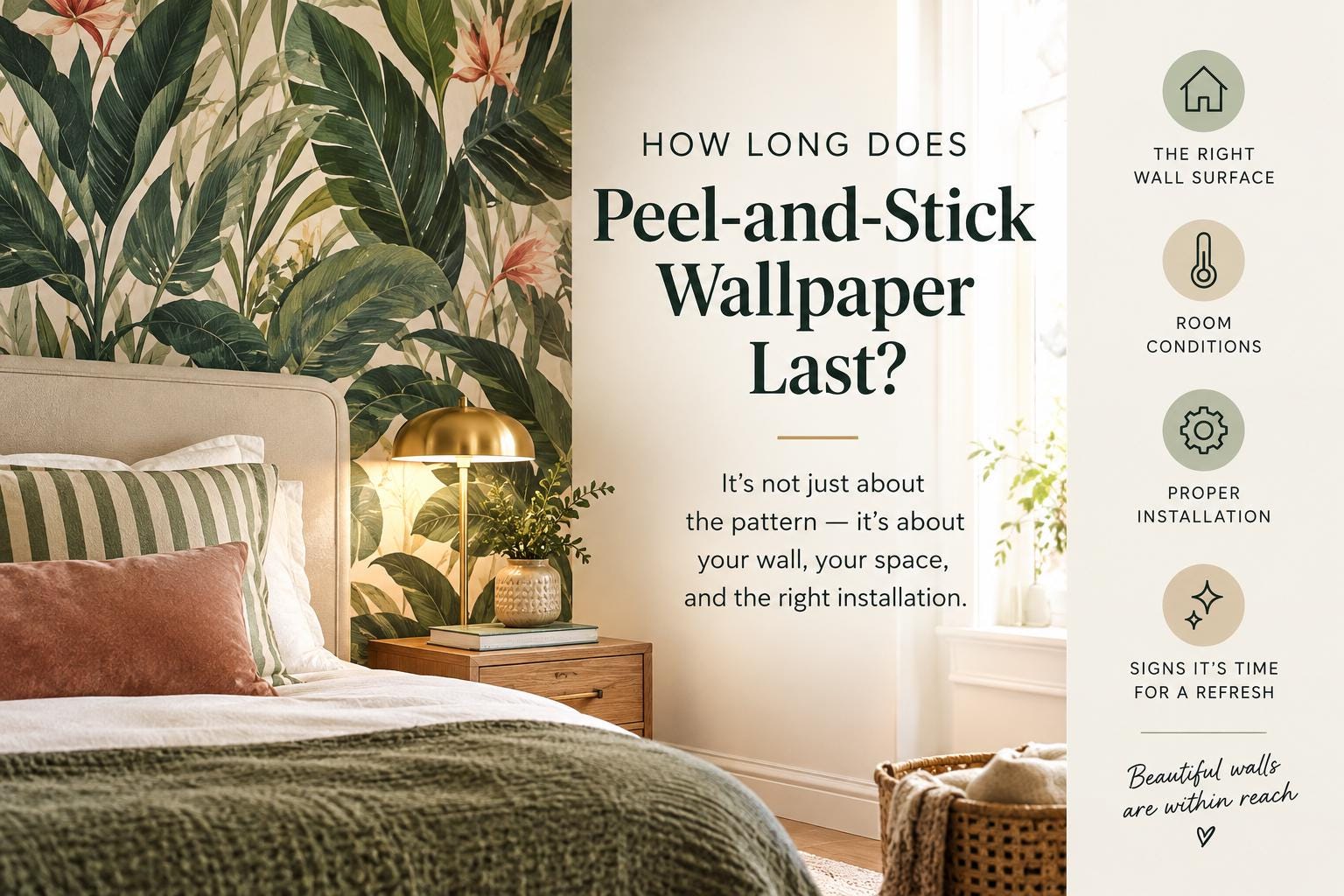
A bold botanical behind the bed or a personalized mural in a nursery should feel exciting, not like a countdown to the next repair. So, how long wallpaper lasts depends less on the pattern you choose and more on the wall beneath it, the room around it, and how carefully it is applied.For a well-made peel-and-stick wallpaper installed on a clean, smooth, fully cured wall, several years of beautiful wear is a realistic expectation. Some installations last longer. Others need attention sooner because of humidity, textured walls, fresh paint, constant sun, or a rushed application. The good news is that most of those factors are within your control before the first panel goes up.
How Long Does Peel-and-Stick Wallpaper Last?
Peel-and-stick wallpaper is designed to stay put while giving you more flexibility than pasted wallpaper. In a low-moisture room with stable temperatures - think a bedroom, living room, hallway, nursery, or home office - it can remain a polished part of the space for years when it is installed on the right surface.Traditional pasted wallpaper is often chosen for very long-term installations and can last a decade or more when professionally installed and maintained. Peel-and-stick is a different kind of decorating choice. It is made for homeowners and renters who want high visual impact without committing to permanent renovation work. You can create a full-room mood, transform an accent wall, or add a custom city map above a desk, then remove or update it when your style or space changes.That flexibility does not mean it is temporary-looking. A properly prepared wall and a thoughtful installation make a dramatic difference in how long the finish stays smooth, aligned, and secure.
The Wall Surface Has the Biggest Say
The adhesive needs a clean, stable, non-porous surface to make consistent contact. Smooth painted drywall in good condition is the ideal canvas. Walls with deep texture, loose paint, crumbling plaster, dusty surfaces, or old wallpaper underneath are much more likely to cause lifting at the edges or uneven adhesion.Freshly painted walls deserve extra patience. Even when paint feels dry, it can continue releasing moisture and curing beneath the surface. Applying self-adhesive wallpaper too soon may weaken its grip or affect the paint when the wallpaper is removed later. Allow new paint to cure completely according to the paint manufacturer's guidance before installing.Matte, eggshell, satin, and semi-gloss walls can all vary based on the paint formulation and condition of the surface. This is why ordering a sample is more than a color decision. It gives you a chance to see the material in your room, feel its finish, and test adhesion on the actual wall before placing a made-to-order order.
Texture Is More Than a Visual Detail
A lightly textured wall may work better than a heavily textured one, but texture always adds uncertainty. Peaks and grooves reduce the amount of adhesive that can touch the wall, which can create small gaps, visible texture through the design, or corners that gradually lift.If your wall has an orange-peel finish, knockdown texture, or another pronounced surface, test a sample in the exact location you plan to decorate. Press it firmly, let it sit, and evaluate the result rather than relying on a wall's appearance alone.
Room Conditions Affect Wallpaper Life
Wallpaper in a calm, climate-controlled bedroom faces a different daily life than wallpaper beside a steamy shower or behind a busy kitchen sink. Humidity, heat, grease, direct sunlight, and frequent contact all influence how long wallpaper lasts.Bathrooms, laundry rooms, and kitchens can still be beautiful places for decorative wallcoverings, but they call for more caution. Repeated steam and moisture can challenge adhesive over time, particularly near showers, tubs, stovetops, and sinks. A well-ventilated powder room is generally less demanding than a full bath used for long hot showers every day.Direct afternoon sun may gradually affect the appearance of any printed decor. If you are styling a sun-filled room, consider placing a mural on a wall that receives less intense light, or use window coverings during the brightest hours. This matters especially for richly colored florals, moody celestial designs, and dark luxury-inspired patterns where color depth is part of the effect.High-touch zones deserve planning, too. A lower wall in a playroom, a narrow entryway where bags brush past, or a vacation rental hallway sees more scuffs than a wall above a headboard. Choose placement accordingly, and keep spare material if your project includes a small area that may need a future touch-up.
Installation Quality Shows Up Over Time
Peel-and-stick wallpaper is DIY-friendly, but it still rewards a measured approach. The strongest-looking installation starts with accurate wall measurements, careful panel placement, and steady pressure as each section is smoothed into place.Before beginning, wipe the wall with a gentle cleaner appropriate for the paint finish and let it dry completely. Remove dust, hair, residue, and anything else that can sit between the adhesive and the wall. Then use a level to establish a true starting line. Walls, ceilings, and trim are not always square, so lining up the first panel precisely matters more than following the edge of the room.Work gradually. Peel back only part of the backing at a time, smooth from the center outward, and check the pattern match as you go. Rushing can trap air or pull a panel off-line, creating tension that may show at seams later. If you need to reposition a panel during installation, do it gently and avoid repeated pulling and reapplying.For oversized murals or detailed repeating patterns, a second pair of hands can make the process calmer and more accurate. It is a small investment of time for a wall that looks intentional from every angle.
Signs It May Be Time to Replace Wallpaper
Wallpaper does not need to look perfect forever to be worth enjoying. A well-loved children's room may eventually need a new theme. A home office might shift from a playful graphic to a more tailored backdrop for video calls. Replacing it can be a design choice, not a product failure.Still, there are a few practical signs that a refresh may be due: persistent edge lifting, seams that no longer sit flat, staining or scuffs that cannot be gently cleaned, fading in a highly sunny spot, or a wall surface that is deteriorating behind the material. If one small edge begins lifting, press it back promptly after checking that the wall is clean and dry. Addressing a minor issue early can keep it from becoming a larger one.Avoid aggressive scrubbing, soaking the surface, or using harsh chemical cleaners. For ordinary dust or light marks, a soft dry or slightly damp cloth used carefully is the safer approach. Always test any cleaning method on a sample first, particularly with a dark or detailed print.
Make Your Wallpaper Choice Work Harder
The longest-lasting choice is not always the one that stays on the wall the longest. It is the one that suits how you actually live in the room. A removable safari design may be perfect for a toddler's room because it can grow with your family. A custom initial mural can give a nursery a finished, personal feel without locking you into a permanent renovation. A dramatic abstract accent wall can make a rental living room feel considered now and still allow for a future change.At WallpaperCraftWorks, made-to-order sizing helps reduce unnecessary seams and awkward trimming, while samples help you make a confident call on color, scale, texture, and wall compatibility before committing to a full design. Measure carefully, order for the dimensions of your actual wall, and account for features such as windows, doors, outlets, and sloped ceilings.
A Beautiful Wall Is a Practical Decision, Too
If you want your wallpaper to last, begin with the least glamorous steps: check the wall condition, let paint cure, order a sample, and choose a room where the material can perform well. Then let the design do what it is meant to do - bring personality, color, and a sense of place to a room that previously felt unfinished.A wallpapered wall does not have to be forever to be a smart choice. When it is thoughtfully selected and properly installed, it can give your home years of visual joy, along with the freedom to make the next room feel entirely your own.