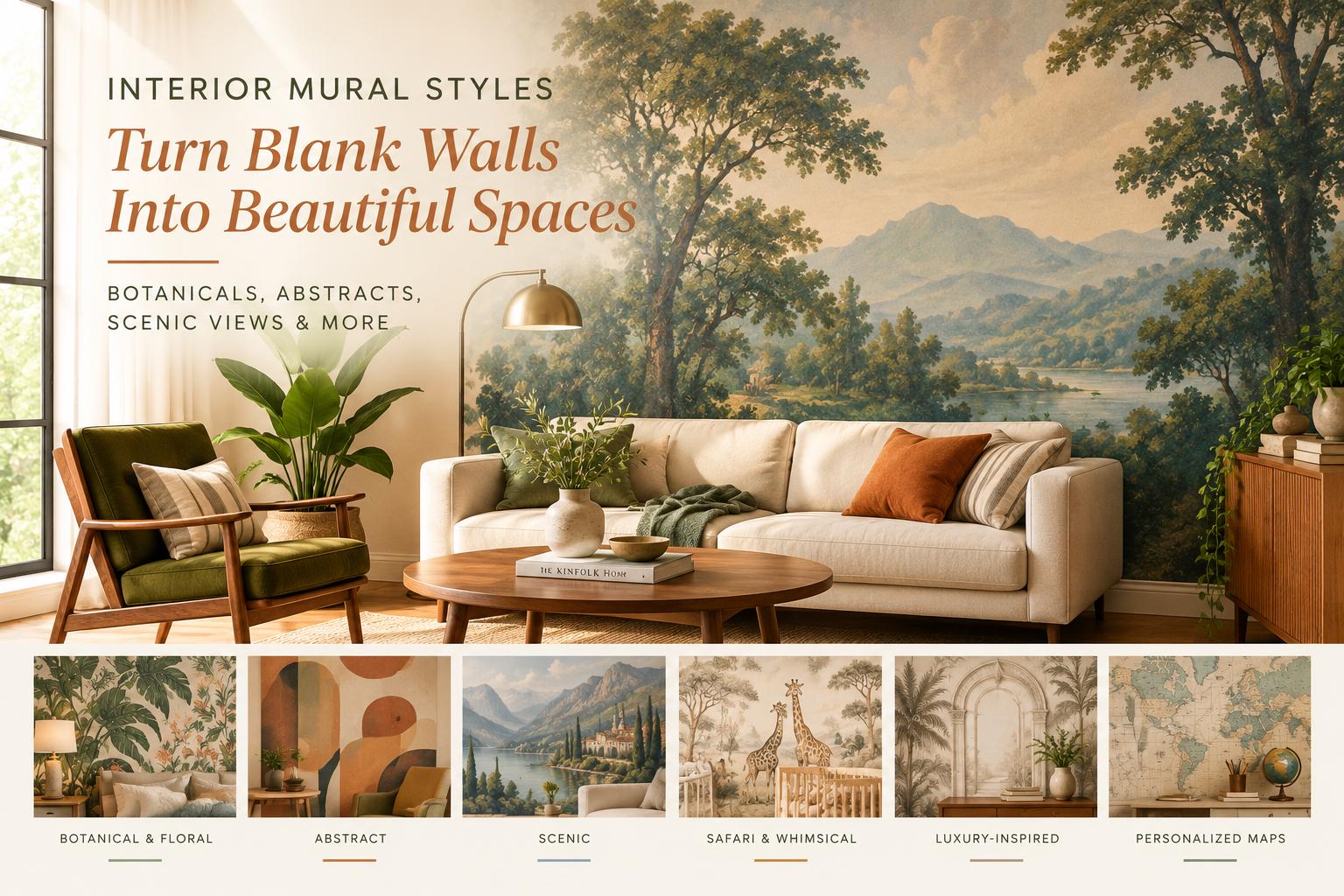
A blank wall can make a finished room feel strangely unfinished. It has the furniture, the lighting, and the rug, but it is still missing the visual moment that gives the space its point of view. The right interior mural styles solve that problem quickly, whether you want a serene bedroom, a playful nursery, a more polished home office, or a vacation rental guests remember.Murals are not one-size-fits-all decor. A misty forest creates a different feeling than an oversized watercolor bloom, and a personalized city map belongs in a different kind of room than a high-contrast geometric print. The best choice comes down to the mood you want, the wall you have, and how much visual energy the rest of the room can support.
Start With the Feeling, Not the Empty Wall
A mural is often the largest pattern in a room, so it deserves more thought than simply picking a favorite image online. Before choosing a style, decide what the room needs to do for you. A bedroom may need softness and visual quiet. An entryway can handle a little drama. A home office may benefit from a design that feels focused, creative, or expansive without becoming distracting during video calls.Also consider where your eye lands when you enter. Behind a bed, sofa, dining table, or desk is a natural mural location because the furniture grounds the design. On the other hand, a wall broken up by several doors, windows, or open shelving may be better suited to a smaller-scale pattern or a more open composition.Peel-and-stick murals make a bolder decorating decision feel more approachable. You can create the kind of feature wall that would normally require a major renovation, without pasted wallpaper or a professional installation crew. For renters and commitment-conscious homeowners, that flexibility matters just as much as the visual result.
Botanical and Floral Murals for Soft, Layered Rooms
Botanical murals are among the most versatile interior mural styles because they can move between relaxed, traditional, romantic, and modern spaces. The difference is in the color palette and illustration style. Fine-line branches in muted greens feel calm and tailored. Large tropical leaves bring more energy. Vintage-inspired florals can make a bedroom, powder room, or dining nook feel collected rather than newly decorated.For a restful look, choose designs with a lighter ground color, gentle contrast, and breathing room between motifs. This works especially well behind a bed with linen bedding, pale wood furniture, and simple bedside lighting. A dark botanical print can be equally beautiful, but it asks more from the room. It tends to look best when paired with warm lamps, lighter textiles, and enough contrast to keep the wall from visually disappearing at night.Floral murals also offer an easy way to add personality to small spaces. A powder room or entry is a place where a saturated bloom or moody garden scene can feel intentional rather than overwhelming. Because these rooms are used in short bursts, they can carry more pattern than a space where you spend hours every day.
Abstract Murals for Modern Contrast
Abstract designs are ideal when you want impact without a literal scene. They can introduce movement, architectural structure, or a luxury-inspired finish while leaving room for your own interpretation. Think watercolor washes, layered arches, soft marble effects, expressive brushstrokes, or geometric color blocking.This style works particularly well in living rooms and home offices where the furniture is clean-lined or neutral. A warm beige-and-taupe abstract can add dimension to a room full of creams and natural oak. A mural with black, charcoal, terracotta, or deep blue may give a simple office wall more authority and depth.The trade-off is that abstract murals need a little editing around them. If the design has strong movement or several colors, keep the surrounding artwork limited. Let the mural be the main composition rather than competing with a gallery wall, patterned curtains, and heavily printed upholstery all at once.
Choose Scale Carefully
Large, open shapes tend to make a small room feel more expansive because the eye can read the design from a distance. Tiny, busy marks can feel lively, but they may become visually crowded across a full wall. If your goal is a calm, elevated interior, look for an abstract mural with a clear focal area and a palette that repeats colors already present in the room.
Scenic Murals That Create a Sense of Escape
Scenic murals bring perspective to a room. Forests, mountain views, coastal horizons, dreamy clouds, and architectural city scenes can make a wall feel like a window into another place. They are especially effective in bedrooms, reading corners, nurseries, and spaces that lack a natural view.A misty landscape in subdued tones can visually widen a narrow room. Cloud and celestial designs create a gentle, imaginative backdrop for a nursery or children’s bedroom. City map and skyline murals give a home office, teen room, or travel-inspired entryway a personal sense of place.The key is to match the scene’s energy to the room. A high-detail jungle mural may feel exciting in a playroom or vacation rental, but it could be too active behind a desk where concentration matters. For daily-use spaces, softer scenic designs with a limited palette are often easier to live with over time.
Safari and Whimsical Murals for Children’s Spaces
Children’s rooms are one of the best places to choose a mural with a clear story. Safari animals, woodland scenes, outer space, rainbows, and personalized name designs can make a nursery or playroom feel special without relying on disposable decor that will be outgrown in a year.For a nursery, look for soft illustration, gentle neutrals, or quiet pastels that work with changing textiles and furniture. In a toddler’s room, a more playful animal scene or celestial mural can create a setting for imagination while still looking polished enough for the rest of the home.Personalization adds another layer. A child’s name, initials, or a favorite place can turn the wall into something made specifically for them. Since made-to-order murals are typically created to your dimensions, measure carefully before ordering and confirm the exact placement of furniture, cribs, or shelving that may cover part of the design.
Luxury-Inspired Styles for a More Finished Look
If your room feels functional but not fully designed, luxury-inspired murals can supply the missing layer. Marble effects, chinoiserie-style scenes, elegant arches, metallic-look details, and refined neutral patterns give a space a more deliberate finish without requiring custom millwork or expensive materials.These styles are well suited to dining rooms, primary bedrooms, entryways, and boutique-style guest spaces. In a vacation rental, they can also help create a recognizable look that photographs beautifully. Choose a design that complements the room’s fixed features. Warm veining and camel tones tend to pair naturally with brass, walnut, and cream. Cool gray or ink tones work well with chrome, black accents, and modern furniture.A dramatic mural does not require dramatic furniture. In fact, restrained furnishings often make a high-impact wall feel more expensive. Let a simple upholstered headboard, clean-lined console, or round dining table create a quiet foreground for the pattern.
How to Choose a Mural You Will Love Living With
Color confidence is one of the biggest concerns with wall decor, especially when shopping online. A screen can shift undertones, and lighting changes everything from room to room. Ordering a sample lets you check the color beside your paint, flooring, fabrics, and wood finishes before committing to a full made-to-order mural. It also gives you a chance to assess material texture and adhesion on your wall.Surface preparation matters, too. Peel-and-stick wall murals perform best on clean, smooth, fully cured walls. Heavy texture, flaking paint, dampness, and freshly painted surfaces can affect adhesion and the finished look. Measure the wall width and height more than once, account for baseboards and sloped ceilings, and order based on the full installation area rather than guessing from a standard roll size.For most rooms, one standout wall is enough. A full-room mural can be striking, but it works best when the design is subtle, the room has generous light, and the furniture plan is simple. If you are unsure, an accent wall gives you the transformation with less visual commitment.Your wall does not need to be permanent to feel personal. Choose a mural style that supports the way you want to live in the room, then give it the space to do what great decor does best: make everyday life feel a little more considered.